Rachel Hartigan (00:00)
In a way we almost accept more uncertainty in our personal lives than in our celebrity lives.
In times like the pandemic grief, it can be hard to work, but it also can be a relief to have a project that feels like your own.
Like it's not anything that anybody else is shaping for you. It's really up to what you want to bring it. And that was an incredible outlet
Annie Wenmiao Yu (00:26)
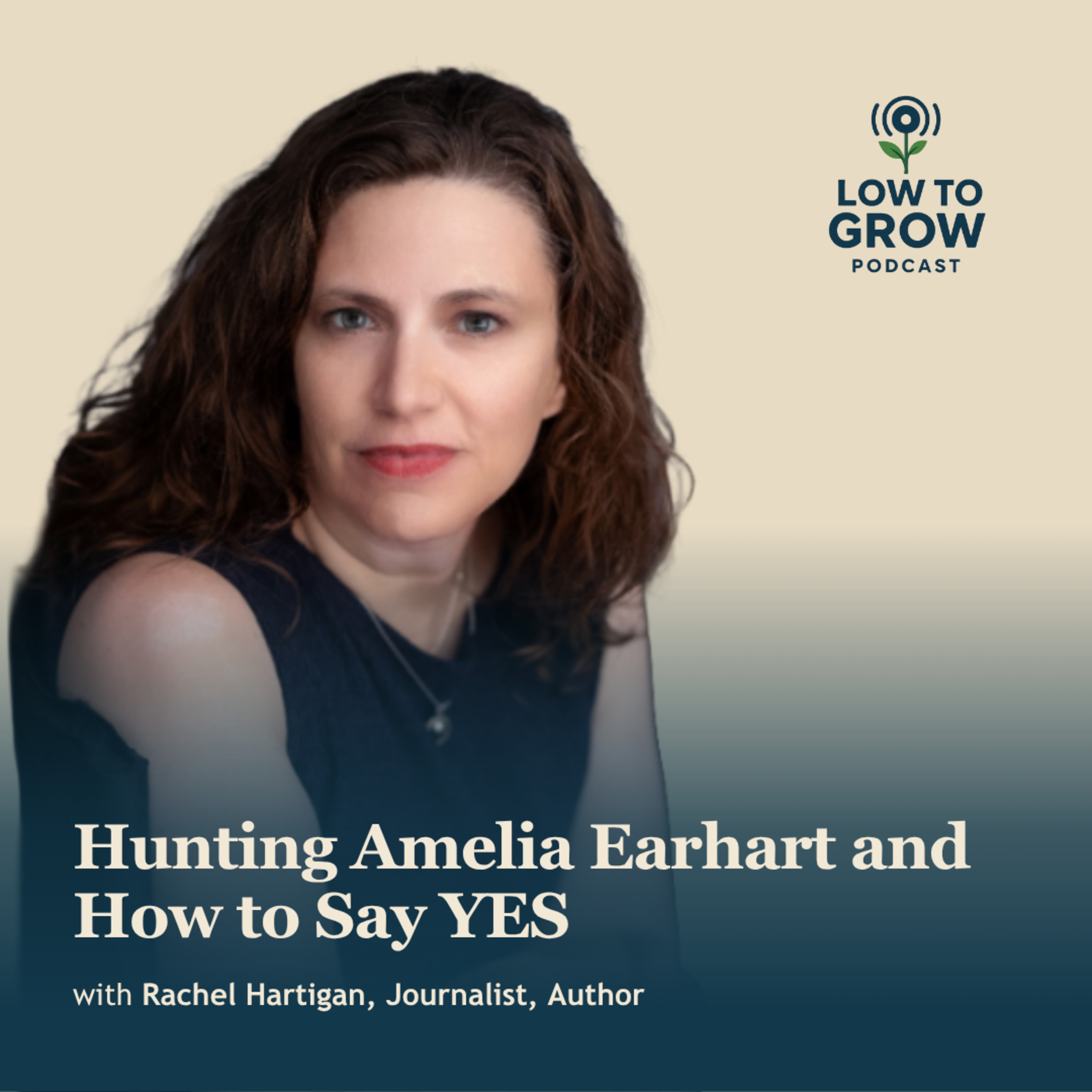
Today I am joined by Rachel Hartigan, who is a former National Geographic writer, reporter and editor whose work has explored everything from the science of persimmon trees to the long and hard-won fight for women's suffrage. She is a former editor of the Washington Post's Book World and has covered education and culture for the US News and World Report. she is now a published author
same inquisitive depth of writing to her debut book, Lost, which is a fascinating deep dive into the enduring mystery of Amelia Earhart.
Rachel Hartigan (01:01)
people ask her, well, why are you making this risky flight? And she always felt that she was asked that more than male pilots were asked. And so she would respond for the fun of it or because I want to.
she felt like she didn't have to justify herself.
the expedition I was going on was bringing human remains detection dogs to the island to sniff around this castaway site to see if they could locate any bones.
Annie Wenmiao Yu (02:20)
Rachel, welcome to the Low to Grow podcast. It's such a pleasure to have you. who do you want to be listening to our conversation today?
Rachel Hartigan (02:27)
So anybody who has been, who's not really sure of what they should be doing, who are maybe beating themselves up about not having a clear path ahead because I just don't necessarily think there are clear paths. And I think that my journey has shown that if you're open to things, interesting opportunities will turn up and it's really the key is to be open.
Annie Wenmiao Yu (02:52)
for you, what's the most interesting opportunity that's turned up by chance in your life?
Rachel Hartigan (02:58)
That would be when I was working at National Geographic and you know the offices you might think that they're in some wild place but no they're just in a Washington DC office building with copy rooms and all that stuff and I was heading from my desk to the copy machine and one of the editors stopped me and said we have a berth on a ship that's going to an island in the middle of the pacific
to search for the remains of Amelia Earhart. Do you want to go? nobody had ever asked me a question like that before, but I said yes right away. And then after that, I thought, wait, how far away is it? And where is it exactly? And I only thought of the questions afterwards, but I had told myself when I started working at National Geographic that, I mean, I actually had it posted on my monitor
just to say yes to everything. And so I was trying to stick to that, that message.
Annie Wenmiao Yu (03:51)
Was that a motto that you've had all your life?
Rachel Hartigan (03:53)
No, it's not. I had been very much, I guess a desk journalist. I mean, had done a lot of, you I'd gone on reporting trips and everything, but mostly I was in an office on a phone doing things that I felt kind of comfortable covering like education and culture. I'd worked in the book section at the Washington Post.
So National Geographic with its focus on really getting out into the field and exploring the whole world and its focus on science, which I didn't really have a background was very new to me and I wasn't sure if I could do it. So it was just a reminder to myself. I mean, you don't know if you can do any of this, so you might as well say yes to all of it.
Annie Wenmiao Yu (04:33)
that's also a model that I have as Because I think in entrepreneurship, and also being a female founder, a lot of the times it's just saying yes to opportunities. And it's so interesting how in the end, even if it's after you know, a few months or after a year, there's always a loop that closes. I think it's a really wonderful approach to always be open and curious about what life has to offer you. Rachel, you were editor of the Washington Post's book world. So how did you actually get
Rachel Hartigan (04:35)
good.
Mm-hmm.
Annie Wenmiao Yu (04:59)
to the National Geographic, where did your career start?
Rachel Hartigan (05:02)
My career started at a little bitty Cowboy magazine in Nevada. I had graduated from Yale with a degree in history and no idea what I wanted to do. I knew I liked to learn things. I knew I liked to write, but I just, I don't know, I was very young, very naive and didn't know what to do next. So I had moved back home to Reno, Nevada and through some
family connections, I guess I got a job at this little cowboy magazine. And I had a very low level job. think I was putting magazines into envelopes, but I got kind of the taste of working for a magazine and looking at the photographs and seeing how you put it all together. And then one day my dad, who is quite sick of me sitting around, you know, musing what to do with my life.
handed me a copy of Harper's Magazine and it was open to an ad for internships. And I had no idea that the internships at Harper's were kind of this story thing in magazine journalism. just like, okay, sure. I'd love to live in New York, so I'm going to do that. So that's what I did. And that was really my introduction to.
Magazine journalism and how you can package stories in so many different interesting ways And after the internship was over I moved to Washington to work for a magazine called Civilization, which was tied to the Library of Congress and that was the first of many magazines that I've worked for that have Folded because you know, lots of magazines don't make it. So I jumped
to a couple different magazines and I ended up at US News and World Report where I was covering including the US News college rankings and also culture. And I had just had a baby and I kind of got a feeling that there wasn't much farther for me to go at US News and I saw or I heard about an ad
or a job opening at the Washington Post for a part-time book editor job in the book section. And I thought that would be perfect because it paid the same amount as my full-time job. And I love books and then I could be home with my baby for an extra day. And somehow, you know, over the course of a few years, I ended up being the editor of the section, partly because I did a good job, partly because
You know, the media industry is always changing and mostly cutting back. And I, I ended up being the one who was in charge of sort of the, the shrinking of the section and then was laid off. So that wasn't very fun. But after that, some friends of mine who had been at us news were at national geographic and they brought me on board just to be, cause they felt, you
National Geographic is really good at everything, but they wanted somebody who was really a writer and somebody who could really bring
some storytelling and strong narrative and just nice turns of phrases to their copy. And that was when I thought, oh boy, this is totally different than anything I've ever done. But, you really exciting. You walk into National Geographic and least the way it used to be set up, there are a bank of elevators. And if you look up, there's a whole model of the Grand Canyon.
just right
there and everywhere you go, there's signs of this really legendary organization. And that was very exciting for me. So that's how I got there, but I always felt like I wasn't quite.
My background didn't indicate that that's where I would end up, but I decided that I was just going to figure out how I could be the best addition to that magazine as I could be.
Annie Wenmiao Yu (08:36)
What did you have to, I guess, either change or perhaps learn in order to really succeed in the different roles that life took you to?
Rachel Hartigan (08:44)
I had to learn to pay attention, I think, really pay attention to how the culture and the style of the different places where I worked. I had to really learn how to take criticism. That's part of being a journalist. mean, being a writer is to be edited. And, you know, lot of people have a really hard time with somebody
saying, this doesn't work or I don't understand this, but that really has to become part of your process if you want to get better. And so I really had to learn how to not take those edits personally, but to learn from them and to see how I could see a question or see a change and make it better. I had to learn how to get over my
natural introversion to call people up and ask them questions and really get them to answer my questions. I mean, that was something I really had to work up my courage each time I made a phone call, even though you'd think I would get used to it after a while. So those are a lot of the things I had to
learn, and I had to learn how to learn. Like for instance, you know, I ended up writing about science and in different ways and I always found it very interesting, but I had to learn how to ask scientists to explain things in a way that a lay person would understand. So I would always say, pretend I am your old aunt and just explain it to me like that. And I had to learn how to,
keep what I learned in my brain or at least accessible somewhere else. I mean, it had a long document of scientific terms that I would just write down. Like each time I'd learn it, I'd write it down and the definition. So I wasn't always relearning it. it's just sort of how to learn and how to get information was really the thing that I was always, a skill I was always developing.
Annie Wenmiao Yu (10:40)
And it's something that's really useful whether you're a journalist or whether you are a novelist as well. Rachel, I'm quite curious, what do you think about AI and how it's going to affect your industry?
Rachel Hartigan (10:51)
Oh, you know, I've been wondering about that a lot. I think my fundamental feeling is that people are worried about AI taking over a lot of jobs. I think there's some things that AI cannot do.
There is a humanity that you bring to covering a story and AI can't be face to face with a person asking them about their experience of something and then translating that through your own humanity into a story. just, mean, granted they could write all the words and it could seem like you're getting the narrative and the facts, but I think even if the AI version is fine, the human version will be better.
One thing that I've started to use it for, and I'm very new to it, I'm like totally a newbie, is figuring out where sources are. Like if I want to write about something historic, say I want to write about somebody I don't know that much about, I can ask AI figure out who all this person is connected to
and figure out where the archives might be, what places these people are connected to. So it's a lot easier to do that than a web search or going from archive to archive. But I wouldn't use it to actually process the research. I would just use it to find where the sources are.
I don't know,
what I would really like to do, and I'm sure you figured this out long ago, is how to make it my personal assistant. I have not done that yet. just do all the things I don't want to do.
Annie Wenmiao Yu (12:23)
also a really critical debate, know, would you want or should we want AI to be our personal assistant? Because it means giving up so much of our privacy to a few tech companies, which is quite interesting. Earlier, Rachel, you mentioned about being at the National Geographic and being invited to go on to this expedition. what happened? And also how did that lead to producing the book?
Rachel Hartigan (12:31)
Yeah.
Well, the expedition was, it was pretty great. The idea of the expedition was that there's this, Amelia Earhart had gone on this round the world flight. She was almost done. She was in Lae, New Guinea and she was about to fly with her navigator to Howland Island, which is an itty bitty island in the Pacific.
In her flight from New Guinea to Holland, she got lost or she never showed up. And one theory about what happened to her is that she ended up flying roughly south to the Phoenix Islands and landing on this island that was then called Gardner and now it's called Nicomororo. And the island has a coral atoll and it has a reef around it that she could have landed on.
There's this one group called Tiger that's been going there for decades looking for signs of her. they found a lot of suggestive things, a lot of items from the 1930s, like a zipper pull and a cosmetics case. They found signs that somebody was a castaway on the island.
but they haven't found anything that ties directly to Amelia Earhart and they haven't found any human remains. So the expedition I was going on was bringing human remains detection dogs to the island to sniff around this castaway site to see if they could locate any bones.
So it was pretty wild. and the other kind of bizarre aspect of it was that it was also a
there was a tour group that was part of it. we were actually, we weren't on a research vessel. We were on an actual cruise ship and all these people had signed for it as their vacation. And then they would be sort of citizen scientists helping with the excavation.
we'd stayed on the cruise ship and then we would go to the island each day and
you know, dig around and then come back and do cruise ship things. So that was a little bit bizarre. But, the dogs alert on the island. So they sat, they stared at their, handlers indicating that they had sniffed human remains. But we spent, I don't know, five days or so, digging and the archeologists did not find anything. And part of the problem is that
It's a coral island, so there's just a lot of coral rubble and coral rubble looks a lot like bones. So it was just a very frustrating exercise. But one thing that they did do is collect soil from near where some of the dogs had alerted because earlier that it was earlier that year, another scientific team had identified DNA
Annie Wenmiao Yu (15:04)
Right.
Rachel Hartigan (15:21)
Neanderthal DNA from caves in Europe. So they knew it was possible to extract DNA from soil. So that was what they were going to try to do. they ended up identifying DNA, but it was so degraded that they couldn't tie it to anybody specifically. So it wasn't a success in terms of finding.
Amelia Earhart, but for me it was just took me out of my regular daily life and made me feel like, wow, I can do this. I can file stories with a sat phone that I'm holding up to the sky, you know, because there was no internet access out there. I could hang with all the explorers and the videographers who were there. You know, because I was a middle-aged lady with a kid and
who was used to working at a desk. So it was very much outside my comfort zone. And then two years later, I went back to that island again, but this time it was with Bob Ballard, who is the scientist who found the Titanic. And he has a whole research vessel with all sorts of underwater tools. And this time he was looking for the airplane because the idea was
Earhart landed the plane on the reef at low tide. And then at high tide, the plane was just sort of carried off and then tumbled down to the seafloor. Unfortunately, he didn't find the plane, but that was very interesting because it was a whole, know, Ballard is just, he's been doing this so long and he just has a very,
I don't know, he just, he's very aggressive in his searching, but he's also very methodical. So I mean, he was going back and forth and using sonar and these underwater vessels. And it was just very interesting to see him at work, but unfortunately he didn't find it. And, you know, I wrote a bunch of stories from that ship. That ship had internet access. It was very high tech but.
When I got back, there was an agent, literary agent who had reached out to me and she really liked my stories and she thought, she's like, this definitely could be a book. And at first I didn't think so because, you know, we didn't find her. there's so many disparate pieces to Amelia Earhart's story and I wasn't sure how to put it all together. So I had to think about it.
for a while because the theory that we were investigating was not the only theory. There's also the theory that she ran out of gas and ended up in the ocean. And then there's the theory that either she got lost or she was a spy for the U.S. and ended up in Japanese territory because Japan controlled most of Micronesia at that point in 1937.
And so I just, couldn't figure out how to tie all of that together. Um, I wanted to, because one thing that came up with writing all these stories is that there was a lot I had to leave out and there was a lot of context beyond just searching for the plane and searching for the bones. Because it turns out that this island, Nicomorra was uninhabited when Earhart
disappeared and it was uninhabited when we went there, but in between it had been a British colony. And so it was connected to this whole history of British colonies in the Pacific. And then the Japanese theory was very much tied to Japanese colonization, but also the buildup to World War II and then attitudes towards Japanese after World War II. So there were all these larger historic
trends and contexts that I was really interested in, but couldn't get into just in my regular news stories. So that was something I was trying to figure out too. So eventually I, I did it and then I had to reorganize it cause my editor said this makes no sense. But eventually I turned this, book into a story with four narrative threads. one Amelia Earhart's life.
And then the other two were the following the people who had investigated the three different theories and sort of what compelled them forward and what evidence they thought was strong. And so, yeah, was, it was a little bit complicated, but it was also fun.
Annie Wenmiao Yu (19:28)
what do think people are really looking for they become obsessed with trying to solve mysteries like Amelia Earhart
Rachel Hartigan (19:36)
You know, I think about that question all the time.
The thing that struck me when I was on that first expedition was what an adventure these ordinary people were having. I mean, they were smart, but they had ordinary day jobs. One of them sold solar panels and another one has sort of a handyman business. So they weren't professional explorers.
I think.
doing this made them feel special and it allowed them to get a competence in things that other people don't have. mean, they really knew how to be on the island and they had this whole routine on how to get onto the island because it's hard because of the sheer coral atoll and how to be safe on it and what to watch out for. just, they knew all these things that
most people don't know. And then I think there's the puzzle aspect of it too, because every time they'd find one little thing that was suggestive and so they'd have to investigate that. And that might end up being a dead end, but then they got a little bit of information that sent them in another direction. So their curiosity was never satisfied. So in a way, they almost got to be
participated in a way in the same things that Amelia Earhart was participating in. They were doing daring things. They were being adventurous. there was a certain amount of ego in that too, because they could, you who doesn't want to be the person who finds somebody who's been missing for almost a hundred years.
But yeah, think that there's just a mystery just kind of clutches them and doesn't let go.
Annie Wenmiao Yu (21:14)
what has this taught you about living with uncertainty in life?
Rachel Hartigan (21:18)
I mean, that's so interesting because while I was working on the book, there were a couple deaths in my family and one of them was a surprise and not a natural death. And one thing that I was thinking about while I was working on the book is like, I'll never know why this person from my family
Like I'll never have answers about exactly what happened and why it happened. It's just impossible. And Earhart's family is never going to know what exactly happened, what she was feeling like. They're just, they're not going to know. And interestingly, I think they made peace with that. And her survivors were...
Annie Wenmiao Yu (21:59)
Hmm.
Rachel Hartigan (22:01)
She was married when she disappeared and then her mother and her sister alive and her sister had two children. they, her mother and her sister and her sister's children lived with it for the rest of their lives and they had to accept that uncertainty. And I think one thing that's interesting about why Earhart's mystery has lasted so long.
is that In a way we almost accept more uncertainty in our personal lives than in our celebrity lives. you know, she was so famous, how could somebody so famous disappear? We know so much, we have so much technology, how can we not find somebody who disappeared?
We should be able to do everything we set out to do, but we can't.
Annie Wenmiao Yu (22:45)
Hmm.
Rachel Hartigan (22:45)
You know, I think people, especially the people who started to veer more towards the conspiracy minded theories, want to feel like they have a bit more control of the world and uncertainty, just by definition, means you don't have control. There's a whole black box that you don't know anything about. And I think for some of the people searching for her, they wanted to feel like,
they had certainty, they had control, and they would profess this certainty even though they didn't have any evidence for it.
Annie Wenmiao Yu (23:15)
That's so interesting. What has the early reception to your book been Rachel?
Rachel Hartigan (23:20)
It's been good. I've been really pleased by...
just regular people's response to it. mean, I was, there are a lot of people who specialize in Earhart, you know, all the people who advocate for the different theories. And I wasn't so much writing for them, but for people who have wondered about, you know, every time a new story pops up that somebody else says they're going on an expedition or that they found evidence or something. I was writing more for the people who were curious about that.
and curious about Earhart and curious about why are we still talking about her. And I've really gotten a lot of people who said that they...
They got so much out of it and they were moved by it in a way that they didn't expect. So that has been very gratifying.
Annie Wenmiao Yu (24:07)
I love that. I'm curious, if anyone listening is curious about why Amelia Earhart's story is so relevant or is still relevant today, what would you say to them?
Rachel Hartigan (24:16)
Mm-hmm.
Well, I think she was talking a lot about issues that we are still talking about. mean, she was a pilot who broke a lot of records, but she also was very much an advocate for women and everybody doing what they wanted to do and not being stuck in a box of gender or anything else. And I mean, that is still something that
we in societies across the world are wrestling with. So her concerns and her foresight feel very familiar. She's not, she doesn't feel like she's from the past. And she was very forward thinking in lots of ways. I mean, she always was interested in the latest technology in the newest thing.
She just feels so modern. I think a lot of women just still feel like she's an advocate for them. I mean, you read her quotes, one thing that she would often say, people would ask her, well, why are you making this risky flight? And she always felt that she was asked that more than male pilots were asked. And so she would respond for the fun of it or because I want to.
she felt like she didn't have to justify herself.
And I think women are still,
feel compelled to justify what they're doing, you know, so as not to seem selfish or like they're getting over their skis or something.
Annie Wenmiao Yu (25:38)
The things that she covers is very relevant and also relatable. So I think that's a huge part of why her story and her mystery is still relevant today. Rachel, what did writing the book about Amelia reveal to you about yourself?
Rachel Hartigan (25:42)
Mm-hmm.
Yeah.
Well, I feel like I could write a book. wasn't sure.
You know, I think it revealed that I have a lot more grit than I thought I did because, you know, I wrote the book mostly while I was working full time, during which several members of my family died. My dog died. the pandemic, like all these things happened and I still kept plugging away at it and I didn't.
Annie Wenmiao Yu (26:05)
Mm.
Rachel Hartigan (26:18)
I mean, I was late on my deadlines, I will confess, but I learned that I could do it, I could push forward, I could focus. And I also learned that In times like the pandemic or grief, it can be hard to work, but it also can be a relief to have a project that feels like your own.
Like it's not anything that anybody else is shaping for you. It's really up to what you want to bring to it. And that was an incredible outlet
during that time.
Annie Wenmiao Yu (26:52)
Wow, thank you for sharing that. And how did you find the actual process of getting a book published? Was there anything that surprised you in particular?
Rachel Hartigan (27:00)
you know, it was weird. I thought that I knew more than I did, cause I had worked in a book section at the Washington Post, but that was, we were receiving the finished product. So I didn't really know how everything, worked to make, to get it there. And one thing that I was surprised by is the editing is
don't want to say less strenuous, but National Geographic editing is very intensive and book editing just isn't that intensive, partly because it would take so much time to go sentence by sentence by sentence. But that was surprising and a little nerve wracking because I was like, I'm sure it could use some tightening. The other thing that has been a very new experience for me is the publicity part.
you know, doing interviews like this, figuring out what people want to hear about, putting myself forward, you know, speaking in public. I mean, I've done a little bit of all of that, but not so, not for something that was representing myself and not so intensively. So that's, I didn't really know what to expect.
But I feel like I'm doing okay, better than I thought I would.
Annie Wenmiao Yu (28:08)
Well, congratulations on getting your first book published. I think that's a huge milestone in any writer's life. Where do you hope to go next? Is there going to be a volume two potentially?
Rachel Hartigan (28:12)
Thank you.
Yeah.
Yeah, I'm looking at some possibilities. I don't think it'll be in aviation, but I'm interested in the 1930s era and all the artistic and political things that were going in. So I may focus on a group of people in San Francisco, but I need to do some more research on that. And then I will be writing a column that will run on National Geographic's website on other lost explorers.
Annie Wenmiao Yu (28:29)
Mm.
Rachel Hartigan (28:44)
and their stories and how they got lost and whether we have ever found them. And so that should be going for the next year or so.
Annie Wenmiao Yu (28:51)
I'm looking forward to reading it. It's been fascinating hearing your career journey from starting as a journalist to now being an author and also your reflections on the expeditions that you went on to and how, I guess, this allure of unsolved mysteries is actually something that satisfies what the day-to-day nine-to-five worker might really lack in their normal routine. And it's a way to appease that imaginative part of themselves.
Rachel Hartigan (29:12)
Yeah. Yeah.
Annie Wenmiao Yu (29:16)
So it's been such a pleasure to have you share your views on that, Rachel. Let me end by asking you a podcast staple, which is what is one thing that you believe will allow more people to have better mental health?
Rachel Hartigan (29:21)
Thank you.
it's something that I've been trying to work on and that is paying attention to my physical reaction to things. I mean, it's a, it's a cliche to say follow your gut, but
Annie Wenmiao Yu (29:39)
Hmm.
Rachel Hartigan (29:39)
You know, in making a choice, what does my body feel like when I think about the different options? And that usually guides me towards healthier choices for me than ignoring it. So just paying attention to the whole body as you're experiencing life. So sometimes that tells you more than your brain will tell you about how you're actually feeling.
Annie Wenmiao Yu (29:59)
So interesting that you mentioned that because I was editing another episode earlier. I spoke to a lady called Eva and she also talked about needing to learn to trust her initial gut instinct. And then she said, it's just how you feel in that moment. And then she said from her, guess, similarly to you, she said whatever she felt in that initial moment. If she didn't really listen to that, then normally
things do not turn out in an optimal way. And that's kind of like what's pushing her to really lean into more to that as well.
Rachel Hartigan (30:28)
Yeah, yeah, no, it truly makes a difference. Yeah, but it's hard.
Annie Wenmiao Yu (30:32)
it's definitely hard. Well, Rachel, it's been fantastic having you on the Low to Grow podcast. Thank you for taking the time.
Rachel Hartigan (30:38)
Well, thank you so much for having me, Annie. It's been great.