
From Breakouts to Beauty Tech Breakthroughs: Building Clear (YC) with Ahana Banerjee


Feeling like you need to have it all figured out before starting something big?
Think again.
In this episode, Annie sits down with fellow Forbes U30, Times Young Powerlist and Y-Combinator alumna Ahana Banerjee, to unpack her path from her childhood physics student to founder of the award-winning beauty tech app Clear.
Born from her personal experience with cystic acne, Clear isn’t just a skincare app, it’s a mission. Ahana shares what it really takes to build something meaningful while staying grounded, including the hard lessons from hiring mistakes, the invisible weight of academic pressure at Imperial College London, and why she believes discomfort is essential for growth.
Tune in to learn:
- Why building the right team can make or break your startup
- The role of privilege, family support, and perspective in shaping purpose
- The mindset shift that helped Ahana stay motivated through self-doubt
Follow Me on:
Instagram: @lowtogrowpodcast
TikTok and YouTube: @lowtogrow
https://www.lowtogrow.com
SAY HI at lowtogrowpodcast@gmail.com :)
Follow Ahana @ahanabanana and @getclearapp
Chapters:
00:00 Introduction to Ahana Banerjee and Clear
03:26 Ahana's Journey: From Physics to Entrepreneurship
06:40 The Birth of Clear: A Personal Mission
09:28 Challenges of Entrepreneurship: Risks and Realities
12:16 Finding the Right Team: Co-founders and Hiring Mistakes
17:28 Building Trust and Culture in a Startup
24:24 Support Systems: The Importance of Family and Relationships
26:55 The Role of Family Support in Building Confidence
28:20 Navigating Challenges in the Founder Journey
29:33 Overcoming Academic Pressure and Self-Doubt
35:33 Finding Strength in Entrepreneurship
37:40 The Importance of Discipline and Resilience
38:28 Embracing Discomfort for Growth
41:38 Self-Awareness and Mental Health
Please Note: This podcast is for general awareness and educational purposes only, and should not be considered a substitute for professional medical advice, diagnosis, or treatment. For support, visit https://www.mind.org.uk/ for free resources.
Feeling motivated? Take action today by subscribing to LIFT with Low to Grow, a weekly email newsletter with my personal take on all things Mental Health X Entrepreneurship!
Who do you think that our conversation today will benefit the most?
I think anybody who is even considering a career in entrepreneurship, or maybe even just anyone with an open mind.
Welcome to Low to Grow, the podcast transforming life's toughest moments into opportunity for growth. I'm Annie, a Forbes under 30 technology founder, whose entrepreneurship journey ran parallel to a mental health awakening.
In every episode, I sit down with inspiring individuals and delve into how they managed to turn their personal or professional challenges into opportunities for growth.
If you're facing uncertainty in your life, feeling down, or simply need a kick of inspiration to keep moving forward, this is your space for the honest and uplifting conversations that you will want to hear.
Hit follow so you never miss an episode, and let's dive in. Welcome to this very special episode of the Low to Grow podcast, coming to you from the iconic Royal Academy of Engineering here in London, in the midst of Mental Health Awareness Week.
Today, I am honored to be joined by an intimate group of entrepreneurial trailblazers in their respective fields. The purpose of the Low to Grow podcast is to dive into the personal stories behind catchy headlines.
And today, we're spotlighting someone at the intersection of technology, beauty, and well-being.
I am thrilled to welcome today's guest, Ahana Banerjee, who is the founder and CEO of Clear, the groundbreaking beauty tech app that was recently featured as Apple's App of the Day.
Backed by Y-Combinator, Clear empowers users with science-backed skincare insights, putting clarity and confidence back into people's routines. At just 24, Ahana was recognized by Forbes on the 30 and the Sunday Times Young Power List.
So Ahana, welcome to Low to Grow.
Thank you, Annie. It's a pleasure to be here chatting with you today. Great.
Before we start, who do you think that our conversation today will benefit the most?
I think anybody who is even considering a career in entrepreneurship, or maybe even just anyone with an open mind, because I think a large part of my journey was not knowing that this is where I would end up, but I was always open-minded and always
actively pursuing new opportunities and really optimizing for learning. So yeah, actually, not just aspiring entrepreneurs, but anyone with an open mind that's curious.
Fantastic. So Ahana, let's start at the beginning of your story. How did it all begin for you and Clear?
Honestly, it starts with childhood, truly, and in two ways.
I think one is more in the career sense. Just to give you a bit of the backstory, I lived in the UK in Chester till I was 14 years old. And at that point, very normal life, I went to a state school.
At the age of 14, my family and I moved to New Delhi, India, and then at 16, we moved to Singapore.
And I think it was in particular that transition from the UK to India that had a huge impact on me because it was my first experience going to an international school.
So all of a sudden, my peers' parents were the CEOs of companies, ambassadors to their countries. There was a total socio-economic difference in what I was seeing and experiencing in my day-to-day.
And to put it frankly, I was experiencing the most privilege I have ever experienced.
But India is a country of huge extremes, and while experiencing more privilege than I have ever seen before, I was also witnessing poverty like I had never seen before as well.
And I think I had that added layer of being of Indian origin, but not really very culturally Indian up till that point, where I always felt like I looked like these people that are suffering.
Why am I living in this bubble of luxury and a fantastic school and a great education when so many people have it so tough? And I think, you know, it was a big thing for a 14-year-old to think about when I reflect on it.
But I think having that realization of the privilege that I had, and in particular, I felt that the unfair advantage I had was my education, was that I had a great school, I had a supportive family, I had great teachers, and I liked school.
I felt that I ought to do something with that education to help other people. I felt a real sense of responsibility. And so, you know, from that point, it was all about impact.
I knew I wanted to do something that used my skills, my background, my education to help people. And broadly at that stage, I wanted to innovate. I felt that, you know, by definition, when you innovate, you're solving problems for people.
I felt the best way to do that is through science. And I know you studied chemistry, but I felt that physics, you know, really with physics, you get a bit of an understanding of all of the sciences.
And, you know, whether you want to be an engineer or a software engineer or really stay true to academia, it gives you options.
And so that also kind of coincided with the time that the way I thought I would have that impact is through physics and academia. And so I spent, you know, the last couple of my teenage years just studying really, really hard.
I was super excited to get into Imperial. My degree started in 2017, came to London from Singapore. Everything was on track.
You know, I was going to have that impact, use my education, all of that. And when I got to uni, it wasn't quite what I expected it to be. And, you know, we can dive more into it.
But I think at a high level, I couldn't see myself pursuing academia. And so it was really out of feeling lost and having a bit of an existential crisis of, I don't think I can pursue this. And if it's not physics, what's it going to be?
Where I just started applying for any and every internship. I did internships in software engineering, in investment banking. I was applying to consulting companies, hedge funds, asset management, literally whatever jobs were out there.
I was just trying to learn about. I ended up stumbling across entrepreneurship in my third year. That was another big turning point for me where it was the first job that I felt allowed me to kind of fully be me.
It was the first job that I got to learn about the technical side and got to write code. But also, you know, I love business and people and kind of explore that side of things as well.
But it was also the first job that I could so directly see the impact of my work. And I think that really again is why it was such a pivotal moment. And I realized at the age of 20, that's what I want to do.
The challenge was well, how do you go from idea to reality, which is where Y-Combinator came in. I applied during my final year and they ended up investing in Clear when it was a four-day-old idea. And that's what enabled me to start the company.
And just very, very quickly on Clear itself, as you mentioned, we're a beauty tech company, we help consumers figure out which skincare products to use and whether they're actually working.
And I very much started the company because of my own issues with cystic acne. I've had very bad acne since about the age of 11. And, you know, it was just a constant cycle of hope and disappointment, trying different things.
It was made worse by the fact that I moved countries growing up during my teenage years because different doctors in different medical systems wouldn't have my records. They didn't know what I, you know, if what I was using was working or not.
It was just a whole mess. And I thought to myself, I have an app to track my period, my diet, my fitness. Why do I have 30 XL spreadsheets tracking my skincare routine?
So, you know, I think it's a very personal mission that I'm solving. But more broadly, as far as how did I end up here, I never thought that I would be an entrepreneur, but, you know, one thing led to another. And it's my dream job.
And I feel very lucky that I get to do this today.
Well, I'm sure that we're all very glad that you made that clear.
I have friends who have mentioned Clear to me, and it's actually made a really big impact on their life and also their self-esteem, especially if they live, say, in the Western world, but they have more Asian skin types.
And I think it's really important the types of data that you're gathering for people and also the type of insights that you're able to give as well.
And it was so beautiful hearing you recount your childhood and how that inspired you to want to make good social impact as well as making a company. You made it sound really easy. Was it always that easy?
You know, like, what were some challenges at the beginning?
No part of this journey has been easy. Well, number one was actually being able to take the jump. I think that part is often overlooked.
And I think a lot of the time, there's also a bit of shame around aspiring founders or founders who have an idea but can't commit to it full time.
If they're not willing to leave their job or drop out of their degree, you know, I've heard investors say that that's a red flag because they're not sufficiently committed.
But I think, you know, that comes from, again, I'm going to use the word privilege, such a place of privilege. If you can afford for your company to fail, and let's be very honest, most startups do, then by all means take the risk, right?
If financially you can afford to not have a job, risk everything. I wasn't in that position. And so, you know, the thing that I lacked when I was 20 years old was capital.
And so, even though I knew from that first startup job that I did that this is what I wanted for the long haul, I wanted to start something of my own, I didn't think that raising capital as an undergrad was a realistic option for me.
I didn't know any investors. I don't come from a family of entrepreneurs or anything like that. But I'd done all these internships, and I knew I can get a reasonably well-paying job.
That's how I can acquire money. I can take my graduate job. I can work for a few years.
I can save up, and that will be my seed funding. That was my career plan. I secured my finance graduate schemes.
I was happy. Parents were happy. It was only in 2021 when COVID hit that I found myself with more free time.
All of my societies at uni were canceled. I just thought, why not start working on something now? It'll just be a learning experience.
I'm still expecting to finish my degree, take my grad job, etc.
But I think the thing that I'm really proud of myself for doing, and I did this when it came to internships, and at this stage with fundraising, and even today, I've always applied for everything and been quite fearless when it comes to failure and
rejection, and I have therefore experienced more failure and rejection than I think most people would be willing to go through. I must have applied to about 200 funding opportunities during COVID. I couldn't get a meeting with an investor.
Y-Combinator has a standard online application. You don't need to know somebody for them to read your application. And in the end, that one application that I filled out, really not expecting anything out of, is the one that materialized.
But when Y-C wanted to invest, it was contingent on me leaving my degree and working on the company full time. And even at that point, yes, it's Y-C, but that is also a big risk for someone to take, because again, what if it fails?
And most companies do. And I was in a position where I had to be financially independent when I finished university.
So, you know, this headline story of just like leave the degree, like turn down the graduate jobs, jumped into building a startup, actually isn't completely accurate to what happened in my case.
Because to tell the honest truth, I could not afford to take that risk. I had to get myself in a position where I was comfortable with it.
And so what I did is with my degree, I had very luckily and fortunately done an optional bachelor's thesis in my third year, which meant that I had fulfilled a bachelor's requirements instead of the integrated masters.
So I was able to get a degree out of university instead of losing three and a half years of work.
But then when it came to the graduate jobs as well, you know, I had these two amazing job offers and I ended up being a little bit naughty and playing some games with both employers. But in the end, they both gave me two year deferrals.
So what it meant is I could leave my degree, I would still have a degree. I could try the company for two years and if it didn't work, I go back to actually what was my planet and I work in finance for a few years, I save up and I start a bit later.
I don't want to make it sound like overly calculated, but it was, I only take measured risks and I don't believe that to succeed, you have to take massive crazy swings and put all your eggs in one basket.
My approach is very methodical and very sort of step by step. And I think that was the first thing of just getting my ducks in a row, so to speak, so that I could even make this my full-time job.
I mean, from there, then, you know, the classic challenge of fundraising, fundraising has probably been the hardest part of my journey.
It's also what completely changed my opinion and shattered my worldview on what it meant to be a female founder and specifically a young Asian female founder as well.
I think finding the right team can also be one of the biggest challenges that you have.
From how you were speaking about your experience, it sounds like you are someone who, as you said, takes measured risk, and you approach life or life-related professional problems in a very structured way.
And that's something that I think I've personally learnt from you as well.
I remember when we first met, gosh, this was in 2023, you were at that time pretty much a solo founder, doing the coding, front-end, back-end, doing the fundraising, building the community, and also going to loads and loads of events, talking about
Clear. Tell us a bit more about your experience of finding the right co-founder for Clear.
Technically, I don't have a co-founder, so my CTO is a CTO. It was a very wacky experience in the sense of, I think, again, if I step back by one step, my leadership style is such that I like to try everything myself.
Not because I'm great at everything. In fact, I'm not great at everything, but I am good enough at everything. And I believe that when I have, I've got some more experience with a particular area, it makes me better at hiring.
For example, if I have touched the code myself, I know where the janky bits are, I know what the challenges are.
And when I am then interviewing for candidates, firstly, I know how to code, which helps tremendously in the technical part of the screening. But also, I know what to look for as far as what are my shortcomings and where do I need to patch those.
And so, you know, that was the first really important hire that I had to make. And I'll be honest, you know, I made many, many errors in hiring software engineers. My now CTO, who's been with the company from about a year in, I found him on Reddit.
And, you know, the way we connected was through the Rust hiring platform because our back end is built in Rust. And at the time, you know, at that stage, the only Rust jobs were really at AWS or crypto companies.
And so if you didn't want to work at a crypto company or at Amazon, it was slim pickings and a skincare app had to do. So, you know, we'd always get quite a lot of applicants.
But what was interesting about Charles is that he and I were very similar as far as our educational background. So he also studied physics at Imperial, but he's five years older. So we never actually crossed paths when we were at uni.
And he moved to South Korea basically as soon as he graduated. We actually had a lot of shared trauma in one way from our university days. But what I love about Charles is that it's a true case of complimentary skill sets.
And I think some of the errors I'd made in hiring before is that I've hired people that were too similar to me and there wasn't any clear delegation. Whereas Charles is 100% a CTO through and through.
He's extremely technical and extremely good at what he does. But I think what has made us such an effective team, and it is just Charles and I, we're just a team of two full time, we have a particular approach to problem solving.
And as I said, everything is a challenge. Everything is a problem in this job.
But when you're aligned on how to solve them or how to go about solving problems, and both of us take a very first principles physicist approach, we're very methodical in how we do things and we run the company like a science experiment.
Whenever there's a business question or a product question of, you know, why are people churning at this stage of the onboarding, we move very quickly because there's just two of us, you know, there's no things getting lost in communication.
We run the experiment, we look at the data and we act quickly. And I think that's how we've been able to make so much progress in a short amount of time. And I think the other side of it is also just the interpersonal trust side of things.
I'm a very transparent and forthcoming leader. So you know, when someone joins the team, I have no issue showing them how much cash we have in the bank, exactly what our runway is.
And I know not every CEO approaches the company that way, and that's completely fine. But my company is called Clear, so I do like to lead with transparency.
And I think having such a deep sense of trust has also made us both feel like we can talk about what we really want out of this.
You know, career-wise, we make sure that even though he's in South Korea, I'm in the UK, we speak every single day, we have a Zoom call.
You know, we make sure that every two weeks, we block time for a deep dive, one-on-one, not to chat about the day-to-day stand up, whatever, but actually, how are we feeling? What are the high-level goals?
You know, are we both getting what we want out of this? And I think making space for those kinds of conversations as well builds even more trust, and has made for a really great working relationship. So I feel really lucky that I found him.
I don't know how, I still think, though, that it's very hard to find people, because this is one case where there was a lot of trial and error, and I got it wrong more than I got it right.
I think one of the biggest reasons companies don't work is co-founder dispute and fallout. And I think almost like with personal relationships, it's very hard to predict what will lead to a good match.
I think the only real insight that I have from it is values alignment.
And although Charles and I are very different people, as far as maybe our interests or our hobbies or what we talk about at the pub, I don't think you'd find either of us in a pub to begin with.
But I think we both fundamentally really care about learning. We're both very disciplined people, and we both like having the freedom to experiment and be creative and work hard as well. So I think because in that sense, we are similar.
That has really helped build the kind of culture more broadly that I want to build.
That's fantastic. I'm glad to hear that you're such a complementary and trusting relationship with your CTO. That's very important.
Yes. You alluded to a few trial and errors and some errors. Can you share maybe one or two examples of where you did make a mistake with hiring and what you learned from that?
Yeah, I think I have swung too far on both sometimes, the optimizing for technical skills and not caring enough about the fit side.
I've also then swung too far the other way after having that learning where I've cared too much about, are they a great fit and the competencies are not there.
I think, again, in the early days, because something that I was aware of but also made aware of by external people was my age and my years of experience, which were few at that point especially, and so when it came to making the first software
engineering hire, I thought I have to hire someone senior. That was just the thing in my mind, and it's so interesting being a young founder myself about the biases that I brought forward. I thought senior meant old.
To put it very crudely, I thought I need someone that is older than I am, that has worked for many, many years, and one of the very early hires that I made was someone who, I think he was 60.
So, he had plenty of years of experience under his belt, a lovely person as well. But in this case, it was someone that had actually only worked in big companies, reputable great name companies.
But at that point, I didn't realize so much that actually, sometimes if you have always worked in big companies, especially as an engineer, you don't actually have the skills to be completely self-sufficient.
You need a lot more direction because you have never had to go from a user has randomly asked for this feature. We need to test it. We need to implement it.
We need to do back-end, front-end infrastructure, everything. And so I think that was one aspect where I realized that I should not judge people on age. More years does not mean better or even relevant experience.
And who am I, a 21-year-old of all people, to judge someone on age? That should absolutely not be a factor when it comes to hiring. I think another mistake that I made when it came to hiring was over-indexing on education.
And what I mean by that is the name of the university that somebody went to.
And I think you fall into that trap, and especially when you've done internships in certain companies, where that is part of their hiring flow, and you're used to working with people from a very small pool of academic institutions.
And what I very quickly learned is that the name of your university has little to no correlation to your actual competence in the workplace.
So now, I mean, since then, I've hired people who don't have a university degree, and it genuinely does not matter to me. Not to say, you can still have gone to a great uni and be competent, of course.
But it's more that if you haven't gone to a great university, I really do not care. And just because you come from a great university, I also do not care.
And so, I think it's, I've had a lot of learnings about what is actually important when making a hire.
And just on the values point, and then when I've swung the other way and over-optimized for technical competence, but not cared enough about the fit and the value matching, the problems that that has caused from a more culture perspective around
trust, you know, we're a fully remote organization. And we were chatting earlier, I'm not a micromanager.
And that's one of the kind of core values of Clear I don't want to be, because I want people in my company to be there, because they want to work, and they want to contribute.
And they feel like they have the freedom to, not because I told them to do X, so they have to do X. That's not the kind of company I want to build. And how I build it is just as important as what we're building.
And there was one hire in particular, and it was quite sad, we're amazingly talented, but motivation issues, to put it quite frankly. And when there isn't quite that cultural alignment, the end result is not good.
It doesn't deliver the results that you need, even if they, as an individual, have the competence to do it. And so I think after that, I had a huge learning where it felt quite corporate, but I very clearly defined these are the company values.
These are examples of how we implement these values in our day-to-day. What are some questions I can ask in the interview process to actually grade these candidates against each value to see if they're the right fit?
And what ended up happening from that was, it's not that a candidate is good or bad, but it genuinely was, are you the right fit for our company? And to just give you a quick example, you know, our company is fully remote.
If I'm interviewing someone and they tell me that they prefer to be in an office, that doesn't mean that they're a bad person. Obviously not, right? But it actually is a slight negative because we're a fully remote company.
And I know that that is how resentment starts to build up. If you need people around you to thrive every day and you're deep down not happy about that, it does have a huge impact on your happiness, your level of motivation and your commitment.
Whereas somebody that, you know, the way me and Charles view remote working and the rest of our team, part-time team members, it's about the freedom.
It's about crafting the life that you want and working whenever works best for you and your other, you know, family commitments, whatever it might be. But there is no reason inherently to stick to a nine to five work schedule.
And so, you know, there's different ways it can be perceived. But it isn't about saying whether someone is good or bad. It is just genuinely understanding what is important to you and your company.
And is this person going to align with that or not?
I absolutely agree with what you said. Each company is so different. And I think a startup, even when it's a very small team, you just need to make sure that there's that magical culture fit.
And sometimes it can be quite intangible things. Sometimes it can be more tangible things. But the thing that I think you've learned, and which I think I've learned along with my co-founders, as well as to make decisions quickly.
And if someone isn't the right fit, then tell them so and let them go. Because then it works better for you as the founders, as well as for the employee as well. I'm going to kind of rewind slightly.
You've been working on Clear now for nearly four, five years?
Four years, yeah.
Yep, so four years. And a lot of that was you as a solo founder bearing a lot of the work. From my personal experience being a founder, it can be lonely, it can be difficult.
Who was the person outside of work that you would lean on for support?
My mom. Honestly, you know, you're right in the sense that it can be a lonely journey, but I have to say I have never felt lonely because my family and my partner, I think for me, my support system is four people.
It's my mom, my dad, my brother and my boyfriend. And in all of the worst times, the hardest times, the one thing that I have never sacrificed is those closest relationships to me.
And, you know, the four of them, they've been there for every single step of the journey. They have seen all of the rejections, all of the highs, the lows. I talk about everything with them, about everything that's going on in the company.
But, you know, if I have to pick one, it's my mom. I think you met my mom as well. You know, I'll bring her along to events and things like that because it started before Clear in a way.
I think to even have the confidence to start your own company, that comes from somewhere. And I think for me, it came from the way that I was raised, the fact that at the dinner table, I was allowed to disagree with my parents.
We were allowed to have debate. I was always heard when, you know, my parents had dinner parties. There was no kids' table and adults' table.
I was encouraged to talk to the grownups from a young age. And so I think having always felt heard, having a very clued in mother as well, you know, but both my parents are wonderful parents.
But my mom in particular has always been so involved, but never told me what to do and always had so much trust in my decision making. Of course, that builds confidence.
Of course, that does give me confidence in my decision making, in my communication abilities. It makes me feel like I have the right to be heard. I've never felt like I've had to shrivel in a room where I was the youngest or anything like that.
And I think these are all skills that take years to build. And, you know, I have to credit my family to that. So I have the world's most supportive family and partner as well.
And, you know, for him, it's sometimes more tangible because he is a physicist and an excellent software engineer. So he, you know, in the early days, if I had to get stuck on a bug, he'd help me.
And, you know, whether it's something practical, like code or the emotional support that one needs, or, you know, even just I am slammed with investor meetings all day, preparing a meal, you know, things like that.
I have such a strong core support system that I have never actually felt lonely on this journey.
That's really nice to hear. I have met your mum. She is lovely.
And I could tell even from speaking to her for five minutes, how extremely proud she is of you. And yeah, I can definitely see her being one of your number one supporters.
And it's really lovely to hear about how, you know, how your parents raised you, your experiences growing up, you know, being encouraged to speak to adults, all that added to the innate self-confidence that you have.
Yeah.
One question. Has there ever been any point in your founder journey so far where you found that innate confidence being tested?
Not in my founder journey, actually, but right before my founder journey when I was at university.
And I think it's because when I started my founder journey, I had already gone through such turmoil, I think emotionally with what happened before, which I'll share in a second. I adopted the mindset that most companies fail.
I'm not doing this to succeed. I'm not doing this to be on the Forbes 30 under 30. I am doing this because what I want to optimize for at this stage of my life and my career is learning and personal development.
And by choosing this path, I cannot make a better choice because whatever happens to the company, I am going to learn more than I could possibly imagine.
Coming back to when I started my degree at Imperial and I wanted to be a physicist, I think because I was so eager to pursue academia, I fell into a very academic peer group.
So, you know, I was the front row lecture theater crew and those were my friends and it was very competitive. All my friends were my course mates.
And I think that there were so many things that played into it with the fact that I'd come from doing the IB curriculum at school.
So, my friends who had done A levels were a little bit ahead, especially with some of the maths and Imperial physics courses, very maths heavy. And my peer group was highly and is till this day highly competitive.
And competitive to the point that I would often be put down by my peers. And that, again, to a large extent, was the reason that I started pursuing these opportunities outside of academia. Because I was made to feel like I wasn't smart, basically.
I was sort of, I had this message reinforced that you are worse than us, you're not smart enough, you know, why is it taking you so long to finish this problem sheet? Like, how can you not know what this thing is?
How can you not understand what this lecture is? I mean, like, there was a conversation after one of my second year exams where one of my friends was like, no, but like, how could you find the exam hard? But it was so easy.
What do you say to that? You know, and it didn't help. Like, it was my whole environment at uni.
And I'm not not to say everyone at Imperial is like this. It was my social circle. And also, to an extent, some of the staff that I dealt with, my personal tutor as well, when I talk about other achievements that I'd had.
And again, I look back, if you look on my LinkedIn, it's like, wow, this girl was killing it in like first year of uni with all these spring weeks and stuff.
When I would tell my personal tutor about it, he'd be like, yeah, but why are your maths grades like this? So I was never congratulated on my achievements.
If anything, I was actually told you're only doing all these outside things because you're not good enough at physics. And so, you know, I went from in my first year, like I was still me and fairly confident, hadn't fully been broken down yet.
And I remember so distinctly, I did the first internship I did was the spring week at Morgan Stanley in the spring of my first year. And I converted that to the summer internship, which was the summer after my second year.
So there was about a year and a half between the two. And one of the directors who had interviewed me for the spring week, I ended up meeting her again on the summer internship. And she asked me, what has happened to you?
And it triggered me, I started crying because my confidence was so, so low during university because there was just this constant reinforcement of this message of, we are better than you, you are not smart enough.
And I didn't have a lot of fun at university. All I did was apply for internships, my extracurriculars, and I studied nonstop. There was no clubbing party, none of that.
I had to work so hard to just get a 2.1 in my degree. All of my friends were deans lists, etc. I didn't know anyone else that was on a 2.1.
And just for that alone, I was made to feel terrible. You know, and I felt like I was putting in more effort into my studies and not seeing the same results.
And at that point, I think that the only metric by which I viewed success was grades, was literally where you ranked in the year.
And it didn't help that the way the course was structured is, you know, for certain tutorials, you would be ranked on your grades and put together in groups. So it's like everyone knows like where you stand in the year.
That really affected my self-confidence. And the thing that got me out of that was in my third year, well, it was partly was COVID and not being around my peers. That helped me massively.
But the second thing was, and this isn't a nice thing to say, is you know, this whole time I'd been made to feel less than like my skills were pointless. It didn't matter that I could do X, Y, Z. I'm not good at this degree.
So what does it matter?
It was when these very same people who had been putting me down for all these years started applying for internships because they thought they were too smart, didn't need to do any of that and then, you know, graduation comes and they're like, oh, I
need a job now. And the reason it's not nice to say is because it's, you know, it's a full on like Schadenfreude, but I saw them apply to internships and grad jobs that I had secured and they couldn't.
And this really confused me because I was like, but they are superior to me. I put them on pedestals of like, how can they not achieve this? Like, why would this company take me over them?
And suddenly, like, you know, this kind of coincided with my entrepreneurial stuff starting to take off.
And I realized that actually like my ability to sit a maths exam has no bearing on this area of success and how well I can do a user interview or even my coding abilities, right?
Like, I've actually done more software engineering internships than these people and I can build an app, a full stack product.
So I started to realize that actually, my skills are quite useful and are optimized for entrepreneurship, which is why it was such a sort of lightbulb moment in my third year.
I was like, oh my gosh, I found a job that plays to all of my strengths, because that was the opposite of my academic experience.
And so it was sort of this like double whammy of, wait a second, other people value my skills more than these people who are smarter than me. Their IQ is higher, but the point is, mine is high enough to get the job done and be good at what I'm doing.
And so I think that is actually kind of what got my confidence back. And now I am extremely confident. And I think in a way you kind of have to be as a founder, you have to convince others to believe in you.
That's going to be hard if you don't believe in yourself. And I do believe in myself. I had to go through that journey of kind of losing my confidence for a little bit to get to where I am now.
Maybe if I had excelled in my degree, I would have never applied for any internships and I would have never discovered entrepreneurship.
That would have been quite a huge loss. So I'm very glad that you went through all of that. Yeah, you know, I think that we actually had quite similar experiences at university.
So you did physics, I did chemistry. I also similarly to you had to work very, very hard to get a 2.1. It wasn't easy.
And I think when I was at Oxford, there was so much prestige in having very high marks in exams, but I think I went to university always knowing that how well I did in an exam, in theory, isn't going to really impact how well my career is going to
be, especially if I don't stick in research. That's something that I had to repeatedly tell myself and really hold on to over the course of the four years at Oxford, especially at times when my grades weren't top of the class, but I wasn't failing
either. And I think similarly to you and actually similarly to a lot of other founders and entrepreneurs that I speak to, they love doing a lot of different activities. And I think it's that natural curiosity that we have.
It may be more people related activities or maybe organizational activities, but draws people to entrepreneurship. And similarly to you, when you were speaking just now, I was thinking, gosh, this is exactly how I felt.
Being a founder was the first time that I felt that all of my natural interests and skills can be put to use. And I love it.
And it's something that if I mentor students currently and they say, well, I'm not doing that great in my degree, although I was the highest performing person in my secondary school or in my high school.
And then I say to them, but you're doing all of these other activities and just take the time at university to explore what's available to you and then really do something about or allow yourself to learn afterwards. So I really, really loved that.
You're also one of the people that has a lot of accolades. If you had to describe yourself in one sentence to someone who doesn't know you, who doesn't know clear, how would you introduce yourself?
I would probably just use two words and I would say disciplined and resilient. I think that is kind of me boiled down. I don't think that I am particularly...
Again, I think my IQ is high enough, but I've met people way smarter than I am. I'm not the smartest.
I'm not the most talented in any one area, but I am way more disciplined and way more resilient and able to deal with failure, being bad at things than your average person.
And that has been the key to every success I've ever seen, whether in work or in life, fitness, sport, everything.
And if, say, for one of our listeners, say there's someone who's perhaps still at school or going to a university and they want to build up that resilience and that discipline, what are some practical tips that you could give to them?
I think the most practical advice I can give is put yourself in positions of discomfort. Put yourself in uncomfortable situations, which is tough advice to take because it's no fun. And it's still not fun for me.
I don't celebrate with every rejection I get. Of course not. It still feels horrible.
If you are an ambitious person and you want to have an impact or you want to achieve big things, that is hard. Okay. So if you want to do hard things, you have to expect them to be hard.
If you are experiencing no's, rejections, failures, it's not because you are incapable or bad at what you're doing. It's testament to the fact that what you're doing is hard.
And actually, all of the learning and growth happens when you are opening yourself up to that ambitious goal. And I would tell myself this when I was fundraising. Again, I did over 200 pitches and most of them said no.
And it stung every time, right? You give your everything, you answer all the questions, jump to the due diligence hoops, and it's a no at the end of it. Nobody celebrates that, of course.
But even at the no, I would still ask myself, would I rather be doing something else? You know, this was a conscious choice. Nobody put a gun to my head and said, you must be a founder, you must fundraise.
I chose to do this because I wanted to learn and I wanted to raise venture funding for my company so that I could execute on my vision.
And that's a privilege to be in, in many ways, especially as a 22 year old at that time, to even be in the position where I have a company and I can ask investors for funding is an amazing position to be in.
And it came back to that initial mindset point of, even if this investor says no, have I learned something from this interaction? And the answer was always yes.
And so I think actually viewing rejections and failure as a sign that I am on the right track because I'm pushing myself out of my comfort zone and reminding myself that that is a conscious choice.
There is another universe in which I may be coasting through life. But I know that that is not what leads to happiness for me. I have to challenge myself and push myself to achieve happiness and satisfaction.
And I think the flip side of that is when you do then achieve whatever goal you set out, when you have worked hard for something, it's that much more satisfying and rewarding as well.
When you see people that have had things very, very easy, it's almost a curse. You're unable to feel that level of satisfaction.
But when you deep down know how resilient you've been, how much failure you've gone through, and then you finally get that small taste of victory, it feels so much sweeter. And it really is just a matter of persevering.
And that's why I would use the word resilient as one of my key adjectives, because, again, like I think I have experienced more failure than most people know. It's just I swing a million times.
And that 0.01% that I actually hit the ball is the one that you see on the LinkedIn profile. But I'm, you know, and I've always kind of been unafraid of failing.
Last question for you before we close. What is one thing that you believe will allow more people to have better mental health?
I think taking the time to understand or to build self-awareness around your own value system. Everybody is different. Everyone has different life experiences that shape us in one way or the other.
But so many of us get caught up in the day to day and, you know, even in our own feelings. But if you haven't tried to understand yourself, almost like analyze yourself, like you're a psychology student, to just think, why do I feel this way?
What is truly important to me and what matters? That is what then makes day to day decision making easier.
And especially for people like you and I, who are startup founders, where we have to make hundreds of decisions every day, that's exhausting and it's hard.
But when you know what your values are, what's important to you, and you have a framework to abide by, it makes it not only practically much easier to make decisions, but when it comes to saying yes or no to things, again, when you've got those
guiding principles, it means that you're much more at peace with the decisions that you've made. It's not to say that it's a complete shield from dealing with anxiety or other mental health issues that might come up and often are triggered,
especially by stressful situations like this. But I think it all starts with a level of self-awareness and just maybe asking yourself, what are the three most important things to me? And I can answer.
The three most important to me are number one, those closest relationships I mentioned. Number two is actually my health. And number three is my career and what I achieve.
And those are my non-negotiables. What are my nice-to-haves? So, you know, of course I like friends.
I like hanging out with people. I love music. I used to have a band in Union in high school.
I loved it, but I have also come to learn. I can live without it, and I'm at the stage where days are busy. And if I have to make time for three things, it's going to be my loved ones, my fitness, sleep, whatever, and my work.
And that's actually what I need to stay physically and mentally healthy. But those three things might be different for everyone. So I would encourage everyone to do some self-reflection on what's truly important.
That's beautiful.
Thank you for sharing that, Ahana. Thank you as well for taking my time to share your personal journey all the way from childhood to university to now building a company.
And I really like how you were able to say so succinctly what the three most important things to you are and what your priority is. I think sometimes people can go through life not really knowing what that is.
I think it takes a lot of discipline to be able to know what they are. So thank you for that.
Thank you, Annie. A really, really interesting conversation. I appreciate you having me on to chat about all these things.
That's a wrap for today's episode of the Low to Grow podcast.
If it resonated with you, leave a review and hit follow to help more people to find important conversations. Keep growing and see you next time.
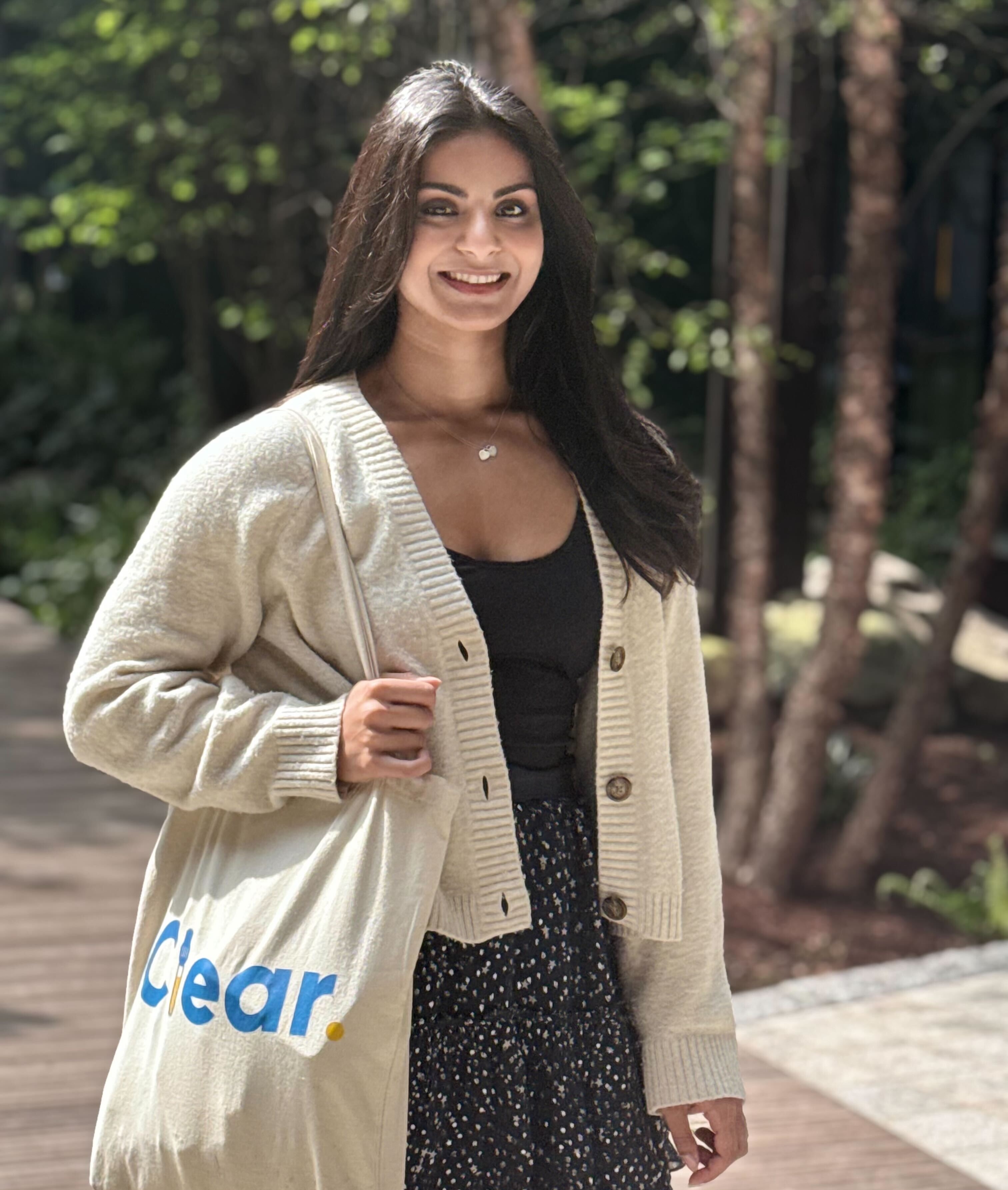
CEO
I am a 26-year-old founder, Forbes 30 Under 30 technology honouree, Sunday Times Young Power List 2024 honouree, and physics grad from Imperial College London. My work has been featured by the likes of Sifted, Courier Magazine and EU-Startups, and I have been a speaker at numerous conferences and universities, including Oxford, Cambridge, Bocconi and IIT.
My company, Clear, is fuelling innovation for brands and empowering consumers in the skincare industry using data, technology and community. I was accepted to Y Combinator (W21) with the idea and subsequently raised ~$1M in venture funding for the company. We have been recognised for our beauty-tech innovation by L’Oréal and Beiersdorf, and were recognised by Apple under "Best New Apps" and "App of the Day" on the App Store.