
From Setbacks to Significance: How Aghogho Built Community, Confidence, and a Calling






In this episode of Low to Grow, future physician and community leader of over 400,000, Aghogho Okpara shares what it really takes to keep going when life keeps saying no. After six attempts to get into medical school, Aghogho opens up about the emotional weight of rejection, the quiet strength she drew from her faith, and the unwavering support from her father that helped her stay the course. Her story is a powerful reminder that resilience isn’t loud, it’s the decision to try again, and again.
Aghogho Okpara opens up to Annie about how loss reshaped her purpose, why asking for help became her greatest growth edge, and how building her nonprofit, Achieve with Aghogho, and an online community of over 400,000 people taught her that success is never a solo journey. The conversation explores leadership, education as a path to equity, and the vital connection between physical movement and mental health.
What you’ll walk away with:
- A resilience framework for moving forward after rejection instead of shrinking back
- A healthier way to process failure without tying it to your self-worth
- Practical insight on leaning into faith, support systems, and community during hard seasons
- A blueprint for building meaningful, mission-driven communities that actually show up for each other
- A leadership mindset rooted in teamwork rather than hyper-independence
- A fresh perspective on education as a tool for empowerment and social equity
Follow Low to Grow
Instagram: @lowtogrowpodcast
Connect with Aghogho on his profile page on our website!
Please Note: Low to Grow is for educational purposes only and should not be considered a substitute for professional advice. For free mental health resources, visit https://www.mind.org.uk.
Feeling motivated? Take action today by subscribing to LIFT with Low to Grow, a weekly email newsletter with my personal take on all things Mental Health X Entrepreneurship!
Aghogho Okpara (00:00)
like people of...
mental health battles. It's really well known how high suicide rates are within this profession because profession, because people don't rely on other people for help and they really go through a lot of and by themselves.
Annie Wenmiao Yu (00:16)
Today, I am joined by someone whose voice and actions are of many young people across the world.
Aghogho is a BBC featured change-maker,
one of the Irish Times' face of the future.
and also a nominee for TikTok's Voices for Change.
Aghogho is a current medical student.
at University College Dublin
Aghogho Okpara (00:37)
I went into that sixth exam with the mindset of, I don't care actually if I fail this time, I'm going to keep trying. If it takes me 10 more attempts to get into medicine, I will sit this exam 10 more times.
Annie Wenmiao Yu (00:51)
She was accepted on her sixth try into medical school.
And her story of and resilience inspires many young people today.
Aghogho Okpara (01:00)
I'm a huge believer in educational I think it's unfortunate that certain groups in society really don't have access to things that other groups are almost born with.
Annie Wenmiao Yu (01:11)
and also the founder of Achieve with Aghogho
whose community of over 400,000 her for one united reason.
Aghogho inspires each of them to believe in themselves.
Aghogho Okpara (01:23)
Honestly, Annie, I had to learn how to rely on people for support. I think that was one of the greatest lessons that my dad's death taught me.
being somebody who was very hyper independent and has been that way for most of my life, life, you sometimes fool yourself into thinking you can do everything you can't.
I'll share something personal that I haven't actually shared online before ever. the week before my dad passed away, I had a
Annie Wenmiao Yu (02:42)
Hi, Aghogho! Welcome to the Low To Grow podcast. It's a pleasure to have you. Let me start by asking you, who do you want to be listening to our conversation today?
Aghogho Okpara (02:52)
Well, thank you so much for having me. I think that the people who would benefit the most from listening would be people who have experienced failure or rejection in the past and they feel like they want to create new things for themselves. They want to be able to believe in themselves again. I think people who are looking to grow their sense of confidence within themselves, as well as people who have been through situations in the past that they feel like
might hold them back from success in the future. So for example, the background they've come from or certain life experiences, I think that if people are looking for hope, this is the right episode to listen to.
Annie Wenmiao Yu (03:32)
for and I cannot wait to delve into your story and also the learnings that you have had amongst that with you. Aghogho, where would you say that your story starts?
Aghogho Okpara (03:42)
If I'm to go right back to it, have a bit of a, I suppose, multifaceted career right now. I'm currently in my last year of medical school, but I'm also the founder of a nonprofit and I'm a speaker as well. So I do a couple of different things alongside being a content creator, but going right back to the beginning of my story and my career path is me deciding to become a doctor when I was around 14 years old. it's
It's
kind of a bit of a funny story. I was walking down the hallway in school with my friend at the time and she mentions that she wants to become a pediatric oncologist one day and I'm looking at her and I'm like, what isthat? that? I had never heard of those words before at 14 and she explains it's a doctor that takes care of kids who have cancer. So I was really, really intrigued by it and that day I went home, home, went into my laptop.
searched on Google pediatric oncologists and I went down this pretty much rabbit hole of the different types of doctors that there are, what they do, how medicine pretty much changes the world. And I became really, really, really intrigued by it. And that's when I decided that I wanted to become a doctor. I was somebody who until now was really interested in like nutrition and diet and the effects that the current like Western diet would have on,
people's hearts in the future. And future. So that really drove me to study medicine. But my journey to medicine is very, very nonlinear, very unconventional. It took me six attempts in total before I got admitted to medical school. So the first time I sat like a medical admissions exam, I was about 16 years old at the time.
then the last time I sat one I was 21 years old the last time I sat a medical exam or 22. So it was a long journey and I think for most people who want to become doctors, it's a lot more straightforward. Most people will write an exam once or a maximum of twice and then they'll get in. But I think the thing that makes my story a little bit different is the fact that I didn't give up each and every time I experienced those failures. I would
have these high hopes that this is gonna be the time time, and then I would be knocked down again and it just kind of kept happening like that over and over and over again. I learned a lot through the process yeah, it's interesting looking back at it now because my journey into medicine is what pretty much set me up to create an online platform of over 400,000 followers now. It's what set me up to
Build My Nonprofit, which focuses on helping students believe in themselves. It's Achieve With Aghogho that's what the name of the nonprofit is. And it's also helped me to become a public speaker because now because now I have a story to share. it just kind of goes back to that statement that people tend to say of turning your pain into purpose. I feel like my life and my story is a huge example of that.
Annie Wenmiao Yu (06:51)
That's such a example of resilience and also grit. And I really want to delve into what it felt like for you to have tried six time over the course of five years to get into medical school and only succeeding after six times. Because, a lot of people with your background and also with the experiences that you were having at the time could have easily given up or chosen to go down a different path. That's also very successful, but not medicine. So what kept you
fixated on getting into medical school.
Aghogho Okpara (07:23)
Yeah, so this is an interesting question. I get asked this every time I do a talk, actually. People seem to be really fascinated by the fact that I didn't give up and I kept trying. I think number one is I've always been a very determined person. When I want something for myself, I make sure I get it. I almost would say that I'm stubborn to the extreme.
in that where most people would say, okay, this is probably a sign I should stop. I just see it as a challenge for me to essentially keep going. And I think when it came to medicine in particular, I knew that I had an interest in how health would evolve over time, but I was also very interested in science and in problem solving. And what made me keep pursuing it is the fact I actually at that time, and it's funny because we might speak about this later, but
I could only see medicine as the path for me. I could not imagine myself in any other field or in any other career or with any other job that would satisfy the sorts of desires that I had, especially when it came to things like interest in learning, my interest in continuous learning and science and helping people. I feel like I did a lot of exploration of different types of careers and I found that
medicine was the one that seemed to kind of hit that spot for me and so I went full force for it but I think a big part of me me also continuing is I had really good support my dad was a huge huge voice in my life and, and
I think for a lot of people, the reason why they give up on their dreams is because the people who are around them, whether it's friends or family or community, they tell them that maybe you should try something else. Maybe you should consider a different career. Maybe you should steer this way or that way. But I had father who was extremely like, he really, believed in me. And every time I experienced a failure, he would react like it was the most normal thing. And he would just say, do you know what? You can try again.
it's completely okay if it doesn't work out this time because you'll have another attempt in the future where you'll be able to apply yourself and perhaps you'll get in at that time. And time. And so I think having that voice that constantly said to me, you are capable, you have what it takes, you can do this... this. It really instilled a sense of self belief within myself that made me think, okay, even though things aren't going in the way that I want,
It doesn't mean it's going to be this way forever. And so I kept pushing for that for those reasons because I had those voices and I had that determination. And also my faith actually played a huge aspect in it as well. I'm a big believer in purpose and in how each human being, I believe, has a purpose here on earth. And it took me a long time before I, you know,
believed that medicine was part of my purpose here on earth and I spent a lot of time praying about it and so once I had that sense of peace that this is what I want and this is what I believe God wants for me I was like no matter what I'm going to go full-fledged for this.
⁓ And I know it's going to work out because saw it as something bigger than me. And thankfully, I mean, on the sixth attempt, I ended up getting it. gut feeling, if you'd call it that, I don't know. It ended up being, okay, yeah.
Annie Wenmiao Yu (10:48)
Wow, I love that. And I also love how poignant it is that we're recording this the eve after one of your big medical exams. So thank you for taking the time. think a lot of other students that I know probably would have chosen to take this evening off to go celebrate. But I really appreciate you taking the time to come and share your story on the Low to Grow podcast.
Aghogho, ⁓ I do want to delve into what that process of you finding out and identifying for yourself, what your purpose in life is, which is medicine. But before then, I do want to ask you to just share if you're willing to, how it felt each of the first five times that you took the test and you realized that you did not get the result that you want.
because I think a lot of times people talk about their final success, but I think it's also really important to talk about exactly what your mindset and also what your emotions were on each of those five different occasions as well.
Aghogho Okpara (11:41)
100%. I completely agree with you, Annie. think that across the board, people speak too much about success and they don't speak about the failures. And so what tends to happen is people that experience that failure or that rejection, they begin to look down on themselves or they begin to try and force themselves to get over something that realistically you should take time to process. ⁓ And so looking back on the five failures that I experienced,
I definitely was not, I didn't feel resilient at the time. I definitely didn't feel like somebody who had grit. To be very honest, those failures made me look within myself and almost questioned my worth at to be very honest, the first two failures I experienced were not that bad because I still had hope at that time. I was in secondary school when I sat the first three,
attempts I made to get into medical school in terms of those exams. And exams. And so when the first two didn't go well, I was like, okay, the third one is my last attempt to get into medical school straight after my like secondary school experience, slash high school experience. And I remember receiving the third rejection. That's when it really hit for me me because now it was like, okay.
I'm about to start university in three months from now and based on these grades, this results from this examination, I know for a fact I will not get medicine. And medicine. And so it's funny, I remember, like I can vividly remember being in the corner of my bedroom and crying my eyes out because I felt like everything that I had spent the past two years working towards had suddenly just gone down the drain because
To give you some even more background, I wanted to attend medical school in the UK. And so that's why I was sitting so many exams. I sat what they call the BMAT, I sat the UK CAT, and then I also sat the Irish Medical Exams. But the thing is, I didn't go to a private school and I wasn't connected with people who could help me prepare my applications for the UK. Also, the school I went to, they weren't used to people applying to the UK.
from 15 really, I was navigating everything myself. I remember I would be the one to go to my guidance counselor and say, this is what they're asking of me, this is what they recommend. And it was almost like two people were working together to try and figure things out. But because of that, I had to really teach myself a lot of things. So for example, to sit the BMAT exam,
Annie Wenmiao Yu (13:56)
Wow.
Aghogho Okpara (14:14)
which would be required for the likes of like Oxbridge as well as some other UK medical schools, I had to learn physics because one of the sections on that exam examined you on biology, chemistry, physics, and I think maths. And at the time in school, I was only taking biology and chemistry. And so I like at the age of 16 took it upon myself to learn physics all by myself. myself. I bought this textbook.
And after a long day at school, I would go home and treat physics like it was another subject that I was taking in school. And that level of effort over two years, it took a lot out of me. In a similar sense, I was preparing for my final exam. So it would be like an A level equivalent called the Leaving Cert here in Ireland. And because I knew that I needed like impeccable grades to get into the likes of Cambridge,
or UCL or the likes of that for medicine, I had to work 10 times harder than anybody around me. And most people here would only start doing that work in their final year of like high school, secondary school, but I started doing it in my penultimate year. So I spent two years doing what people usually do in one in terms of the amount of focus I was giving it. And so I provide all that context just to say that when I had that meltdown,
Annie Wenmiao Yu (15:18)
Hmm.
Aghogho Okpara (15:32)
in my room after the third rejection, it was an accumulation of everything hitting me that all the work that you've just spent the past two years of your life committing to, I had deleted social media for the entire year, I had not seen my friends in a long time, I sacrificed a lot and it seemed to all be for nothing. And so I was distraught to be very honest. I couldn't really see any hope in my future. I know it sounds really dramatic now that I like.
of look back on it but it's how I felt at the time. I was really disappointed you know in myself and I didn't really know what was the next step for me and it took a lot of courage for me to decide to sit my fourth exam which I did maybe like seven months later so I did it in my first year of my undergraduate degree which was Biomedical Health and Life Sciences and I remember when I sat that fourth exam I basically performed worse than the third exam that I did in that.
Annie Wenmiao Yu (16:28)
you
Aghogho Okpara (16:29)
And to tell you the truth, Annie, that's when I gave up. I said, no more, medicine is not for me. A lot of people don't realize this when they hear my story. They think that I just pushed through the whole time. No, I completely said that I'm walking away from this field. I told myself that I would either do a PhD in physiology or else I would go and study dentistry in Canada or something like that. But that medicine was clearly not for me.
and I wasn't going to allow myself to keep going through the process of trying and failing. Because failing. Because in truth, after a while, mean, after four times of trying to do something and it doesn't work, you then start to feel like you are the failure. I no longer saw failure as an experience. I equated it with my identity. And I saw myself as somebody who was of low worth because...
no matter how much I had tried to apply myself, things don't seem to work out in the way that I want to. And so I spent like the next maybe two years or so really trying to avoid medicine. I dismissed the, even the prompt to grow myself in terms of like, okay, you've experienced this thing, how about we change mindset? I avoided thinking about it full stop. ⁓ It wasn't until coming up to my fifth attempt where I realized
I still feel like there's something in me that's calling out to do medicine. So maybe I do need to face that fear. honestly, it was in preparing for my fifth admission exam that I realized how much the fear of failure was paralyzing me. I actually barely studied for that exam because I was so afraid of doing bad in it and that I almost self sabotaged myself so that I wouldn't end up doing bad or doing good either way.
And it's funny because in that fifth exam, I was so close. I think I missed it by two points in that exam. but that, even that experience of getting so close to the mark for some reason, rather than me feeling like a failure, made me think, okay, if you can perform this well without like studying like crazy, then what would happen if you were to just try and give it a risk and see what happens. And thankfully I did. And that's what.
culminated in my sixth entry exam which was, thank God, successful. So it's been a bit of a roller coaster journey in terms of emotions, feelings, but yeah, that's pretty much it.
Annie Wenmiao Yu (18:50)
Wow, what a roller coaster indeed. And I actually did not realize, how you staggered the exams that you took, first three they were taken before you started your first university degree, all with the hopes getting in somewhere to do medicine as your first university degree. And then you actually some time off and then retried again for fourth and fifth time whilst you were at university doing your first degree.
there was actually a point where you decided to give up on even thinking about doing medicine and actually turning away from the idea of you studying medicine at all in this lifetime. What then made you take the action to do that fifth and then that last sixth exam?
Aghogho Okpara (19:30)
Yeah, that's a great question. I think that when I look back on it, what made me do the fifth exam, again, going back to the fact that I'm a person of faith, I started really feeling a pulling that you need to try again, because medicine is still for you. And it was something I really tried to ignore. But again, I'm a big believer that when you are quote unquote destined for something, you can't run away from it.
even if you try, it's that whole thing of if it's meant to be, it will be. People tend to speak about that in a romantic setting, but I actually experienced that in a career light, that if it's meant to be, like no matter what, it will be. And that's what I experienced when it came to the medicine thing. Because again, I spent a lot of time, I was preparing to graduate from university, coming up to the fifth exam, because I sat that one in my final year of my undergraduate degree.
And towards that time, I was just thinking, okay, what am I going to do once I graduate? Am I going to work in a scientific lab? Am lab? Am I going to do a PhD? Will I pursue dentistry? And so again, I was just spending a lot of time praying about it, like to God, to Jesus and being like, okay, what's next for me? And I felt like that was really illuminated to me as the path that I was supposed to take. Even though within myself, I felt like
I don't want to put myself through this again. I felt like something bigger than me was calling me to it. But it. But funnily enough, you say for the sixth exam, what pushed me to study for that? So I've mentioned my dad previously. He was a huge, huge influence in my life in pushing me to believe in myself. And unfortunately, he passed away shortly after my fifth exam.
⁓ And that was very, very, very difficult for me. So I think I received the results for that exam in August time. ⁓ And my dad had passed away. He later passed in November of that same year. That was 2021. And when that happened, I was obviously heartbroken and it was a really, really, really difficult time in my life. But it's funny because...
Instead of his death destabilizing me and making me feel like, well, it definitely did destabilize me in ways, but instead of it making me feel like I need to steer away from the things that I want and just take time, I felt this new surge of I need to try, if not for my sake, then for the sake of my dad. And it's funny, because a lot of people will hear this and they might think, maybe my dad was like, you know.
quote unquote, forcing me towards medicine. He was never the one who made me want to be a doctor. There's no doctors in my family. I decided all by myself that I wanted to study medicine. He was just supportive throughout. And I just remembered how much he believed that I was eventually gonna get in. Kind of makes me emotional thinking about it now. I remember when I got my fifth examination results and I found out that I
I was not going to get in because I missed it by two points. I had already told my dad that I was probably gonna get in in because the points that I had gotten that year, if I had gotten those same points one year prior, I would have actually gotten admission. So the points pretty much like elevated and threshold increased. And so before the offers went out, I told him,
dad, I think I'm going to get into medicine this year. I had started preparing to move to the town for that university, literally started learning how to drive because it's a type of town where you kind of need to drive, there's not reliable public transport. I started buying duvet, bed dressings. I really prepared myself for this new stage of my life.
I literally had started planning a going away party and I sent invites out to my friends saying, guys, I'm about to move because I've gotten into this university to study medicine. And then of course the offer day came. I didn't receive an offer and I was because I didn't expect that to happen. But the bigger thing was I had this fear of what's going to happen now if I'm to tell my dad that
I actually didn't get in because I know that he's already gotten really excited about this and really happy about it and has told his friends, et cetera. And so I actually delayed telling him for maybe like a month. I was really afraid of what his reaction might be, not because he would be the type of person to give a scary reaction, but just because I fear disappointing him after getting his hopes up. And I'll never forget the phone call that I had with my dad that day.
⁓ I told him and my voice was shaking and his response was out of this world. It was literally just, that's okay, you're gonna get it the next time. He didn't seem fazed by it in the slightest. There was no hint of disappointment in his tone. He was just so confident in me and in my ability and he just saw it as another obstacle in the road. And when he died, I really reflected on that.
⁓ And I told myself that if he believed so much in me, then I owe it to myself to believe in myself as well. And I owe it to him to try again. And so I did. And it's so funny because the mindset I went into that sixth exam with was the mindset of, I don't care actually if I fail this time, I'm going to keep trying. If it takes me 10 more attempts to get into medicine, I will sit this exam 10 more times.
⁓ I finally had let go of my fear of failure when I sat that sixth exam and it's so funny because that ended up being the exam that worked out. it's almost like in a funny way, it's almost like life was trying to teach me something through that and once the lesson was learned, it was like, okay, now you can move forward.
Annie Wenmiao Yu (25:31)
Wow, I'm getting goosebumps hearing you tell that story, Aghogho, and your father, what a loving, encouraging man. I mean, over the course of our conversation so far, it really jumped out to me that your faith and also the loving support, the kind support of your father were two really instrumental pillars that really held you up along that journey. Thank you for sharing that. also thank you for talking about losing your father. I know that's a really difficult topic.
When you lost your father and also when there was still the uncertainty about whether or not you're going to be able to go to medical school, how did you keep yourself active and productive and working towards a goal? Because I think those are two huge life events that can happen in a person's life.
And I think some people can very easily and also very understandably just take some time off before really pushing themselves again. What gave you that grit to just keep going straight away?
Aghogho Okpara (26:31)
Yeah, wow, great question. Honestly, I think that a part of it was, I mean, it wasn't immediate. I sat the exam in March and my dad had passed in November. So maybe there was like a four or five month gap in between. But I think a big part of it was leaning on people for support. I was really thankful that when my dad passed, my friends were of a huge support to me. They really showed up for me and
Honestly, Annie, I had to learn how to rely on people for support. I think that was one of the greatest lessons that my dad's death taught me. I used to be a very independent person, almost hyper-independent.
If I was going through something low mentally, I wouldn't share it with anybody. I would stick to myself and I would try my best to find my way out of whatever tunnel I was in alone and...
I remember for the first time in my life when my dad passed, I was like, I don't think I have the capacity to do this alone. I also feared what would happen to my mental health if I tried to do it alone. Because in the past I dealt with, I dealt with mental health struggles. ⁓ I used to deal with depression when I was younger. And so I was really afraid that it would pretty much swallow me if I was to.
try to face it by myself, especially after such a huge life event. And event. And so I remember at that time, I started proactively reaching out to my friends and I would ask them, would you be happy to come over and spend a day with me? I would call people when I felt like I needed to talk about things and talk about what I was going through. I would intentionally try to leave the house at times in order to change my environment.
I was really, really intentional about ensuring that the support systems in my life were actually able to support me and they weren't just there because I think sometimes what we can do, especially as young people, is we see these support systems as just infrastructure rather than things that we can actually use and things that we should use.
Really, I'm grateful looking back now that I made those decisions to actually ask for help and ask people if they wouldn't mind having a conversation with me or going for coffee or this or that because going forward now, it's really taught me a lot. I think like people of...
mental health battles. It's really well known how high suicide rates are within this profession because profession, because people don't rely on other people for help and they really go through a lot of things alone and by themselves.
And so I think that the reason why I was able to get back on my feet so quickly is because I had people holding up my arms. Do you know what I mean? It wasn't like I was standing up by myself, but it's like people around me were like, okay, I'll take her elbow. I'll take her other elbow. Let's see if we can get her standing. And so yeah, until today, I'm so grateful to all of my friends, all of my family, my church, the community around me who really held me up at a time where
realistically, I should not have been able to have been able to thrive in those periods of time. So yeah, I'm really, really grateful.
Annie Wenmiao Yu (29:48)
Shout out to all the people who are there to hold you up and who gave up their time to give their energy to you in such a challenging time. I really love how you shared about, that mindset shift that you had internally of being someone who used to be very independent and never asking for help to someone who actually then actively seeked time, attention, support from other people when you knew that you needed it. Can I ask what triggered that in you?
How did that mindset shift happen for you? Was it something that you read about or did someone in your circle recommended it for you?
Aghogho Okpara (30:19)
I had a great friend who, when my dad passed away, she said something very interesting in one of her messages to me. She was like, let me know how I can help you. Like, let me know in what capacity I can help you. And I think most of the time where people reach out, they tend to say things like, if you need anything, let me know.
or I'm here for you. It's almost like these statements that are well-meaning, but they can come across a bit empty at times because a person won't really know what to do with those statements. But she specifically gave examples. I think she was like, if you want me to get groceries for you, if you need somebody to talk to you, just tell me specifically how I can help you. And that reframed my mind. I don't know what it was about hearing her say that.
but it made me realize that you can be specific in your requests to people. Your friends are in your life for a reason and so you can ask them, like for example, would you mind popping into Tesco for me and getting me like ingredients for dinner this evening or would you mind coming to cook for me? I don't really know what it was, but it just really made me think that, okay.
this is something that I actually can do. And yes, it requires me to be more vulnerable by asking people to do things that I quote unquote should be able to do for myself. But if somebody is offering to help me in a specific capacity, I would be, it would be silly of me not to take that opportunity. But also I did a lot of like reading around that time and
I read some books about grief, so there's a book that C.S. Lewis writes about grief and think he lost his wife when he wrote that book. I can't remember exactly what the book is called though. The word little is somewhere in the title anyways. But I remember within that book he describes his experience of grief and he describes how...
angry when people ask you how you are and you are angry when people don't ask you. And I just felt really understood by the things that he was saying and describing because especially being a young person losing a parent, most of my friends have never lost ⁓ like a parent or else they haven't experienced loss because I mean, when you're in your twenties, it's not a common thing that people would experience, at least in this side of the world.
Annie Wenmiao Yu (32:26)
you
Aghogho Okpara (32:49)
And so I felt very alone and I turned to things like books, I turned to YouTube videos, I turned to things online, like, you know, the five stages of grief. I was looking for as many places as possible, which is why I try my best now to be open to speaking about it when people are also going through the same, because I know how it felt like in looking for that sense of, I the only one who's feeling the way I am right now?
and not being able to find those sources. So I'm sure that part of the reading that I did encouraged me to lean on people around me as well, because I think that it would have been a much more difficult journey if I hadn't sought that advice or that counsel from, albeit strangers, but people who were able to help. help
Annie Wenmiao Yu (33:37)
I love how you were able to seek out those pieces of yourself. And I guess part of the healing journey is also the act of looking for things, resources that can help you get out of a certain mindset. And also, as you mentioned how you're now openly sharing that in order to help other people.
I want to ask you a bit more about your nonprofit Achieve with have over 400,000 people in your community. What gives you the motivation to run that alongside your very demanding schedule as a full-time medical student?
Aghogho Okpara (34:14)
I think I've always been somebody who's driven by social justice, by equality, ⁓ and by seeing everybody on the same level playing field. When I was like 16 years old, I remember when the Syrian refugee crisis was happening, I approached teachers in my school and I was like, I want us to do a refugee awareness day, because these people
voices need to be heard their stories need to be put to the forefront. And I have always had that within me, that sense of wanting to amplify voices that are otherwise not really listened to in society.
Of course, medicine is a huge way of being able to do that. But for some reason, saw it as I could see that wherever whatever field I'd be able to quote unquote activate that side of myself in, it would be outside of medicine, or at least it would be alongside medicine, because I'm also interested in health equity, extremely interested in it. But I knew that it might be in another area. So
It's funny when I started posting online and growing my audience, one of the things I started noticing was that people would DM me and they would say, I love your story. I'm really, really inspired to work harder now or to not give up on my dream, but I feel like I don't have what it takes. And I kept hearing that narrative over and over and over over, of people who clearly wanted more for themselves.
but they didn't think they were intelligent enough, they didn't think they were smart enough, they enough, they felt hindered or held back by the circumstances in life that they were in. And it really started to bother me because I started to think about the fact that these are people who have such bright potential such great futures ahead of them. And if they choose to believe these narratives, they're never gonna apply themselves and therefore they're never going to achieve the things they want. It almost becomes this
self-fulfilling prophecy. when I decided that I wanted to be proactive about doing something about it and forming some sort of structure where we're able to address that. And so that's kind of where Achieve With Aghogho was born, where I decided that I wanted to give people the tools in terms of education. Because I think people that come from backgrounds that are not as privileged, they don't know a lot of the things that are needed to thrive
in the workplace or to thrive in education because these things are just not automatically passed down. For example, if you have parents who are immigrants, when they came to the country, they probably weren't thinking about how do we thrive in the workplace and become C-suite level. No, they were thinking of survival. They were thinking, how do we provide food on the table for our children? so...
A lot of people who come from, whether it's backgrounds like immigrant backgrounds or else maybe they come from a sector of society that is just underserved in one way or another. They don't know a lot of things that people who do come from more privileged backgrounds know. And I wanted to share the information that I myself have learned over time. I don't come from a super privileged background, but I think that through the experiences that I've had, for example, my experience with failure, because I learned so much through that experience, I've just
picked up different lessons along the way and I wanted to share it with people. But I also wanted to connect young people with others who have experienced success, but come from relatable backgrounds. And so what we do as an organization is our main goal is to help students believe in themselves and excel in education, students as well as young professionals. And what we do is we hold regular, like at least on a monthly basis,
sessions where we are teaching people things that they might need to know, for example skills like how to communicate in an effective manner, how to study in a way that will ensure that you retain the information that you're reading, how to believe in yourself when something goes wrong. It's pretty much informal education that we do. We get sometimes guest speakers to come in and share their experiences or share their expertise or their knowledge.
and we try to inspire people to know that, okay, if that person could do it and I can relate to an element of that person, then surely that means that I can do it too. But the interesting thing that's come from it is also we're building a strong community of young people who want more for themselves and are seeking connection with other young people who also want the same for themselves.
And that's something that I actually only realized by starting the organization, running our events and asking for feedback. And people were like, one of my favorite things about attending the event, whether it was an online one or an in-person one, was the community that I have just been connected to. People have made friends with each other. People have formed a network that they might not otherwise have had access to.
We had an event actually just on Monday, so like three or four days ago at the German embassy here in Ireland. So we did a collaboration with them. And one of the members of our organization came up to me and she said, I attended the goal setting dinner that you guys held in December. And one of the girls that I met at the dinner, she decided to help me out because I told her that I was going to start a book club. And so she offered to design a logo for me for free.
to help me develop a business plan. I know, for free. And I was so touched by that because these are two strangers who would not be connected and all of a sudden they're helping each other achieve their goals and accomplish the things that they really want for themselves. And so we're so, we're really trying to build that sense of success isn't something that you do alone, it's what you do with people around you and it's something that you do by learning from people who've already gone ahead of you... you.
Annie Wenmiao Yu (39:44)
Aww.
Aghogho Okpara (40:12)
And so what we're doing now is we are pretty much trying to increase our membership. We're trying to encourage young people who people who want more for themselves and want to be connected to a community to join us and to plug into the things we're doing because at the end of the day, education is its power. Knowledge is freedom. So the more you know, the more you're able to thrive. And my passion is truly to...
equal this playing field. I'm a huge believer in educational equity. I think it's unfortunate that certain groups in society really don't have access to things that other groups are almost born with.
And I think that education is one area where it's just not acceptable for that inequity to exist. exist. I think that for certainty, when it comes to the ability to learn, because it increases your earning potential.
It increases the respect that people in society have for you. It's pretty much the key to everything. And so I just want to see a world where people know as much as they need to know ⁓ and are able to have greater prospects for their future as a result of that.
Annie Wenmiao Yu (41:21)
absolutely agree with that because education just really opens up the surface area of potential that a person could have and it sounds like you have a very active community as well and that you have lovingly built over the past few years. Aghogho, what have you learnt about yourself over the course of creating Achieve with Aghogho?
Aghogho Okpara (41:43)
Ooh, what have I learnt about myself since creating this? This is a great question.
I'm gonna think about this now.
interestingly in the course of creating Achieve with Aghogho I have learned about my weaknesses. I think being somebody who was very hyper independent and has been that way for most of my life, you life, you sometimes fool yourself into thinking you can do everything and you can't.
because I've been so used to being the person who is able to, like I think this is a problem sometimes if you're a
quote unquote, all rounder type of person, you have a lot of different skills, you don't realize that just because you can do a lot doesn't mean you're the best person to do those respective-things. things. exactly. And so I think I've really learned that, yeah, I can't do everything well. And it is...
Annie Wenmiao Yu (42:30)
can relate to that. For sure.
Aghogho Okpara (42:42)
In fact, important to look for people to join you as a team who are better than you at the things that you want to do, because then it helps things grow in a much more efficient more efficient way and in a much more fluid way. for example, I would be lying if I said I was good at the admin sort of like side of things. I'm, I was slow at responding to emails, for example. I'm not really good at Excel. I hate Excel. I can't use it. ⁓
Annie Wenmiao Yu (43:10)
Hahaha.
Aghogho Okpara (43:11)
And if I was the one doing all of those things, then it just wouldn't end up being good for the organization and all of these things. I think the slower you are to admit to your shortcomings, the more it affects your business. And the more it negatively affects your business is what I really mean. The pride that we can sometimes have as people who are leading something, it can be to our own downfall.
I just think that when you're building something that is beyond yourself and is something that should be benefiting people and benefiting society at large, it is extremely important to be humble in And it's so important to just be able to say, somebody else might be better fit for this and I'm going to let them because in fact, I can learn from somebody who's doing better than me. And then perhaps, you know, maybe I would be able to improve my skills
in this way or another. So it's really taught me the importance of teamwork and in relinquishing that sense of control because yeah, control, it sometimes can feel like something that's, it's great. Like, yeah, I know everything that's going on, but it can catch up to you very quickly. And I think if you want to build anything of scale, you need to learn how to let go of it.
Annie Wenmiao Yu (44:27)
think it really is such a testament to self growth, isn't it? To realize for yourself and also admit to yourself what you should be doing and what you should be focusing on rather than just kind of almost blindly doing everything just because you can. think that's a very strategic move in terms of the mindset shift. And I think generally that's a sign of someone really, really kind of growing and settling into adulthood.
Aghogho Okpara (44:31)
us.
Annie Wenmiao Yu (44:52)
So I love that you were able to share that with me. Aghogho, I also did want to ask you because you've referred to your faith quite a few times now. And I actually read a blog that you wrote a few years ago about losing your dad and how you actually struggled reconciling with your faith in the period afterwards. Would you be able to share a bit more about how you're still able to stay true and believe in your faith, even after losing someone so dear and also so close to you?
Aghogho Okpara (45:17)
Yes, wow, beautiful question. And I guess to give people context who didn't read that blog post of mine, after losing my dad, I went through a pretty rocky journey on my faith. I had a lot of questions to God and I didn't really understand why things had to happen in the way that they did. I was somebody that really believed that, you know,
God was going to heal him and that he would be fine because I knew he was sick. But I just believed that he would end up being okay because essentially my dad had a condition that when he was first diagnosed from it or with that condition, I searched the expected life expectancy and it was somewhere between three to five years. That's what they said. So once the five year mark had passed,
I was convinced that he was going to just jump into the other bracket because certain websites pretty much said on average it's three to five years, but some people can live an extra 15 to 20 years. And so because he had missed that five year, he had jumped past the five year mark. was like, great. That means he's in the 15 to 20 year bracket. And that's maybe that's on me for not understanding like how averages and stuff work, but I had hope.
That was essentially what made me believe that I had a lot of hope that he was going to end up being okay. when things started going downwards, it really took me aback because I've always known my dad to be a resilient person. When I was growing up, I had never seen him sick as in I had not so much as seen him have a cold. So suddenly seeing him be diagnosed with a condition that is
like pretty much terminal, it's not going to improve. It was extremely hard for me to reckon with and so I had no choice really but to turn to my faith in Jesus and to say okay I can't do anything about this situation and I was really young at the time as well, I was like 15 when he was diagnosed, diagnosed, so I was really like okay God you're gonna have to do something here because I clearly can't do anything myself... myself.
And so that's why when he ended up passing, it was hard for me. And I'll share something personal that I haven't actually shared online before ever. But basically the week before my dad passed away, I had a dream.
And in that dream, was like such a bizarre dream for me because I've never had any dream like that before in my life. Everything was pretty much white in the dream.
My dad had come back from Nigeria to Ireland because he was in Nigeria at the time when he died. He had come back from Nigeria to Ireland in the dream and he pretty much walks up to me and it was me, my mum and my sister there and he sits beside this wall and as he's sitting beside this wall, nobody says anything in the dream. It's just this, it's just a strange sense of I don't even know but he sits beside this wall and we sit down beside him.
And as we're sitting there, I start seeing thank yous coming out of my dad, as in like written thank yous. It's like, thank you to this person for this role in my life that you played. Thank you to this person for doing this. It's literally like a million thank yous just started leaving him. And I was reading all of them as they were kind of going out. And I remember...
Annie Wenmiao Yu (48:26)
Hmm.
Aghogho Okpara (48:41)
waking up that morning because I am somebody that believes that, I know everybody has different beliefs, but I am somebody that believes that sometimes God speaks to us in dreams. And so I remember I had a strong feeling that dream didn't come for myself. There was just this strange aura around it that didn't seem like something just kind of coincidental. And I felt it so strongly that I was really kind of afraid as to what the dream was trying to tell me.
The weirder thing was that I woke up with this strong sense of peace after dreaming that. And I was actually very angry at the peace that I felt because I didn't understand why I should feel peace after a dream like that. I remember kind of being like to God, I don't understand why you would give me a dream like that and follow it by peace. Because to me, that almost seemed like confirmation that the dream was coming from God because that sense of peace was coming from it. And so I remember frantically calling my dad.
the next day and he didn't pick up and I was panicking because I thought the dream was trying to tell me he's died. Around the time my dad was passing, I started getting this weird inkling that something terrible would happen. So I used to check his WhatsApp and I would be reassured when I'd see, last online, you know.
couple hours ago. And so even though he didn't pick up, I saw that he was last online a while ago. I was like, okay, so he's fine. He's still alive. two days later, he calls me back and we have a conversation. And that actually ended up being our last conversation a couple of days after. So a week after I had that dream, he passed away.
Annie Wenmiao Yu (50:11)
Hmm.
Aghogho Okpara (50:17)
And I remember even when I had that dreams, one of the things that I wrote down, because sometimes I write down like interesting dreams like that that I would have, I wrote down, that felt like a goodbye. And I don't know why that happened to be the case. so, yeah, on the 19th of November, he passes and I was in shock and in disbelief. I was really, really obviously heartbroken that what I felt was coming.
Annie Wenmiao Yu (50:25)
Mm-hmm.
Aghogho Okpara (50:45)
had now actually happened. It's interesting because yeah, my relationship with God really took a downturn after that. I really struggled to trust in him. I didn't understand why he would let something like this happen, you know, because sometimes it's like, if you have the power to do this, why wouldn't you change it? Why wouldn't you turn the situation into something better? But it's really funny because in that time of
Annie Wenmiao Yu (51:04)
you
Aghogho Okpara (51:10)
feeling intense pain and anger and sorrow. After a while, I decided to pretty much open up my Bible and I started reading and one of the things that really stuck out to me was the fact that God knows what it's like to lose a loved one too. I mean, I'm a Christian and so I believe that Jesus Christ died and was resurrected and all of these things. But I thought about the fact that
Jesus Christ died. so that means God knows what loss feels like. even historically, it's known that Joseph, like his physical earthly dad, wasn't around for his whole life, meaning he passed before Jesus, went made me think, okay, Jesus understands loss too. And that changed my perspective because I was like,
Annie Wenmiao Yu (51:51)
Mm.
Aghogho Okpara (52:01)
I kind of was seeing God in this negative light of how can you let me go through this? And suddenly I thought, but he's gone through it too. And so he's not trying to punish me by allowing me to go through something like this. And that's when my mindset surrounding death really began to change. I started seeing it as something that is horrible and painful and people don't want to go through, but there is a sense of beauty in the finality of life.
Like not to become super philosophical or something, but I really have thought about this. fact that, you know, if we were going to live forever, we would live in a completely different way as to us living now. The sense, the fact that we have this quote unquote deadline, this final time here on earth, the fact that's creeping up on all of us, it informs the way we choose to live our lives every single day.
Annie Wenmiao Yu (52:44)
Mm.
Aghogho Okpara (52:57)
It's what helps us to be more present in situations. It's what helps us to show love to people that, you know, on our worst days we might not want to show love to. The knowledge, even if it's subconscious, of death being something that can affect us or our loved ones, it actually helps us to be the best sorts of human beings that we can be. And I didn't realize any of this until my dad had passed and...
That's when I kind of saw it as, okay, yes, I don't think death was something that God originally wanted for human beings, but I think he's turned it into something that can be a beautiful thing. thing. Although in the moment, it never feels that way, but in retrospect, you look back and it's funny. Would I love for my dad to be back? 1000%, but would I be the person I am today if he was? No.
I absolutely wouldn't. It shaped me into who I am and I'm so grateful that my faith was able to help me get to that point of, this is actually all right and there's so many people who have experienced this. And again, I think that just realizing that God does love us and he is, he does want the best for us and he's not out to get us.
that helped me to reconcile with my faith. And so slowly I started, you know, church groups or like connecting with other people who had a stronger faith to me at that time. And they really helped me to uplift my spirit. yeah, thankfully things are pretty smooth sailing now. It's always up and down, but I think that's natural with anything that means a lot to you.
Annie Wenmiao Yu (54:32)
No, for sure. think grief comes in waves. And thank you so much for sharing your own personal revelation. Whilst you were talking, I was actually thinking, gosh, it's so true. I think the fact as humans, we have a limited time on earth. And the fact that we know that we have that limited time is probably, as you said, what makes us more present, but also what makes us really appreciate and have this urge to make the most of the out of the time that we do have on earth. I was also thinking
Aghogho Okpara (54:56)
Yes.
Annie Wenmiao Yu (54:58)
a slight parallel would be when I speak with new mothers, for example, and they always say after they return to work, even though they theoretically have less time now because they have to look after a child after work, actually makes them more productive and also more effective at work because they know, okay, I have this block of time, but I'm at work. I'm going to be whizzing through all these things so when...
time comes, I can go home and just be fully present and spend time with my child. So I think again, it's that concept of knowing, as you were saying, knowing that we have this block of time. And then that's what triggers and motivates individuals to, you know, do the best that they can and try to find purpose and also act on that purpose that they have found in their life. So I absolutely love that. And please never apologize for being too philosophical. I feel like in this day and age, we need more of that because it's
Aghogho Okpara (55:24)
Wow.
Yes. Wow.
Annie Wenmiao Yu (55:48)
good reflections from each individual and every individual such as yourself and myself, we've had a complete different set of experiences growing up that's so unique to us. And yeah, so that's going to make us have our own views and reflections on the world. And that's part of the really beautiful tapestry. Aghogho, I don't want to end taken up enough of your time on this eve after your exam. But before I let you go, let me ask you.
Aghogho Okpara (56:12)
Thank
Annie Wenmiao Yu (56:14)
one final question which is what do you think is one thing that will allow more people to have better mental health?
Aghogho Okpara (56:21)
one thing that I think would benefit people in terms of their mental health is actually like number one, ⁓ okay, maybe I'll cheat and say two. Number one, leaning on people around you as I said earlier, not being afraid that you're a burden to the people who are in your life. They're in your life for a reason. And so we should always feel like we can rely on those who love us.
Annie Wenmiao Yu (56:31)
Yep. ⁓
Aghogho Okpara (56:46)
but also movement. I really believe in physical movement and in exercise and it doesn't have to be high intensity, it doesn't have to be Hyrox. You can go on a walk and these things have a positive effect on us. I think sometimes when things sound too simplistic, we're very quick to dismiss them. But I can say for a fact that incorporating
physical movement into my daily routine has transformed my mental health. And it's not even just about, saying I exercise for the sake of being able to say that, but the chemicals that the body releases as a result of doing those things really is beneficial for our mental health. So I would definitely say leaning on people and physically moving as often as possible.
Annie Wenmiao Yu (57:32)
Absolutely agree. I laughed earlier because you mentioned Hyrox, and I was just thinking back to the one time that I did do it. It was actually okay, but I much prefer going for a walk. Yeah, for sure. Well.
Aghogho Okpara (57:40)
Yeah, I haven't been brave enough to try hyrox
yet, one day.
Annie Wenmiao Yu (57:47)
one day for sure. Well, Aghogho, was such a pleasure to have you on the Low to Grow Podcast. Thank you for sharing your time.
Aghogho Okpara (57:53)
Thank you so much for having me. It's been a pleasure.
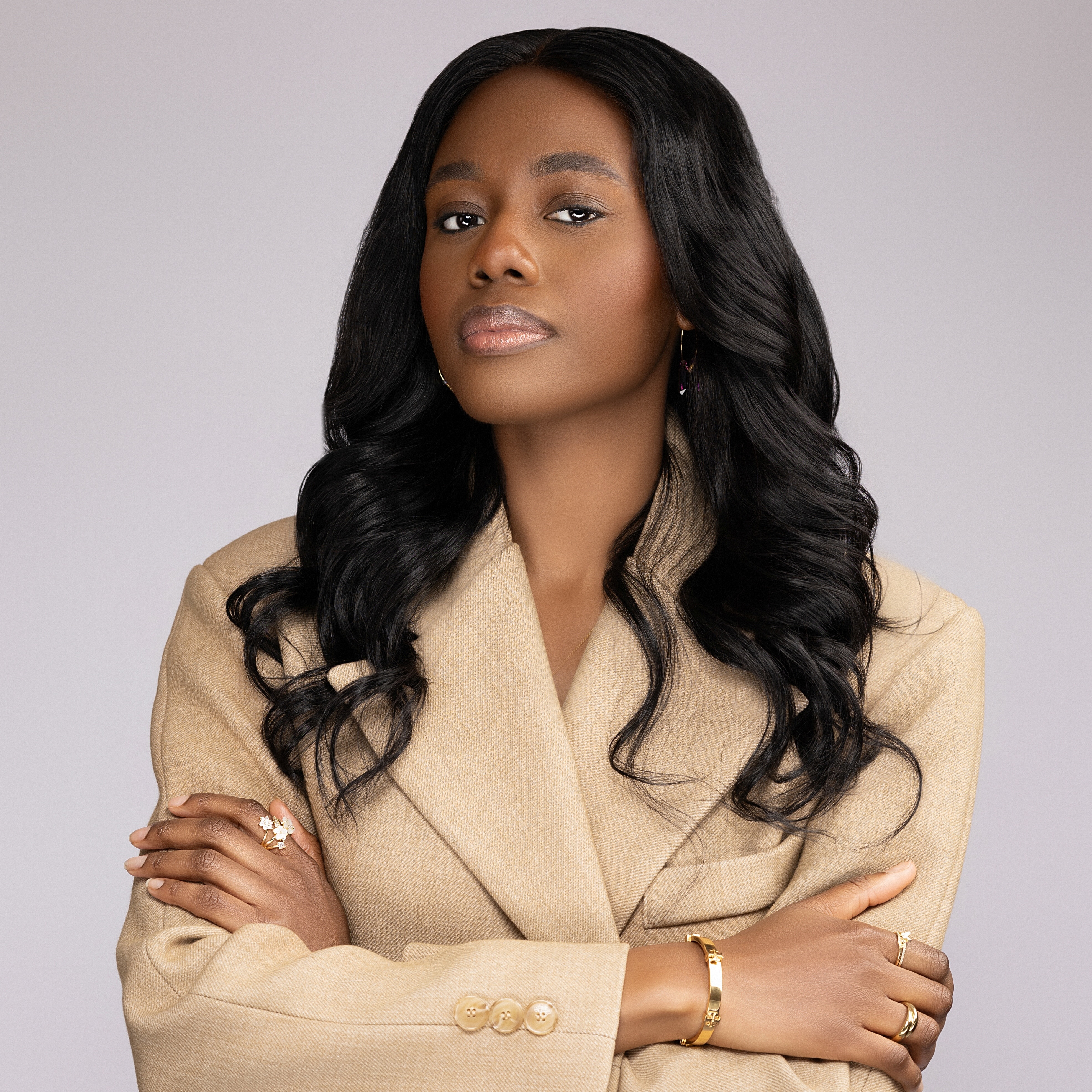
Founder & Creator
Aghogho Okpara is the founder of Achieve With Aghogho (AWA) and an award-winning medical student at University College Dublin. Her young voice is currently driving global change in education. As a digital creator with a following of over 400,000 people, she uses her influence to inspire young people to believe in themselves and thrive in education. She is best known for her inspiring story about rising from failure. Aghogho has been interviewed on BBC International News and was termed a "Face of the Future" by the Irish Times, a "Trailblazer" by RTÉ, and a "Voice for Change" nominee in the 2025 TikTok Awards. She is also an international keynote speaker and has delivered talks for global corporations such as Apple and Zoom. Through her organisation Achieve with Aghogho (AWA), she aims to improve educational outcomes for students from all backgrounds by helping them to develop self-belief.