
How a 19 YEAR OLD is Democratising quantum education: Elisa Torres Durney


Think you’re too young or too inexperienced to make a global impact?
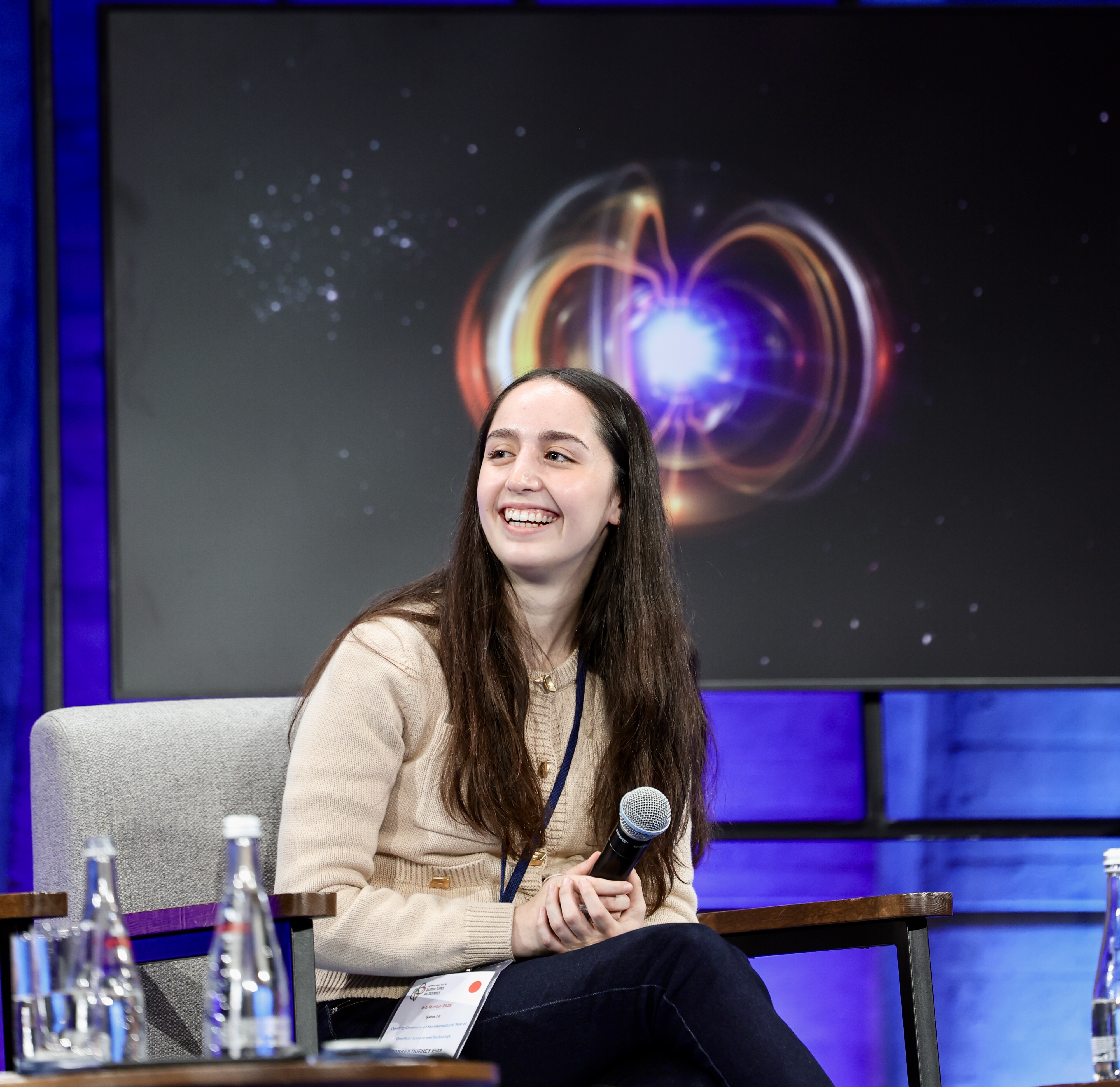
Meet Elisa Torres-Durney, a 19-year-old Chilean student, UNESCO Advisor, and the visionary behind Girls in Quantum, a UN recognised global initiative making STEM and quantum education more accessible to youth worldwide against financial, political or institutional barriers.
Annie sits down with Elisa to unpack how she turned early curiosity into a worldwide QUANTUM movement all before age 19. Elisa shares the personal and cultural challenges she’s faced, the importance of building community in male-dominated industries, and how she stays grounded while balancing university life with leading a social enterprise.
Celebrate the 2025 International Year of Quantum with us and tune in to learn:
How online education during the pandemic opened unexpected doors to QUANTUM COMPUTING
The mindset shifts needed to overcome imposter syndrome
Why you're never too young to create meaningful change
What every founder needs to keep going when rejection hits
Whether you're a student, early-career professional, or dreaming of starting your own venture, this episode will challenge your idea of what’s possible... at any age!
Follow me on:Instagram: @lowtogrowpodcastTikTok and YouTube: @lowtogrowhttps://www.lowtogrow.comSAY HI at lowtogrowpodcast@gmail.com :)
Chapters:
00:00 Introduction to a Young Trailblazer
02:34 Elisa's Early Inspirations and Journey
05:58 Overcoming Challenges in Quantum Education
08:49 Building a Global Community in Quantum
11:28 Finding Financing for US University Applications
13:33 Balancing Education and Social Impact
16:42 Cultural Shock and Personal Growth
19:09 Redefining Success Through Community Engagement
21:06 The Essence of Success
22:27 Navigating Career Choices
24:18 Role Models and Inspiration
25:12 Women in Science Facing Rejection Before Breakthrough
26:20 Embracing the Entrepreneurial Journey
26:24 Everything Was Once an Innovation
28:37 Every Founder Needs Perseverance
29:43 Learning from Rejections
32:09 Elisa's Biggest Challenge with Girls in Quantum
35:57 Mental Health and Reflection
Follow Elisa:Website: https://www.girlsinquantum.comLinkedIn: https://www.linkedin.com/in/elisa-torres-durneyInstagram: https://www.instagram.com/elisatdney/?hl=en-gb
Please Note: This podcast is for educational and informational purposes only and should not be considered a substitute for professional advice. If you're struggling, please reach out to a qualified mental health professional. For free resources, visit https://www.mind.org.uk/.
Feeling motivated? Take action today by subscribing to LIFT with Low to Grow, a weekly email newsletter with my personal take on all things Mental Health X Entrepreneurship!
Who do you think will benefit the most from listening to our conversation today?
Students who are watching or people who perhaps thought that there's just a defined path in order to get to a certain goal. I hope to share the story of how everything started and seeing that there's no linear path.
Welcome to Low to Grow, the podcast transforming life's toughest moments into opportunity for growth. I'm Annie, a Forbes under 30 technology founder, whose entrepreneurship journey ran parallel to a mental health awakening.
In every episode, I sit down with inspiring individuals and delve into how they managed to turn their personal or professional challenges into opportunities for growth.
If you're facing uncertainty in your life, feeling down, or simply need a kick of inspiration to keep moving forward, this is your space for the honest and uplifting conversations that you will want to hear.
Hit follow so you never miss an episode, and let's dive in. Today on the Low to Grow podcast, we are diving into a story that proves you're never too young or too early in your journey to make a global impact.
Joining me today is Elisa Torres-Durney, a trailblazing 19-year-old Chilean student and the powerhouse founder behind Girls in Quantum, an initiative that's redefining what accessible STEM education looks like.
Through her leadership, the movement has reached over 7,000 students across more than 27 countries with free resources, workshops and mentoring, all centered around the future-shaping field of quantum technologies.
Now, Elisa has already caught the world's attention, earning a spot on the Forbes under 30 list in Chile, also becoming one of the top 10 finalists with a global student prize.
Elisa has collaborated with major global organizations like UN Women, GR 100, Mission Million, and Aspiring Girls, and has taken the stage at events hosted by TEDx, The Economist, and even The Lancet.
But beyond all of that list of awards and accolades, Elisa is here today to talk about how she turned her passion into purpose, started a global movement as a teenager, and what it really takes to grow something meaningful when the odds and the
systems that you're working with are definitely not built for you. Get ready for a master class in bold beginnings, boarding community, and quantum leaps. Welcome to our show, Elisa.
Thank you so much for me. I love what you do and be able to also share with people. It's very nice.
So I appreciate the opportunity. And yeah, I really hope that people can enjoy hopefully. And yeah, we can share stories together.
It's a pleasure to have you, Elisa.
Before we start, who do you think will benefit the most from listening to our conversation today?
100%.
So I hope to share the story of how everything started and seeing that there's no linear path and therefore, perhaps students who are watching or people who perhaps thought that there's just a defined path in order to get to a certain goal may
benefit completely sharing that nothing is perhaps how we imagine it to be. And there's of course different ways to achieve a certain goal. And I hope that that will benefit them and all the people that have that certain goal in mind. Fantastic.
So Elisa, where does your story start?
I would just go back to my childhood, being surrounded by the ideas of creativity and curiosity and just being very keen to explore my interest and not having the fine thing that I loved.
I think for me, it's been all about exploration. I think that everyone that has come to a point where they love something, they've been through many things. It's not like it happens just right away.
I remember when I was just very little, I remember just learning more about biology, having my own. It was like a Barbie microscope, very, very tiny, very, very beautiful that I loved. And that really insatuated me to learn about nature, be curious.
And for me, I think that was the start of everything, of just getting to know things from nature, from my environment, question things, raise questions, and the fact of understanding that I could understand much more than I could ever understand.
So that was really nice. And that has led me to different paths, learning quantum computing, learning about science, and therefore just leading me to now, which is creating this global organization for students.
So I really hope to keep bringing education to students around the world.
Well, Elisa, I remember that we actually first met in person earlier this year at the United Nations for the kickoff of International Year of Quantum, which is 2025. Very, very exciting.
But I just wanted to ask, how old were you when you first started working on Girls in Quantum and also what prompted you to do that in your spare time?
I started, I think, it was mostly 15, 16 years old. I had the opportunity to learn about this program, Interaction to Quantum Computing, and I found myself in a position where it was so bizarre. This quantum computing, I never heard that word before.
I remember looking up online and it was just this weird thing, full of like wires and copper like structure, so big, yet so different. But that was really, I think that that didn't stop me.
I was really here to learn more and I'd say, well, what can I lose from this? And I applied to the course and thankfully, I got the opportunity to receive this scholarship, to learn for a year long about this program.
And it was the fact of just knowing that this is an emerging technology, all the potential and just also being able to understand that it impacts so different areas, from health to finance to logistics to so many things that we cannot even imagine,
perhaps. It was very compelling for me to just say, okay, I don't want to stop here. I want to keep learning. And I think what a great idea then to get to know more people from the community, to set up something together.
I thought that perhaps by building a community that could help you accountable would make a difference, especially seeing more girls in the field.
I remember messaging people from my team and in my group, for example, I told them, well, I would love to collaborate with you. Perhaps we can create something and thankfully, a couple of girls replied to me.
And that's how it started, like this idea, Girls in Quantum, of involving more students. And it's been really nice to afterwards, just keep learning together, but also provide education to others and yeah, see what quantum has to offer to everyone.
That's really exciting. You make it sound really easy. Were there any tough times in that journey?
100%.
I think that there's always great times of sharing with each other, learning about the community, but it was very hard for me not having, I would say, the best background in order to learn properly quantum repeating.
There's, of course, lots of concepts which are so complex, which require higher education. For me, it wasn't something that I had.
I remember struggling so much to learn concepts, and just it was very difficult for me because I saw students that were sometimes 11 years old that had like this kind of, it seemed like an innate skill, and that was really hard for me.
But I think that after that, I just realized the powerful, I think, skill of collaboration. Asking for help, for me, wasn't about giving up at this point.
I was just starting into something so new, so different, so complex, yet something that I really didn't want to abandon. Of course, language barriers as well. I remember it was so difficult to understand all the things that people were saying.
I've been thankful enough now to study at University of the United States where I can practice my English more. But back then, it was very complex and difficult to just understand difficult concepts being translated in English.
So it was completely unknown for me. And I think the last thing was also feeling inadequate or having this imposter syndrome of, oh, should I be here? I didn't see as many girls as possible.
So I felt that it was so different to just be involved in a group of people that perhaps didn't seem like me. So there's always these questions that you might think, is this the right place?
But once you understand your curiosity and that you really want to do something, then there's nothing that can stop you.
I think you touched upon so many key points that a lot of young people will just really resonate with.
Whether it's choosing a subject at university, or whether it's choosing that first career, and feeling like you're almost short-handed because you don't have a technical background in a very technology-focused company, I think it's very, very great
that you're able to share your initial overwhelm, it seems, with the complex terminologies in quantum technology and quantum computing, especially in English, which isn't the native language. And for me, English also isn't my mother tongue.
And I really, really applaud you for creating this organization that is now completely in English and actually helps to educate a lot of girls all around the world about what quantum technology is, are using that common language.
How did your work on Girls in Quantum in those early days in high school take you to the US for university and then take you onto a global stage?
It's been a lot of learning. Sometimes one may take the easiest path or just the most convenient, but there's always other opportunities out there that we have to look up.
I think for me, during the pandemic, I was just starting to discover so many courses online and this course came out, The Introduction to Quantum Computing. And if it wasn't because I'm curious, then this perhaps wouldn't have been born.
So there's always those chances that you can take and it's not the traditional way. There's always ways to challenge you.
I wouldn't encourage anyone to just look out there for even more possibilities that they think perhaps they don't exist when it comes to high school.
Although we didn't have much complex classes, it wasn't a limit to ask questions to my professors and see how they could support me or perhaps if they had any ideas for me as well. I was telling them all the time about Quantum.
I had the online classes back then and I was telling them, I'm learning this on the side after I disconnect from this call, I'm going to join this other course. I think they were just fascinated.
I was joining a lot of things online from debate, student council. I was just trying to explore anything that brought me the way of seeing the world in a way that it's not just linear.
You can just have multiple things that will correlate with each other. So when it comes to student council, managing a group of people understand different perspectives.
So some way, it all helped each other and it was kind of boosting each area itself. My professors started to get to know more about the work that I was doing, and I started sharing it with my community.
I remember doing events with my local municipality, and they were super interested to get to know more about what we were doing. We were impacting girls from my school, students in general from my city, which is very, very small.
So that's why perhaps they got to know more about what we were doing because it was so small.
When it comes to the process of application to the United States, it wasn't something on mine until someone recommended to me to look at those options online.
However, I knew in that balance that it was going to be difficult because of the finance aspect, or how to fund my studies there, undergraduate. I've known a couple of people that went there for graduate studies, but not undergraduate.
It was a very difficult work for me. I remember I'm an only child, so being able to just go away from my family wasn't something planned.
But then I just got super interested into this process, into the fact of perhaps having other education that could help me with technological areas, I could connect with professors.
I think that that really caught my attention and I got really involved into it. My teachers had no experience about it at all, so I had to do it on my own.
I applied for scholarships in Chile, and I got one from the Education USA and from the Embassy, and they were able to help me with the process and the fees. And that's how, thankfully, I got the chance to study abroad.
But it was very, very difficult, of course. I received some offers afterwards from Canadian universities and United States universities, and I'm very thankful for the opportunity to study there.
I think it's just such a privilege that I cannot really thank enough for the opportunity to study there. I'm always sending pictures to my parents and to my family about the university, what I learned.
Right now, I'm here at Oxford, thanks to a scholarship, learning about Artificial Intelligence, something I never, never imagined that could happen.
Where are you staying in Oxford? Which college are you staying in?
Yes, so I'm staying at New College, which is wonderful because there were, for Harry Potter fans, there was a lot of filming going on here. There's a lot of history.
Although it's called New College, it's one of the oldest ones from the 39 colleges here at Oxford. And it's very central. We have the wrap of camera, the staff, I would say, three minutes walk, so very close.
And you get to study one of the wonderful places here, get to know the story. And I think the richness in terms of academic life, so it's very nice.
Perfect. And I think summer is always a really wonderful time to be in Oxford. It's slightly less busy with students.
You really get to soak in the atmosphere of the environment.
Yes, you're so right, and especially getting to know the city parks, and getting to know also some traditions, what people used to go and used to do, so very, very nice.
Elisa, thank you for sharing all about your journey of actually getting that application together for university. It certainly sounds like you were taking a route that hasn't been done before, so kudos on you for doing that.
Can I just ask, what is it like balancing the workload of working on Girls in Quantum and your university work?
For sure, I think it's been one of the most difficult things I've ever done in terms of just managing workload, managing your own expectations for your work, academic life, and social life.
I remember starting Girls in Quantum for me during high school, it was challenging because I had to focus on school, academics, of course, and all the different things I had to do.
But it was definitely far easier, way more easier than at university or at college.
It's just a completely different way of understanding how to manage my priorities and be able to also focus on staying healthy and just socializing with friends and be able to do other things as well.
One of the challenges as well is when you really love something, you really don't get to really understand, okay, when to also have a break for what you love. So that's one of the toughest things.
Because I really love Girls in Quantum, I think that one of the things that keeps me going is the team, how there's just students from all around the world joining this mission.
And I never thought that could be possible, having this idea back during the pandemic. And now Girls that are from regions I didn't even know, sending emails, hey, Elisa, I would love to join up from this country, from this region.
Sometimes they're at university, so it's just impressive. And I still cannot imagine. We had a Qvolution recently, our conference, online conference, and we got so many emails from people around the world, so something I really cannot believe.
But when it comes to balancing things, for me, it's been key to just be able to share the work with others, be able to delegate, collaborate with the group, and seeing here, I have all my exams, here's the time where I will be super busy, perhaps,
but I won't be able to focus that much. But perhaps other person will be able to have that time to cover there and do as many things as possible. So there's always the chance of communicating.
I think that's the best thing ever, communicating your priorities, set your limits and boundaries in terms of how much can you contribute being realistic.
Sometimes it's difficult, but I think once you learn how to do it, you're more knowledgeable about your time, your commitment and what can you do. I remember when I transitioned from Chile to United States, it was so difficult and so hard for me.
The first month, for example, I remember just missing so much of my family, questioning life decisions and being able to struggle. Well, I was struggling as well with the culture and that did I fit in or not?
And so what's the right decision moving like thousands of kilometers from my country to study away in another country? That was very hard.
I think the social aspect as well, but slowly but surely, it comes into a way that first, you focus on yourself, focus on your health, focus on being just you. There's nothing more cliche than that, but that's super, super true.
You have to just be yourself, explore your interests, keep sharing that love with others, and then you'll find your community. There's no, I think there's no rush for that. You just have to find that way slowly and be patient.
Talking about culture shock, and I saw the time that you need to acclimatize to a new environment.
What is one thing that really shocked me when you arrived in the US University?
I would say how many people came from so many different backgrounds, just so many different stories and so many different ways of seeing the world. It was so shocking to me. And I think positively and negatively in both areas.
I remember having people that went to the military, just being able to have so many different stories to share, people that took years and went to discover all around the world, and people that had so many things to share in terms of experience,
politically wise, culturally wise, in terms of how they viewed education and personal values that they see life. It was very interesting, not just because of college life, because of just moving to a new continent was like so different for me.
I didn't know what to expect. I remember the week before going abroad, I recorded this video to myself, some questions that I would have for my future self. What would be the name of my friends?
What would be the things I would surprise them the most? What would be the thing that I will miss the most from my country, Chile? There was a lot of things that I was very anxious about.
But now, looking back at that video, I think I was just very scared, very anxious, but I would just tell myself to just breathe in, live the moment, and appreciate the... I think that every single challenge, it wasn't more...
I wouldn't tell my younger self to prepare for anything in specific. I would just say to keep my mind open and just continue with the flow, and that if mistakes happens, it's okay, because they will make you grow, they will make you you.
I really love that idea. Elisa, also another question for you. You've been building Girls in Quantum for quite a few years now.
How has it impacted how you view your life or how you view success?
Oh, that's a really nice question.
I would say when it comes to viewing my life, Girls in Quantum has definitely shaped the way of looking at the barriers that we have generally in the world and how sometimes we really diminish the power of students, the power of people just building
community and seeking for something they really want. I used to think that students just are able to share their voice, for example, to policymakers or perhaps people in a position of power.
And it will just share their voice, but nothing else will happen.
But I have just been learning that that's not it, that in reality we have the chance to really make change by including others, by showing the things that are happening today in the world that perhaps others are scared to say, afraid to mention, so
we can show things that can be really powerful enough to connect with students that are miles and kilometers away from you, which is very strong and very nice to say. We can communicate things with each other, we can share about our love and passion,
and we can help each other in moments that there's a lot of uncertainty and a lot of that feeling of, oh, I feel powerless, I really, I don't know what can I do? We've been having a lot of challenges at Girls in Quantum where people sometimes cannot
access to their right educational systems and educational institutions as well, the differential constraints due to political challenges, cultural challenges, family issues sometimes. There's a lot of things that are happening in the world that we
don't really know, but we don't have to underestimate the power of the community of young students, seeking for that help, contributing in the way that you can, and also how technology right now should be in our side. So how do we use it for the
right? How we can right now access in a couple of clicks, things that people are back in the year, we're looking for that. It's been so, so much time in libraries and it wasn't very accessible for everyone. So I think that has shaped me so far.
When it comes to viewing success, I've just learned I think that there's no linear path.
You can just be, I don't know, I would just say something like the CEO of a financial company and you can just have a background completely different, for example, I know in nature or in history.
That leads you to understand that there's no defined thing for you to achieve a goal and the way that success is built for me is not just attribute to one person, but all the team that is behind, all the people that make you connect with other
people, that make you feel good, that make you feel confident in how you view yourself. I think that success after all comes more than awards or recognitions.
It comes into a way that you realize that you can do much more, that you felt you could a couple of years ago in confidence, in attitude and also the way that you can just have a social impact, which is very nice and yeah, help others.
How big is your core team at Girls in Quantum at the moment?
Well, it's very nice. We're around 20 people. I'm just learning and just having so much fun at Girls in Quantum.
I'm so, so thankful for them, for their enthusiasm, their willingness to do so many wonderful projects. And they're just like, oh, let's do this. Let's jump in a call.
I really love them.
I love the enthusiasm that you have when you're talking about your teammates as well. That's really lovely to see.
Elisa, if some of our listeners have siblings or maybe they have children even, or maybe they have themselves in the stage of trying to choose the right subject to apply for at university, what advice do you give them?
Yeah, for sure. I think that 100% communicate with other people that are in the field. Sometimes we just see a very biased way of a career or a major, but we don't really explore the thousands of opportunities that are out there.
Contacting new people, if you see someone that really inspires you as well, contact that person and see if there's an opportunity.
I always tell people that the way that I think Girls in Quantum has been successful is because of perseverance and the way of just being a spam sometimes.
And I think that that comes into a way that we've been sending so many emails, we've been trying so hard to retell to people that have the experience that we really admire, like you and Mia, for example, people that perhaps just have been in so many
areas as well, they have the experience. We've been just sending so many emails, so many messages, and that's like constant trial and error.
We tried with so many, I cannot express enough, thousands of emails to people in Chile, globally, and we had no response, but we kept trying. And for me, I think that's been useful in every single aspect.
So if you're not certain about a career, perhaps try looking at your role models. Why do they inspire you? Why is something that you look up to?
And then you start going to more detailed things about your goals, your purpose, and that generally, once, as I said, a career won't define your whole life.
It will just be the start of something, and you can shape your career in a way that will help you to achieve all your goals.
So, I would reach out to people, ask as many questions as you like, and then start seeing what looks best for you without having, or without limiting the way that you explore new areas.
I love that. Who are your top two role models? And also, what would your advice be to an aspiring social entrepreneur?
That's a good question.
Well, there's wonderful people, a wonderful woman like you, Amiel, that inspire me.
And I think that it's been all into a way of mindset of how they've been able to achieve what they have done in a way that it comes with a lot of perseverance and resilience. I would say there's a whole community.
The whole community of women in size, for example, inspire me so much.
I met people in science that have developed wonderful breakthroughs in science, and they've told me how they were rejected by academia so many times, they didn't have the opportunity to fund their studies, and therefore they had to find other ways of
continuing their jobs, continuing with their goals as well. For me, it's the community that inspired me.
The fact of just, I think that there's this saying of, to raise a baby almost, it takes a village, or to raise a child, I think that applies as well to people, to students, to enthusiasts, that it takes a village as well.
It takes people, communities, and these ideas together, collaboration itself, to be able to get to a better state, to just realize new things, learn wonderful topics.
I'm inspired by the community, by ideas, people who have just completely challenged other people's perspectives, and they didn't limit themselves, but instead just followed their thoughts, and they were confident enough to develop wonderful ideas and
wonderful innovations nowadays. I think when it comes to innovation, one of the things that surprised me most is that sometimes we really don't notice how everything in life was once an innovation, or phones, tables, things that we take now into
something basic or minimum, they were once an innovation, and it was all thanks to people that went out of the box, that were just trying to push themselves. So yeah, ideas and communities, they inspire me. That's what inspired me a lot.
Love that. And what would you advice be to someone who's listening in an audience who might be an aspiring social entrepreneur?
I would say embrace it. Just don't give up your unique value. Learn about yourself.
You get to know a lot about yourself, about the style that you lead, the style that you talk, the style that you are able to communicate ideas with others. Just always keep your head up in terms of there'll be higher mountains, so to say, to climb.
But that doesn't mean that you don't have to stop every single peak to look back and see what you've accomplished and just take a deep breath in terms of, hey, I've come into a way that perhaps once I wish I was here.
I always say that comparison, it's always a huge thing every time in every single thing, and that you can always strive to be best, but there's always limits and things that you have to understand, and that hey, it's just so different for me, for
you, for so many people, the way that we view success, the way that we live our lives, the way that we want to live our lives. So yeah, it comes to understanding that you are so different, you're so unique, and if we all are the same, then it will be
such a boring world. So just stop there, appreciate things, and embrace all the things that will come into your way.
And I think that everything comes to your mindset, if you have the mindset of like, I'm so excited for all the things that are coming, whether it's challenges, whether it's rejections, but I'm excited.
It's like when you're, you know, you're gonna watch something really nice, or like a movie, or you're gonna have a really nice plan for the day, and you have that excitement into yourself.
I think that's why we should have overall, like if you have the right mindset, like enthusiastic, optimistic, embracing all the challenges and failures, then you're ready.
I absolutely love what you said about having the right mindset.
And I think earlier, you know, you always were talking about having that perseverance to keep on spanning people, as you said, and not taking no for an answer or maybe accepting noise, but then keep trying.
That's something that I think every founder, whether it's a full profit or a non-profit or a social enterprise, everyone has to go through that in the early stages of building something. You speak from a lot of personal experience as well.
I think that when it comes to hosting this podcast, you've definitely learned so much from people and their thoughts and experiences.
Has there been any times that you've been challenged your perspective, perhaps in a positive way, that you thought, oh, perhaps I always thought about this in this way, and now that I hear you, I've been completely challenged, or I see this in a
different way. How's that happened to you?
That's a very good question, yes.
I think the most profound lesson that I've had to learn myself by filming a podcast is actually realizing that what someone says or what someone is able to talk about is reflective of their current stage of self-development and also their personal
life experiences. And the lesson I have learned is that there's no single strand of what is the right life experience to have and what is a right type of self-development to have.
I think to me, speaking to a lot of the different podcast guests, it really hit home that everyone is completely different and unique, and that is what makes the world interesting, and that is what actually drives a lot of innovation, whether it's
Totally.
That's very wonderful. And I also appreciate the way that you can share this podcast with people.
Back in London, I remember we mentioned about how people sometimes may just show the best part of it or just show accomplishments, but it's very nice when you can share your experience and all the things that you go through, especially to just more
than this feeling of feeling accountable with each other. It's more about understanding that with everything good, there's something that you went through and that you can just build up experience and keep learning, then that you are stronger every
time. It's like every single talent adds to like a tool kit of like the fence, a hat or I don't know, like an equipment, like a shield somehow that is powerful and stronger.
Definitely, and I think with a lot of the founders that I've had on my podcast specifically, or actually even authors, they all go through a lot of rejections in their really early days.
And it's actually that perseverance when no one else around you seems to care apart from you.
I feel like sometimes that actually shows that you're on the right track and you just need time to make your dreams really come true and to be able to slowly achieve small milestones that then snowball and actually reach the larger goals that you
want. I think something else that I really learned is that everyone is entitled to have their opinion.
And I think for me, the personal learning again of doing this podcast is actually to be slower, to jump to judgment or conclusion and really just stay still and listen to what the other person is saying and really try to then fill myself almost step
Yeah, true.
That's so valuable. I think that has happened to me when it comes to the transition from university, just understanding perspectives and there is no right or wrong, as you mentioned.
It's just like the way that we live and the way that we've seen the world. So yeah, I completely resonate with that.
Would you be happy to share on a podcast, what is the biggest rejection that you feel that you've had and what you learned?
Yeah, for sure. I think there's been some things that I think more than feeling rejected, but it was very sad for me to just feel that it wasn't as valuable the way that I could perhaps contribute or share.
There's been instances, for example, where I remember sharing a lot of the work that we've been doing at Girls in Quantum and there was a lot of just questioning about the mission, about perhaps priorities.
And if I, it was so funny, people that were thinking or telling me, oh, but you're not focusing on school then, but why are you doing this? Who's forcing you to do it? Are you doing this for the money?
People who just told me that I wasn't very prepared for this and that just people with PhDs should be in the world of quantum computing, that instead of pursuing this, I should just go back to school or that I was just young, and that there wasn't as
many Latin Americans in this field for a reason. So there was a lot of things that were really hard fall in some way.
But for me, it was an opportunity to just, I think as many people have told me, an opportunity to just shine, to be able to show that there is, there is a light out there, that there is way of spreading positivism and love as well, with what you
love, what you love to do. And that's very nice. I think that you find community through those challenges, through stereotypes, and you're able to prove.
I don't really like the word of proving people wrong, but to share that instead of those prejudices, or like those perhaps conceived notions that they might have are different, and that instead we can empower other students that are from Latin
America, that are from different backgrounds, that are women, that are from underrepresented backgrounds, it's possible. And that's not something that, because it hasn't been done before, it cannot be done in the future.
So yeah, there's always opportunities for you to shine, to take the spotlight without just being someone that just wants to be there for the shine and the glittering and all the spark, but because you want to be there shining for others to shine as
Well, I definitely get that feeling because every time after we have a conversation, I leave feeling very energized.
And earlier when you were talking about what makes Girls in Quantum work, I think you probably also forgot to say that a lot of the reason why I did buy Calis because of your energy and the energy that you bring to a community that you're building
around you. So I love that. And to your earlier point, I completely agree.
I think it's just quite important for everyone to remember that sometimes people with the appearances that you would expect might surprise you, whereas people with the appearances that you do not expect might actually shock you.
It's just something to keep in mind and to not judge people by what they have on their CV, which is in black and white, how they look, what they sound like, but actually really get to know them and really see the potential and help to nurture that
Always seek an advantage of what you have, of the opportunities out there, of just contacting people, reaching out for help and never feel ashamed for something that you don't, perhaps you don't take advantage of, or perhaps you have already.
It's more about what you do with it and what you're able to do it, the way that you feel about yourself, the way about how you treat others.
I think it really is, it's a lot, it tells a lot about the balance that you have as a person as well, and the way that you can perhaps start a social impact project.
And yeah, just be able to link that, be conscious about it, and also be able to do it the best way possible while learning about yourself.
It's been really nice and I've been getting to know a lot about me, a lot about other people, a lot about their motivations. And I'm very excited to be impressed by everyone.
Just the love that they have for science, the love that they have for social impact, and that there's no limit for collaboration.
I love that. And Elisa, it's been such a pleasure to watch you on your journey. And thank you for allowing me to be part of it.
Let me ask you our podcast staple, which is what is one thing that you believe will allow more people to have better mental health?
I would say that I would strongly encourage everyone to have their own book, journal or whatever to write or perhaps record things. Share about their thoughts.
I recently received a question, how did I take this hard decision or how did I not give up? A couple of girls who asked me that because they were starting an organization and it was so challenging for them to not receive any replies.
And I remember telling them that I had this book of just writing things down, reflecting, and that you don't have to take rash decisions, and that it all comes to a way of understanding your purpose, the mission that you have, why you started to
doing it. And if you write that down, if you share a video, if you communicate with your friends or with other people as well, I think that it's all about reflecting and just taking a deep breath and understanding it. Just go for a walk.
Just try to not take things or decisions in a fast way.
Definitely.
I love what you said because I think sometimes a lot of the spirals or anxiety loops comes from overthinking, taking time out to actually not think about something and then coming back to work with a fresh clear mind can actually help a lot to the
Yes, not time out is a perfect word I would say, but something I think we're talking about with a professor here at Oxford, that sometimes we have the best ideas when we are not specifically on our focus mode, that we're in this mode of relaxation,
of not just having this thing in mind. That's because all the things like your neural networks are all processing that information, so that's pretty nice and I won't encourage anyone to take that as a relax, as a couple of minutes that can make a
Fantastic.
Well, it's been such a pleasure to have you on the podcast. Thank you so much for sharing everything about your journey from your childhood to the US, and also the exciting work you're doing in Quantum.
No, thank you, Miao. I really appreciate it. I think it's such a pleasure for me to be here, to be with you.
We've had a couple of meetings and encounters, and it's been lovely to meet you in person as well. And I also wish the best for this podcast, and I hope that everyone can enjoy.
That's a wrap for today's episode of the Low to Grow podcast. If it resonated with you, leave a review and hit follow to help more people to find important conversations. Keep growing and see you next time.
Founder & CEO
Elisa Torres Durney, a 19-year-old Chilean student, is the founder of Girls in Quantum, an organization dedicated to making quantum computing education accessible. The initiative has built a global network of ambassadors, reaching over 7K students in 27+ countries through free educational resources, workshops, and mentoring programs.
Recognized as one of Forbes 30 under 30, Forbes Chile's 30 Most Powerful Women and a top 10 finalist for the Global Student Prize, Elisa is committed to advancing gender diversity in STEM and quantum computing. She collaborates with organizations such as UN Women, Inspiring Girls, and G100: Mission Million. Elisa has also spoken at international events organized by companies including The Lancet, The Economist, TEDx, Women Economic Forum, EY, and the InterAmerican Commission on Science and Technology.