Annie Wenmiao Yu (00:19)
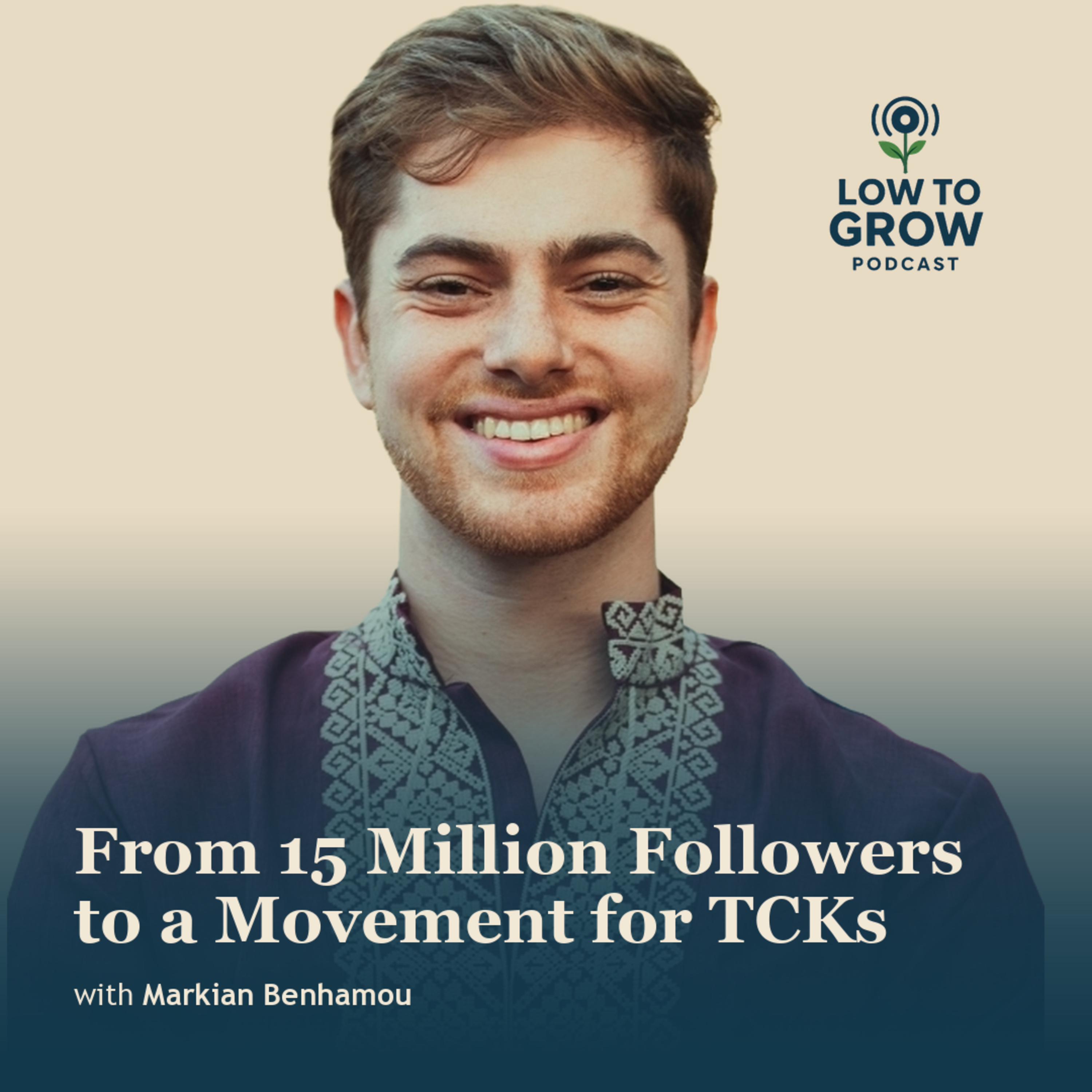
With me today is Markian Benhamou a French American entrepreneur who grew up in Russia, Spain and Hong Kong. After ending his ten year chapter as a content creator Markian is now building a movement for Third Culture Kids worldwide,
to give a sense of belonging to those who struggle to answer, where are you from?
Annie Wenmiao Yu (00:36)
Markian, and it's a pleasure to have you on Low to Grow who do you think will benefit the most from listening to our conversation today?
Markian Benhamou (00:43)
We haven't had the conversation yet. So I don't know where we're gonna dive deep into. But I
Annie Wenmiao Yu (00:48)
Okay. that's a good teaser.
Markian Benhamou (00:50)
Forecast topics that we'll talk about, largely probably about Third Culture Kids. So I'm gonna say that maybe a a TCK, a Third Culture Kid in their twenties who's having kind of a self-discovery moment in their life of who am I would benefit a lot from learning about this term and hearing us speak about it.
Annie Wenmiao Yu (01:10)
Mm, okay. And I know that self discovery is something that you've been on the journey of where would you say that your story started?
Markian Benhamou (01:17)
Ooh, well, depends what what kind of story, but I think a big part of my identity is having grown up around the world and in different cultures. So my mom is Ukrainian American, my dad is French, Moroccan, Jewish, I was born in London, and I grew up in Russia, Spain and Hong Kong.
right now this is my thing is Third Culture Kids and building this movement for TCKs, a word that a lot of people don't know about, but they are. And I think it's shaped me in a lot of ways. I think that would be the natural first starting point for my story.
Annie Wenmiao Yu (01:50)
And when did you first hear about or learn about the term TCKs yourself?
Markian Benhamou (01:55)
I think I came across it in an article, online article, when I was around eighteen. So I never grew up with knowing what the term meant. But as soon as I familiarized myself with the term, it felt like it spoke to me so strongly in terms of explaining my experience of not feeling like I fully belong into any one culture, but feeling like I can adapt easily to different cultures. I wish I had kind of this definitive moment, which I see a lot I see a lot of people having now when
we get to share with them what the term means and they have this aha moment. But it's something that's been brewing in me for l for since yeah, since I was eighteen. And every year would get stronger and stronger and last year I decided, okay, I wanna do something about this identity experience as is my next project.
Annie Wenmiao Yu (02:38)
And again, congratulations on hosting your first TCK Fest where you brought was it a hundred TCKs from all
Markian Benhamou (02:43)
Yeah.
Annie Wenmiao Yu (02:44)
all over the world?
Markian Benhamou (02:46)
Yeah. It was really cool. We hosted it in Slovenia in this boutique hotel and a hundred TCKs showed up. I didn't know if people were gonna buy tickets when we started to to organize this, but eventually they did and people really had a positive experience and there was so much connection and growth and and it yeah, it was a a big success in my eyes. And I hosted it with my friend Sophia and
And everything went smoothly, even though it was doing everything for the first time. we felt very aligned with what we were building. And we believed that we would attract people who believed in our mission and shared our values. And that happened in the end. And it's cool to be on the other side and be like, yeah, we did that.
Annie Wenmiao Yu (03:25)
Yeah, that's such an awesome experience. And I think bringing a hundred people, you know, some of whom might be strangers and having them get along and really open up, that's something that's quite difficult to achieve. But from what I could see from from your social media anyway, it seems to be something that you were able to do with your T C K festival. what do you think really allowed that to happen?
Markian Benhamou (03:45)
Think we get each other because we share that similar experience of not feeling like we fully belong anywhere. I think our culture in general is such a defining aspect of who we are. Culture is the rules by which we play life. Culture, that's usually the first question we're we ask each other because it's like, how can I get a
A picture of who you are, what you believe, what you eat, what you wear in the shortest amount of time and where you're from generally does that for a lot of people because maybe they come from one culture and you associate kind of generalizations with that culture. But for Third Culture Kids who grew up with multiple cultures, it isn't as straightforward. And I think the fact that we all share that multicultural background allows us to get straight.
To deeper things, like who what's your story and who are you? And getting to the root of what that question is meant is leads to for a lot of people. So I've noticed this in the meetups that I've hosted over the last year and a half. just TCKs just bonding really quickly. And I'm sure you you felt that in your own experience too, with the guests that you have and also people in your life who who also maybe grew up in different countries.
Annie Wenmiao Yu (04:58)
Do you know what? I was speaking to a TCK just last week and it was also the first time that we had met. what we both just immediately pointed out was there's always a undercurrent of curiosity and openness. And I think there's almost a slight delay in how fast or I guess how slow a T C K would be to judge someone new. so you know, it's almost as if a T C K is really trying to hold space.
for whoever they meet and allow that person, you know, to define norms that they might have previously had, or to really bring something new into that sense.
Markian Benhamou (05:31)
the way that I see it is if you grow up with multiple cultures, you understand that life isn't just one way. And so it it allows us to have an expansive open worldview and understanding that people have different paths. So perhaps that's the reason why you you connected with this person and felt like they were open to to hearing you out. I think that's one of our defining traits.
Annie Wenmiao Yu (05:55)
what do you think that you understood about belonging as a nine year old that probably takes other people until they reach maybe thirty or thirty-five to realise?
Markian Benhamou (06:07)
Yeah, I think I need to learn about belonging from others.
I haven't found the the answer yet. I'm still figuring that out.
yeah, our experience as TCKs can be really polarizing that sense of highs, highs and low lows. And I think the lows for a lot of people are not feeling like we belong anywhere and searching for a home.
And I think people have their own personal journeys with this of finding that internally. I'm approaching it a little bit more pragmatically, in the sense that I think it's really important to pick the right city that feels like home. I wish I could say I feel like home anywhere, or it's just with the people, but it doesn't feel I'm not there. I'm not there spiritually to to say that. but I think, yeah, for me, finding belonging is about
being in the right city for the stage of life that I'm in. That's why I felt very pulled to move to New York in this stage of my life after being nomadic for three years, while I'm still in the freedom stage of my life, low responsibilities, but high ambition, wanting to surround myself with ambitious people, okay with the hustle and bustle. So New York checks those boxes. But definitely is something that I'm still figuring it out. How does how does belonging look like for you?
Annie Wenmiao Yu (07:22)
for me, belonging it's less to a place but more to people around me, which I guess then also ties back to what you were saying about finding the right city for a particular stage of life. So I'm in London and I moved to London from Oxford, which is, you know, very academic, very small. but I think in London it's just so diverse and I really mean diverse in terms of ethnicity,
where people work, what kind of jobs they do, their age, what their own, I guess, aspirations and more spiritual values are. And for me I love London because it felt liberating. And I never feel that I stood out in London, which I love. I love being able to blend into a city and really, you know, just exist as part of a larger fabric rather than being somewhere where I think visually I can just look very different to other people around me as well.
whilst you were growing up, which of the countries did you feel most comfortable living in? And were there ones that you didn't feel so comfortable living in?
Markian Benhamou (08:19)
I never felt uncomfortable with where I'd lived. Russia, I don't remember it. I was seven when I left. So, well, I guess I mean I remember a little bit, but I spoke Russian as a seven-year-old and didn't think much about our cross-cultural mixes at seven years old. In Spain, I yeah, we had a great quality of life. Like in Marbella in the south of Spain, it's it's a beautiful place to to grow up.
I don't feel Spanish. I I speak Spanish, but I'm not Spanish. I don't look Spanish. I don't sound Spanish. So I never feel like I'm a local here. And then Hong Kong was amazing, was amazing. It's amazing city. Also obviously not from Hong Kong, but it was very easy to adapt there. And that was a decision that my family made kind of on the spot.
Together, my parents were like, hey guys, to my sister and I, do you want to move to Hong Kong? And we were like, sure, that sounds exciting. So we moved there. And yeah, I I had never felt any trouble with with my upbringing around different countries. And and I guess it's a combination of different circumstances.
Maybe I didn't have very strong friendships in Spain, so that was easy to leave. Whereas maybe other people who had who had strong friendships would find it hard to to move. I also didn't move very much. I moved twice in my childhood. yeah, it was never something that I was very conscious of as a kid, of course. But now as an adult, looking back, I can reflect a lot and see how those experiences shaped me.
Annie Wenmiao Yu (09:46)
Hmm, I want to dive into your first career as a creator, which you did for 10 years, and you grew, I believe, was to fifteen million followers. So that's quite a sizable, achievement to have had. could you share with me what led up to your decision to leave that all behind? And also how did it actually feel to actually step away from that and essentially throw yourself into exploring this next stage of life?
Markian Benhamou (10:08)
Felt right to leave it. I see my life in chapters, and I had I felt complete with that first chapter of being a content creator for 10 years, having built a successful comedy channel that reached its peak and was slowly going, losing its its energy.
And I was burnt out as well. I was managing a team, and all these things were like cumulatively compounding. And the idea of just stopping and just taking a break and not working and traveling just felt right when it came to me. So I had no issue doing that. and yeah, I've really enjoyed the last three years of just traveling around the world and taking a break from work and focusing on personal development.
And now that chapter is coming to a close and I'm starting a new chapter. So it's just the cycle.
Annie Wenmiao Yu (10:57)
Hmm. I really love how you described how you see your life in chapters. I think that's so nice. And I think for me reflecting, you know, I've been out of uni for seven years now, and I think it's around this time, but I see a lot of friends around me starting to take a sabbatical or really pivot in their careers or, you know, choose a different pace of life altogether. And I think for me as someone who's been, I guess, in the business world ever since leaving university,
It's it's almost as though, we were taught to have this very singular track of what life should be. It's you go to university, you find a job and you stay there and you climb up th through the ranks. But what I'm noticing, and which you are probably seen as well, is actually, you know, people in our generation aren't afraid to take risks and also aren't afraid to try different things. So I really love how we're able to decide.
when a chapter finishes and when it's time to start a new one. but I did also want to ask you, what do you think you were actually looking for when you first started making those videos online?
Markian Benhamou (11:56)
My intention was to build a business. I always had that intention from the beginning. My dad is an entrepreneur, so I'm lucky to have a figure in my life who taught me about business and like exposed me to that possibility. I think a lot of the times we follow what our parents do because we follow their beliefs, our view of the world is linked to the way that we're taught through our parents naturally.
And so I'm I I feel grateful that yeah, my dad opened up that that path for me to show that it's possible to be an entrepreneur and to build your own business. That to me is the default. I haven't known it any other way. I've I've never had a a traditional job. I don't want a traditional job. I really love being an entrepreneur.
yeah, building the channel was the was such a great playground for entrepreneurship. And I I started young so I didn't have the pressures of paying bills when I was living at home when you know when I'm 16. And over the years, I mean it took me years until it started to make money and gain some success. that was during university. So I was able to leave university and pursue that full time.
and just keep going into business and that's the way that I thought about it from the beginning.
Annie Wenmiao Yu (13:06)
Hm, that's awesome. And when you took the time off after deciding to walk away from content creation, was there anything that you missed about that life? Or rather, was there anything that you missed about that chapter of life that you were not really expecting to?
Markian Benhamou (13:19)
Yes, two years later. So two years after leaving it, I was lacking fulfillment and purpose. And what I realized was that it was coming from doing work that helped others. So in the case of social media, it was creating these positive videos that that brought people together and different communities together. and I didn't have that because I was just traveling and having fun and surfing and dancing and
Exercising, but I was I was having fun for myself, but I wasn't doing anything that helped others, which is what inspired me to find a new project that helped others so that I could be fulfilled. And it needed to be for a cause that I felt personally connected to. I there are many causes that are great, but I don't feel a connection to, so I wouldn't be driven to pursue those. And that's when the the idea of Third Culture Kids, this has been around, this has been
There's been a a spark inside of me, a little flame that I'd like to fan and see where where it goes. And so I started hosting started hosting a meet meetups in Paris and then from there I started making content and then now it's growing into a a roaring fire.
Annie Wenmiao Yu (14:27)
what have you learned from all of the people or the TCKs that you have interacted with over the past year?
at your supper clubs or at the TCK Fest, were there common themes that always came up? Were there common, advantages that you feel like TCK's had?
Markian Benhamou (14:42)
Many common themes. Identity and belonging is at the core of it in terms of asking ourselves who who am I? we think we ask ourselves this question a little bit earlier, maybe because we're we're faced with the challenge of it upfront.
Friendships is a big topic. That's a common one where a lot of the times people in my case, like me, I didn't grow up with the same friends throughout my whole childhood. And I'm so envious of that. I wish I had a childhood friend that I had grown up with since four years old. And then making new friends is something that a lot that everyone goes through, especially when you move to new countries. But again, TCKs probably.
are moving frequently and as adults, we're faced with that challenge of making new friends and obviously wanting to find people who understand us.
Relationships always another common topic, I guess, with people in their twenties and thirties. yeah, there a lot of TCKs ask ask themselves these questions and
I hosted a dinner series in New York where I hosted seven dinners and seven nights and each night had a different theme around career, relationships, friendships, all these things, and we had great conversations about all these things through our own lenses.
Annie Wenmiao Yu (15:51)
seems like you're almost educating a lot of the TCKs about what the term Third Culture Kid is. Why do you think that not more people know about Third Culture Kids?
Markian Benhamou (16:01)
It's never really been widely publicized or marketed. It feels like it's just this sub-niche community of people who know about it and it's hasn't really had a strong marketing team behind it. So I think it's time for that to change and I'm want to use my platform as much as I can to blow this term up. And the reason why I care about that is because I want TCKs to know that they have a place they belong to and that they're not alone.
I think that's I think just giving them the word to people beyond like what do we do about it already is such a big step for a lot of people to feel seen and understood and just to have a word that describes their experience. And we see that in like people's reactions when they find out what it means. So yeah, that's that's the area that I think I can contribute most to in this movement is spreading the word and doing that through content social media.
When did you discover the word?
Annie Wenmiao Yu (16:59)
well it's really interesting actually because I discovered the word earlier this year when I was writing an essay for this psychotherapy course that I was doing at the time. And honestly, when I started reading into it and when I found that there were, you know, books written about the third culture experience, that just
brought my heart into alignment and I felt seen and also validated. And I think what really stood out to me is this concept of how for Third Culture Kids, they generally can have this "and" mindset. So for me, if someone asks me what my favorite colour is, I will give you two answers, two or three answers. And for me, it's okay to have multiple favorite colours because you know I don't need to just have one.
And I have that mindset towards many other things as well. So for example, when you're at the dinner table, is it okay to put your elbows on the dinner table? Is it okay to slurp when you're drinking, you know, a noodle soup, for example? because I've grown up in environments where there can be very different norms of doing the same thing that's just really hit home for me this deep desire to always be accepting of multiple facets of what can be done.
Markian Benhamou (18:08)
Yeah, you always have to figure out what what the right way to to perform is in a way to behave. That's a a common experience for us is obviously trying to fit in and always navigating the in between.
Annie Wenmiao Yu (18:22)
Yeah, for sure. Markian, what do you hope to grow your community into in say three or five years' time?
Markian Benhamou (18:30)
Mm. I don't have a specific image of what that looks like, but I hope that Third Culture Kid becomes a mainstream word that people know about.
I envision there to be many TCK clubs around the world, each with their own niche, some for family, some for young professionals, some for kids. I'm really a big supporter of seeing TCK clubs and projects and feeling like the more the better, and it's never in in competition in that way.
So I would I think the ultimate goal is would be to get the word Third Culture Kid in the dictionary. I think that's when I would be like, cool, we we did it.
Annie Wenmiao Yu (19:07)
Yeah, that'd be such an awesome achievement. because then, you know, if there's a really new kid kind of just growing up, then they can find it in the dictionary and have that, I guess, solid thing to to form their identity around from a younger age, which then I think also affects relationships, careers, you know, all the topics that you mentioned earlier in your dinner series as well. and I also noticed that, the first questions that you ask people when they go to your TCK website is, you where are you from?
And for me, when I read it, that really resonated with me because when I was growing up, whenever someone asked me where I was from, I would almost, you know, have a mild panic attack because I would think, do I say where I was born? Do I say where I felt the most emotionally attached to, or do I just simply say where I have l lived for the longest? And I'm curious, how has your answer to that question changed over the years?
Markian Benhamou (19:58)
That's the b the easiest way to spot a Third Culture Kid is sense a hesitation or a a a pause before answering that question. I think I still have different answers depending on where I am. My short answer generally is I'm half French, half American. Sometimes when I moved to New York recently, I was in Paris before. So people would ask me where I'm from and I I said, I'm from Paris is
Is an easy answer. I've said that I'm from Spain as well when I had moved to the US when I was 18. now I might say I'm from New York if I'm feeling lazy. And like there's there's truth in all of these answers, even though it's not the full honest truth. But I what I like is I I like to d drop a hint or plant a seed, and if people's curiosities if
are spiked, then they will ask me more about it, but I won't share obviously everything up front 'cause that would take a long time.
Annie Wenmiao Yu (20:56)
you've been on a journey of being a content creator to then kind of like traveling around the world and now you are establishing yourself as a community builder for Third Culture Kids as well.
what are some of the challenges that you feel that you have had to overcome in order to make a success of each of your professional endeavors because of the fact of your third culture upbringing?
Markian Benhamou (21:19)
I think it's still very early, so it's very much in development. I think the question for me is how do we scale? How do we grow the impact? It's one thing to create a community in one city and host events for for 30 people on a monthly basis, but then it's another thing to say, okay, how can we inspire people to do this in a hundred cities? And obviously I'm not gonna be the one to do that, and I don't want to be the one to do that.
And then if I'd like to make more content about it and host bigger events, how do we make money out of it so that it's financially sustainable to do these things? So I don't have the answers to these questions at the moment, but I'm very much leading with the mission and knowing that anytime I can add value and do good for this community, it will bring more opportunities and find ways to sustain itself.
The last year has just kind of been testing and experimenting to see if there's something there. And clearly there is opportunity there. And now it's figuring out, okay, how what's the next step to to grow this movement and to impact more TCKs? And right now it looks like making a lot of content. It looks like hosting an annual festival for 100 Third Culture Kids. We'd like to do to do that again next year.
And then building a newsletter that can inspire others to host their own TCKs and share or their their own TCK meetups and share in the newsletter. Very much just yeah, celebrating the community and offering people opportunities to connect. And I think Third Culture Kids although it's niche, it's still very generic because there's so many different types. So I think there's definitely opportunities for niching down within that niche for.
Like parents and professionals and so on.
Annie Wenmiao Yu (23:04)
Hmm, interesting. And how has AI tools influenced or affected your work with either community building or content creation?
Markian Benhamou (23:13)
I don't use it too deeply, mainly to automate some of my back-end systems in terms of people filling out the quiz, then that goes to my air table CRM, that then their contact gets added and behigh for my newsletter and using Zapier to kind of automate this. When it comes to content side, I really prefer not to use AI when it comes to the creativity and
writing scripts, for example, and coming up with ideas. AI would it would be really cool once AI can get to the stage where it can edit videos as well as a human can. That would be probably the most valuable like leverage point for me particularly. so yeah, I'm very much like open to
using AI as a tool to optimize my workflows and make work more efficient. but I'm not heavily using it at the moment because I don't see how where it can like really make a big difference right now.
Annie Wenmiao Yu (24:09)
Okay, interesting. and for you right now as a content creator and also a community builder, what does your day to day actually look like? And I'm asking this, because I think some of the listeners who are, currently young professionals in their twenties and thirties, might be thinking about content creation as an alternative career to go into.
Markian Benhamou (24:26)
My day-to-day is I really I really value freedom. So I have a lot of freedom in my life it's fluctuating a lot. I I've I've been in stages where it's running a company and running a team and it looks like I have a job. And then now where I don't have any obligations, I don't have any deadlines, I don't have any cadence that I'm posting at the moment. There'll be periods where I'm posting every day and periods where I don't post for a month because I don't feel like it.
well right now I'm very much decompressing after TCK fest, but in general I'd say it looks like it's coming up, yeah, brainstorming ideas for content, writing the scripts, filming the content, editing the videos, and kind of having this this cycle.
And it's pretty flexible at the moment.
Annie Wenmiao Yu (25:08)
I'm also very curious about the attendees to your TCK Fest. there were, you know, a hundred people. What kind of ages were they and also what kind of careers were they in themselves?
Markian Benhamou (25:19)
We had a really nice variety of people. The age ranged from 14 to 67. The median age was 31. So majority of people were probably between 25 to 35 I only realized what people did for work after when I was kind of at making some videos and getting their LinkedIns because during the festival we actually didn't talk about people's work a lot. And I think that's something that r people really appreciated. It was
We rarely ask what do you do? And it people I think got got to know each other on a personal level and got to go very deep. And then a lot of people start to realize, wait, actually everyone's doing cool things here. We had founders, we had entrepreneurs, we had therapists, we had musicians, students, I mean, like travel agents. yeah, we had a really wide variety of people's professions and it was really cool.
To realize that after that yeah, people are doing cool things. And we didn't actually talk much about that during the festival.
Annie Wenmiao Yu (26:15)
Interesting. Well it certainly sounds like you got the right group of people together for that. so Markian, let me ask you the podcast staple, which is what is one thing that you believe will allow more people to have better mental health?
Markian Benhamou (26:27)
Take care of our physical health. I think there's a such a strong correlation between my mental health and my physical health. And physical health to me is three main things. It's food, exercise, and sleep. So eating well, exercising regularly, getting enough sleep, for me, it just completely changes my state. And I feel so energized when I'm
optimize in those areas. And I know that sometimes it can be hard if people have high demand jobs and don't have much time, but if you can prioritize those things, I think it makes such a difference on mental health as well.
just thinking about the difference of how it feels when we wake up after a poor night's sleep and how bad we feel for the rest of the day and then how we feel when we have great sleep and for the whole day we have full of energy. So that's what I would say is eat healthy, exercise frequently and get enough sleep.
Annie Wenmiao Yu (27:18)
Hmm. Awesome. It always surprises me how well I guess just how many people mentioned that on this podcast when I when I asked them that question, and I think it's absolutely right that you know, that our body and also how we experience the world, it's really very much a whole and without good physical health, without good sleep, as you mentioned, and good exercise, sometimes it's very impossible to feel like you're in your best form as well. But Markian, it's been such a pleasure to have you on Low to Grow!
Markian Benhamou (27:42)
Thanks for having me.