Annie Wenmiao Yu (00:19)
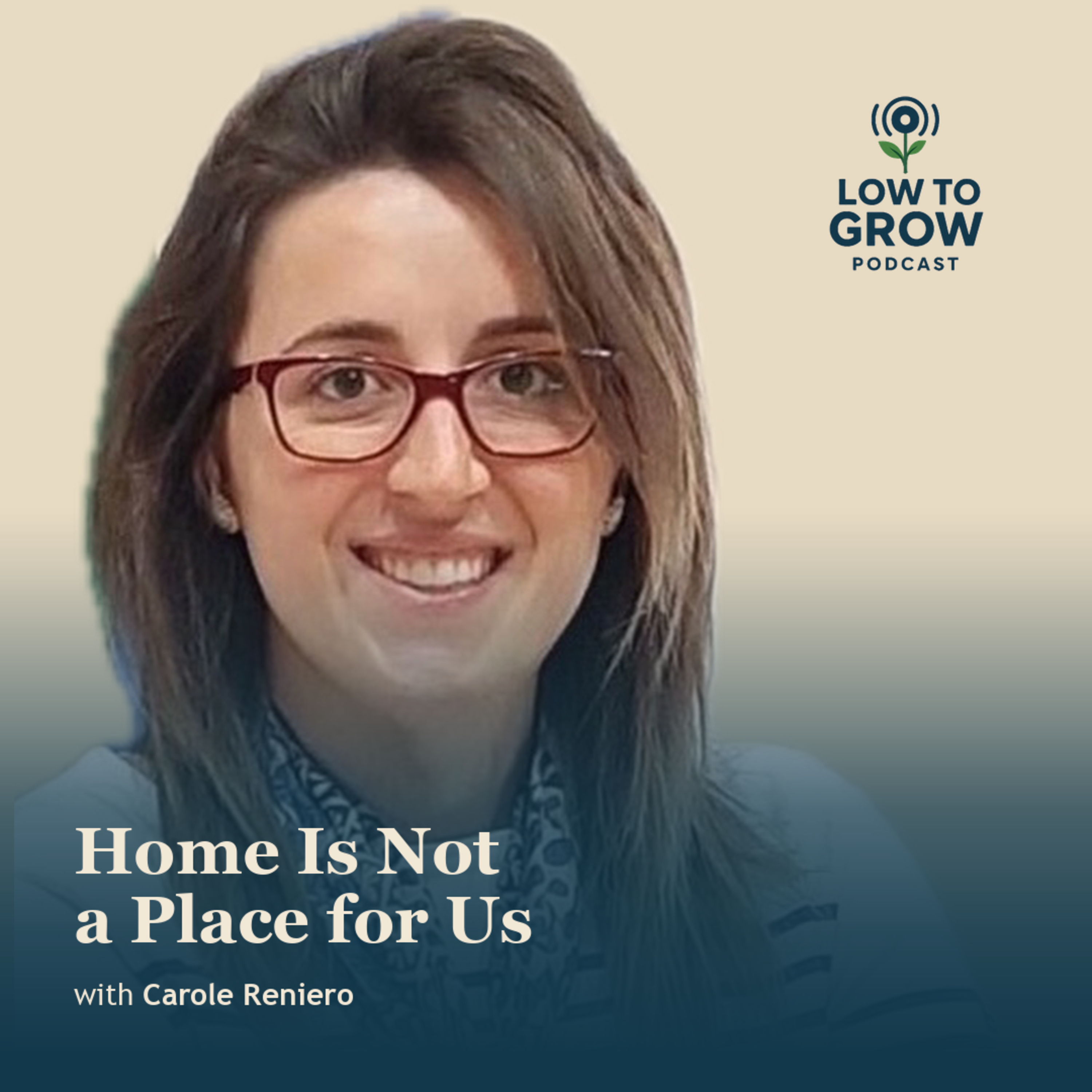
Carole Reniero is a Third Culture Kid born in Switzerland and raised across France, Italy, the United States, and the United Kingdom. With a background in social anthropology and international development, Carole has spent over six years in international education and youth skills development, including working with the UNICEF, UNESCO, and also nonprofits across Europe and Latin America. Her focus is helping young people into work and strengthening early childhood development and education.
Annie Wenmiao Yu (00:47)
Carole welcome to Low to Grow It's a pleasure to have you. Who would you like to be listening to our conversation today?
Carole Reniero (00:54)
I think any other kind of young person, you know, in their twenties or thirties who is trying to find their way, whether it's in their career or are still kind of grappling with questions about their identity and who they are, like it's nice to just be able to share that with them and for them to listen to my story and hopefully that, you know, it reaches yeah, as many young people as possible. Yeah.
Annie Wenmiao Yu (01:19)
That's beautiful.
And Carol for you, where does your Third Culture story start?
Carole Reniero (01:25)
My Third Culture story starts from basically when I was born, in the sense that I was born to Italian parents in Switzerland. So already the place I was born in was obviously different from my origins. And then I moved around my entire life. So every three to four years we moved to a different country. So I got to experience different languages, you know, different education systems as well. That was probably the most challenging part, you know, as a child going through different education systems.
As an only child as well, I should have said, yeah. So and then yeah after Switzerland, you know, I lived in France, I lived in Italy, in the US, back to France, and then I came to the UK for university. And then I think after that, when my education was over and I started working.
the Third Culture experience kind of kept going because I kept moving and lived in France again, Bolivia. So I got to kind of experience a Third Culture as a child and I would say as an adult as well. And it's kind of ongoing at the moment. Yeah.
Annie Wenmiao Yu (02:27)
And what kind of brought you to move around in so many countries when you were an adult?
Carole Reniero (02:32)
I think it's just the fact that it became such a big part of my identity, a big part of who I was. Like I grew up moving around and so as an adult I was like, okay, it's a part of who I am. I'm gonna keep moving, I'm gonna keep searching for new experiences in different places. obviously that got a bit tiring and I think now actually for about a year I've been a little more stable. But
It becomes a part of you, I think. That's the like the as close as I can the best term that I can use.
Annie Wenmiao Yu (03:01)
Mm-hmm can relate to that on a lot of other Third Culture adults I speak to also mentioned that about how I think they call it "doing a geographic". So it's yeah if you get, you know, a bit tired of one place or a bit too familiar, then the natural gut instinct it seems for a Third Culture individual is to actually just uproot themselves and throw themselves into a deep end again and really have that fun of learning something new.
Carole Reniero (03:22)
And
I think you also get used to that constant change and I think after a few years in one place or even in one job, you naturally start looking for that change again, that change of pace, that change of environment. There's something that's thrilling, I guess you could say, about it. despite obviously with all the sacrifices it brings and you know all the other aspects. But yeah, exactly. I agree.
Annie Wenmiao Yu (03:45)
And what was one of the sacrifices that you felt that you've had to make in order to sustain your, Third Culture lifestyle?
Carole Reniero (03:53)
I mean, I think one of the biggest challenges as a child was like I said before, you know, the fact that I am an only child, so growing up
with this constant need to change and transition from a place to another meant that, you know, I was uprooted each time, you know, from where I was, I had to leave my friends, I had to leave my school. And even changing education systems meant changing languages, you know, changing the way that I communicated day to day. So even though I'm, you know, I built a wonderful relationship with my parents as a result because we always moved as a unit, I think that was definitely a challenge growing up.
Annie Wenmiao Yu (04:30)
And as a child, which of the moves did you find the easiest and which of the moves did you find the hardest?
Carole Reniero (04:36)
I think that we're all quite hard. I think you know, when you're very, very young, you don't fully I guess see the impact as much as when you're older. Like when you as you get older, you start to kind of feel the impact of all the changes that you've gone through as a child. You know, there's only so much that you fully understand or are able to grasp about your experience, about how you feel,
I would say they all brought their unique challenges. I mean, when I moved from Europe, for example, to the US for the first time, that was a culture shock, you know, because I didn't speak any English. I was thirteen, which is a very, formative age as well, a very delicate age, the beginning of adolescence. So I think that was very challenging.
But you know, obviously now looking back as an adult, I do see the privilege obviously that also this life gave me and the opportunities that it gave me for sure.
Annie Wenmiao Yu (05:29)
Yeah. I can
really relate to that to a certain degree because I moved from Singapore to the UK when I was 10. And I think going from Singapore, which is I guess in essence a very much traditionally Chinese culture with some Western influences, where I think people are generally quite direct, to the UK, where the culture is more reserved, I found that quite difficult. And I think that was the one move that stuck out to me even now and it did take me a few years to really adjust. But then before then, I think going from Singapore to Australia in a
way it's still quite similar in a sense that everyone's quite open and quite blunt. So so I think it's just interesting how how the different subcultures and countries really affect the experience of the Third Culture child as well.
Carole Reniero (06:11)
Yeah, for sure, for sure. And I do think that there is a certain type of resilience and a certain type of adaptability and flexibility that you develop, some like a thick skin that you develop as a Third Culture child that I think only other Third Culture people or Third Culture children can fully understand. And I think like I think what you've just said is an example also of just needing to power through. You know, you're a child, you arrive, you have to power through, you have to find your way, you know, there's no other option but
through, you know, and and butt trying to to find your ground and and in the new place. So yeah, so I think it's just it takes a a special kind of resilience, I think, as a as a child and as a family unit as well.
Annie Wenmiao Yu (06:53)
definitely I think moving as a family unit it really forms quite a special bond. So I'm an only child as well and I say I'm I'm quite close to them and I don't ever feel that they treated me as just a child. I felt that they were in some ways my peers, and I don't think that I would have had that experience if we had stayed in one country where all of our family members were also around. So it's quite a special experience there.
Carole Reniero (07:13)
Yeah, absolutely, absolutely. and I'm really grateful for for them, but also for the fact that, you know, the fact that we always moved as a unit meant that they always kind of prepare me as much as possible as well before every move. You know, there was always kind of a family discussion, you know, this is what's gonna happen, this is where we're going. It might be hard at the beginning, but you know, we're here for you. we're gonna take these steps together as a family. So as a parent, it's it's very important,
to have that conversation and to allow your child to also express, what that move might be for them, what the impact might be and things like that. So I'm really grateful for that because without that it would have been probably even harder than what it was.
Annie Wenmiao Yu (07:49)
No, for sure, definitely,
definitely. And in your moves as a child, did you come across many other Third Culture children?
Carole Reniero (07:56)
Yes, because of the nature also of the different schools that I went to. So I would say though the school where or the place where I found the most Third Culture children and it's also the place where I first heard of the term Third Culture child was in secondary school, the last two years of secondary school.
I did the IB, the International Baccalaureate. I was in Paris. I was in an international school for the first time. basically all of us were Third Culture children. And I remember one of our teachers asking us as part of this class project, like where is home? He interviewed everyone, saying a sentence, a phrase of where is home. And the idea of the project was to show how difficult that question was, you know, for us to answer. But it was very powerful to see everyone kind of feeling the same way. Like where is home? I'm not sure.
You know, it's everywhere and nowhere - I always say that, or it's where family is or something like that. So it's so it was nice to be a part of that community and to have I guess for the first time so many children or young people around me that had gone through similar experiences.
Annie Wenmiao Yu (08:56)
That's such an awesome project because I think growing up one of the questions I struggled most with was someone asking me, where do you come from? And I kind of have a mild panic attack because I think, well, what do I say? Do I say where I was born or do I say the country that I'm living in now or the one that I-feel the most close to? So it's really lovely that you were able to experience as a class and discuss the fact that home isn't always such a simple answer for people with so much migration in their background as well.
Carole Reniero (09:22)
You know, it can be a bit cliche to say that as well, but you know, like home is not a place for us, I think. for a lot of us place was, you know, a person or, you know, a specific feeling, you know, that maybe you get only when you're with, you know, your family members or, if you for example, people who go to visit their grandparents in the summer or something like that, that may be home, you know, the feeling of being with them and the activities they do and things like that. So that's that's quite interesting, the fact that
Yeah, home can be so many things and means so many different things,
Annie Wenmiao Yu (09:51)
and how important that you were able to, I guess, attend that school and have that introduction to Third Culture in the years before going to university. how much of a factor do you think it was in terms of your identity formation?
Carole Reniero (10:03)
I think it was really important for me to be in a place that could almost validate all the feelings I'd had up until then. all the experiences before were I think there was never really that sense of community.
I was always a foreigner, I was always the one who was different from the others. I was the one who had to adapt and fit in, you know. Whereas this was the first time where I find myself with people where I didn't have to fit in, I could just be myself.
And I think it was very special to go through that at 17, 18 years old before university, before, you know, I left home home in the sense of my parents and you know went to university and it just kind of validated that identity for me and also made me feel like a part of a community. That's another word community that I don't think a lot of us know what that's what that's like or what it what it means because you know we are
From everywhere and nowhere. But I guess it was the first time that I could say I felt like I was a part of a a community of like minded young people.
Annie Wenmiao Yu (11:02)
So really
validating your experiences and for you finding that community. I always find it really fascinating how for me when I meet another Third Culture individual, we might have grown up in completely different sets of countries, but somehow when we meet, I feel like we can both click because I can always sense that the other person has had that multicultural upbringing.
Carole Reniero (11:20)
Absolutely. Absolutely.
Annie Wenmiao Yu (11:22)
Yeah, so I guess it maybe, you know, shows that for Third Culture individuals, our sense of home and belonging is more relational rather than geographical and tied to a particular place.
Carole Reniero (11:32)
you summarise perfectly what I was what I was trying to express. So there you go.
Annie Wenmiao Yu (11:37)
Well, I actually stole
that from a book called called Third Culture Kids by Dave Pollock and Ruth van Reken And that's how I was introduced to the Third Culture theme and it honestly changed my life because I again I think for me that book validated a lot of experiences.
how do you feel that your experiences as a Third Culture individual kind of affects what you do now? So I know earlier you mentioned
in your career, moving around quite a lot. Were there other character traits that you felt that you developed as a result of moving across multiple cultures when you you were younger that you were able to really leverage now in your day-to-day?
Carole Reniero (12:08)
I think there's a few things I could say there. I think in terms of what I do now, you know, obviously I work in education. I'm lucky enough to say that my passion is also my work, which is also not something that everybody has the privilege to say. So I'm really grateful for that. and I think one of the biggest things that influenced me in choosing this sector was experiencing different education systems myself, seeing the pros and cons of each education system, you know, for example in the US, just to say an
example, I learned so much about communication and public speaking. It's a very verbal, education system. There's a lot of presentations, there's a lot of spoken communication. in the French system, it's still very much a lot of writing and a lot of discipline. And it's you know much stricter in some ways in terms of the teaching approach that I received when I was in elementary school So it it was very interesting for me growing up with these different teaching approaches, these different
education systems and I thought to myself I would love one day to you know to work in education and to sort of bring maybe the pros of each place together. You know, there's no ideal, in the same way that there's no ideal perfect place. There's no ideal perfect education system. But I'd love one day, like my dream long term will be to either have whether it's my own school or whether it's my own, NGO as a passion project, but something that brings together these Third Culture
experiences to life through education. So yeah, I'm I guess I'm on my way there, hopefully.
Annie Wenmiao Yu (13:32)
That's such
a beautiful dream. what kind of students would you want to have in these schools?
Carole Reniero (13:37)
It's very good question. I've kind of gone back and forth because my career started working more in the in the UN, the NGO world, where we obviously support the more disadvantaged, you know, students. Or I worked in Bolivia, for example, in a year, you know, in a very difficult country where there's a lot of social issues, a lot of poverty, inequality, et cetera. So I got to see that part of education, the empowerment element and and how much you can
do for for children, you know, in a place like that through education. But I also got to see the whole other world, which is the one that I grew up in, which is the international school world. You know, maybe, you know, families are a little bit more wealthy that can afford, you know, to send their children there. So I would love to to say that I like to help,
develop the next generation of leaders no matter where they're from and no matter what their background is.
Annie Wenmiao Yu (14:27)
One question I have for you, because you're in the education industry. Where do you see AI having the most impact in the next year? And where do you see AI taking the field of education as you work in the next five years?
Carole Reniero (14:40)
It's a very interesting question, and actually you're asking me at the right time because I work at the moment in an organization that uses AI as part of the teaching method and as part of the tutoring approach. So I manage a tuition center in London and we use AI as part of the program. So AI is used in the sense to create a very tailored and individualized curriculum for each student. So it basically adapts the questions, the topics are adapted to the pace of learning, the progress
Of each student, which means that you might have two students of the same age sitting next to each other, interacting with each other, but at the same time working on something that is entirely tailored to their own level. you could do master English, you know, with the standard academic subjects, or you could look at
other more technical skills or things like that. And then we also do, you know, workshops that kind of bring them together. That's more for the soft skills development side of things, whether it's communication, like I was saying before, or public speaking or, you know, effective questioning, you know, those, those types of skills. So I see AI as being an integral part of education just because that's where the world is headed right now. So there is a part of needing to just accept that and welcome that instead of being afraid of it and then rejecting it.
But I think we also need to be careful about what that is going to look like in the classrooms, making sure that the teachers are ready to be able to teach with that in mind. And I don't think the education systems as a whole are ready for that despite the rate and the speed at which things are moving, we're still in that pilot phase now of seeing, you know, what the impact could be. And something else I wanted to mention on that is that there's there's already there's a lot of studies.
In early childhood education, for example, that's what I worked on in Bolivia, that really look at the impact that technology and screen time has on the development of young kids, like their brain development, and how detrimental to their development that can be. So there's also something there we need to be careful, you know, in terms of how we're going to incorporate that in a way that doesn't fully take away the human element of of education, which I think obviously will remain fundamental, a fundamental part.
Annie Wenmiao Yu (16:49)
What were
the results from your study in Bolivia? Was it, you know, a certain number of hours of screen time that
Carole Reniero (16:55)
it wasn't my study exactly, it was a study run by UNICEF in Bolivia in collaboration with some other partners that I can't remember the names of right now, but national partners in Bolivia and international partners in South America. So it was a regional and national study that they did over the course of a few years. and basically they were saying that for very young children between the ages of zero and five, so the very young kind of infant toddler age,
If they spend even say two, three hours a day looking at a screen on a tablet, whether it's even like watching a cartoon or you know playing a game or something like that, it can have like a detrimental impact in their own development in terms of how they're going to communicate when they're older, in terms of their overall development, so their ability then to do well in school. the speed at which they can grasp concepts, their creativity.
All of that is taken away when you're looking at a 2D screen. You know, children are meant to be playing around, they're meant to be, you know, exploring the world around them in 3D, with each other, and so a lot of the work that we did in Bolivia was actually workshops with families and with the healthcare sector to teach the importance of you know not using technology at such a young age, the importance of playing with your child, of speaking with your child, of communicating with your child. These are all things that I think
some people may seem kind of obvious, but they're really not. And I see that even in the center where I work, a lot of the parents, you know, just kind of on their devices and you know they're not setting the right example, I guess you could say, for for their kids. So if that makes sense.
Annie Wenmiao Yu (18:25)
It really makes sense. And it least on to my next question, which is how do you see the change, if at all, in how teaching is delivered in classrooms in the next five years with AI coming on? So I think earlier you mentioned maybe for each student to have a tailored curriculum, but for them to still be physically in the same classroom next to other children their age and for there to be a teacher. Do you see that kind of format changing in the near term? So perhaps having less in person time and more, I guess, self studied.
at home for the children.
Carole Reniero (18:56)
I think it's a very good question. I do think that I think we're gonna have to look at it from a system point of view. So for example
I think that being present, physically present in a classroom with your peers, with a teacher, should never be taken away from education. I don't think it should become something that's super individualized, you know, again, looking at a screen all day at home or something like that. I think everything that I was saying, the human side of teaching, which is, you know, you know, empathy, the effective questioning that you are doing, for example, you know, the coaching side of things, the the mental health, the whole aspect of being with people that should never be taken away because
that we're only gonna isolate ourselves even more and you know I think it's gonna have an impact on people's mental health as well. We're already isolated enough as it is. but I do think that
There will be definitely elements, I see some elements of you know, teachers having to adapt maybe their approach a little bit to each child. And if this if the child has that program or that curriculum that's already made for them, then the teacher is more as a human assisting with the learning and making sure that they understand the concepts and things like that before they move on, you know, for example, to the next topic or the next question. But I do think, you know, teamwork, group projects, all of that will still remain just as important and and fundamental
because when you go in the world of work, you know, if you're not able to work in it as a team, if you're not able to manage people, if you're not able to, bring all that human side of things, human element, then you're not going to be able to do well, you know, or to have an impact on society. You know, we do that through collaboration, through working with each other, not, you know, just by using technology.
Annie Wenmiao Yu (20:34)
No, for sure. For sure. And it's also really interesting because I guess, you know, types of technology, video conferencing, telephone, these were developed in order to enable human collaboration. And I guess to a certain degree, I guess with COVID, that showed us that we can still collaborate even if we don't see each other physically. But I think what COVID also showed us that as humans we need to have that physical proximity to other people, whether it's at work or whether in personal lives as well, in order to really feel human and to be able to thrive physically and mentally as well.
Carole Reniero (21:03)
I mean, there are so many studies already that have been published. I think there's also a documentary that came out on the social dilemma or something like that. I think it's called, that talks about how social media, you know, video conferencing, all of those elements, Zoom, YouTube, all of those, you could put them all in one kind of category, has had such a negative impact in terms of mental health, in terms of that feeling of belonging, of community. That the word that we started with, the sense of you feeling.
Feeling you belong to you know to a community, the fact that you have even like close relationships, close friends, a lot of that kind of can disappear or can re-be harmed by you know all the use of these technologies. Because if we spend you know our entire time scrolling that's never gonna be the same as seeing that person communicating face to face, putting in the effort to do that. I think it's it's become an easy,
an easy way out but that can can really isolate us. So that's why it's connected I guess to what we're discussing now. But yeah, we just have to be careful about how we teach, our kids, and young people on on how to use them.
Annie Wenmiao Yu (22:09)
Yep, makes sense. what are some of the skills that you think Third Culture children have that can't be teached, but rather has to be gained through living that Third Culture experience?
Carole Reniero (22:20)
I think there's a level of
critical open-mindedness that I don't think you can get in any other way. I think you can be an open-minded person who is curious, you can be an open-minded person who reads a lot, who is interested in finding new things. But that open-mindedness that I developed through moving around, I could never have gotten by reading a book about a country or about hearing it from someone else's experience. And I think that relates to what you were saying before that when you meet another Third Culture person, there is that unique
relational bond that is hard to measure, but it's related to that skill as well of understanding and open-mindedness. That's one key thing. I think I mentioned briefly before as well, resilience-again, a skill that many people can have without being a Third Culture child. But
sometimes you just don't have a choice. You have to pack up and go and leave everything behind, everything you've built, you know, all your relationships, your friendships, your physical space and environment, your room, you know, as a child, you know, even, you know, just you have to leave all of that behind, pick up and go. You can cry a little bit, you can feel sad a little bit, but not for too long because you need to kind of catch up and you need to, you know, adapt very quickly. I think that's a unique kind of resilience that cannot really be taught. I think you just have to kind of go through that.
yeah, and I guess tied to that is the adaptability, you know. I feel now, for example, even when it comes to work context as an adult that I have I'm able to adapt very quickly to even challenging situations or manage. For example,
Annie Wenmiao Yu (23:49)
Examples of that.
Carole Reniero (23:53)
Going from, for example, my first job, which was in a small organization in the UK where that I loved, to the big world of the UN and stepping into these big offices with people from different countries and different places and and feeling comfortable speaking to those people and comfortable having that dialogue and having those conversations and for example talking about, I don't know, an educational project with people from different countries. It comes a lot more easily to people who've experienced this side of this type of
life. So and and I think it can be challenging for some. You know, sometimes, you know, that that cultural dialogue, like the ethics in that country might be different from yours or their communication style may be very different from yours. And it can be quite challenging to read someone maybe when they're from a different country or a different culture. And I think growing up in different places teaches you to kind of read people differently. even though it's not something I can measure, but I can attest based on what I've experienced and other people that I've met.
I just kind of feel comfortable, having a conversation with anyone. and I think that comes from the life that I've lived.
Annie Wenmiao Yu (24:55)
Yeah, definitely. And you know, that ease of just going up to someone and not expecting to be rejected is something that I realise not everyone has. And I think that comes through more, I guess, exposure to people from different countries and kind of realizing, okay, these new communities are also safe. And I guess as Third Culture children we'd learnt that through self-experience whilst growing up, which might not always be the case there.
Carole Reniero (25:19)
And that's why I guess we bond with other people who know what it's like, you know. And that's also why now in my job I thrive when I'm in international teams, you know, or people from different countries who can bring their own ideas and people from different backgrounds, I always try to kind of understand,
where they come from, what made them who they are, and, you know, find out more about their culture if they're from if from a place that I've never visited before or something like that. That's that's another thing, I guess, like that curiosity is something that we
naturally have I would say all Third Culture individuals have. and I think like you said it helps you to also put yourself out there and just, you know, walk up to someone without fear and just kind of see what happens and which is what you did with with me as well. So look at this and it's such a lovely conversation. So
Annie Wenmiao Yu (26:05)
I know and
I'm glad that we're able to film in person as well because that's
Carole Reniero (26:08)
Yeah, would have known, yes.
Annie Wenmiao Yu (26:10)
for sure. but what you said earlier was interesting. did you ever work in an organisation where it's more monocultural? Or have you always been in organisations big or small that's more multicultural?
Carole Reniero (26:22)
It's funny actually because I keep saying like I love probably the current organization, yeah. Currently where I work, it's you know, it's UK based. so it's primarily a British company. I primarily work with British people. it's a little bit more monocultural compared to the other places I've worked in before. but I think what makes the biggest difference is working with people in this case who are very willing to learn.
Mm-hmm, who are willing to learn from my experiences abroad, who are willing to
Let me have that seat at the table to share my ideas and put things into place. I also have a role, you know, the fact that I manage my own center means that I have a lot of independence over, you know, the things that I do. So I and that's more on the manager's, you know, skill, the leadership skills, you know, that my manager has. She's happy to kind of let me go and she empowers me to do my own thing. And so I think that speaks more to the personal skills rather than, you know, the culture obviously of this person. but yeah, so I think now even though I don't have that international side.
I think there's a human side that's very strong, which I think was just as important 'cause, you know, when it comes to leadership and and and things like that. So yeah, so I'm lucky right now. Yeah.
Annie Wenmiao Yu (27:30)
Okay. Well yeah, that's really beautiful to hear. I think the having the right manager who really empowers you is just like amazing for career growth and also self-esteem as well as self-confidence going forward.
Carole Reniero (27:40)
Yeah. Yeah, absolutely. And you know, and I'm sure, you know, the listeners of this podcast, other people, everyone has gone through, you know, very difficult experience at least once in their life, you know, at work, you know, with a very challenging manager or a toxic work culture. You know, I've been through through that myself. And I think again that kind of I when when that started when I started this job and I was in a very difficult situation, I think that
Resilience and that confidence that I had built over time through the life that I built was kind of stripped away temporarily. So I kind of lost parts of my identity. And I think it's interesting just how much, like I said, how much that confidence and that resilience is a part of the TCK identity. So when that kind of gets taken away, or when somebody tries to kind of bring that down, it can have like a massive, a massive impact in that sense, which is kind of what I
also had to go through. So yeah. So I
Annie Wenmiao Yu (28:38)
Would you be
comfortable sharing a bit more about what that experience was?
Carole Reniero (28:41)
this was about a few years ago. So I was I started my first very big job. It was kind of a dream job at the time, to be honest. Very big organization, very big team. and I was really excited because yeah, I got to, you know, I was going to work on education projects that I was interested in. and then I met this manager who
in this environment because it was the environment and the manager who was a micromanager who it was very very difficult let's just put it that way in the team and I wasn't the only one who was going through that so and I think what was really hard for me was it was the first time that I faced a situation you know like that in the work environment. I was still you know mid-twenties, early to mid-twenties.
And like I said, I just kind of felt like that confidence kind of going away because it was never good enough. You know, I had to kind of constantly prove myself and it was never enough. And it was the first time, you know, I was kind of used to, you know, receiving that feedback or positive praise when I was doing something well. And that was just kind of completely taken away. So I just kind of had to
Again, I started I had that mentality of like I need to power through, I need to go through it and I can do it, you know, because that's kind of you know, what I had gone through my entire life, you know. And but I think in that in that situation it was the first time that I had to stop.
and think and you know get some support and you know go through that process and of healing and that I'm still on now but I'm obviously now I can see it as like a different version of myself. You know, it's definitely in my past now. going through that as well as a Third Culture child can be an interesting experience in the workplace.
Annie Wenmiao Yu (30:12)
No, thank
you for sharing that and I'm glad that you made your way out of it. It sounds like a tough situation. Yeah.
Can I ask how how long did you stay in in that workplace for?
Carole Reniero (30:21)
I was there for about a couple of years. So it was very long.
the reason why I'm sharing I I've shared this is because if there are other listeners in their twenties or thirties who are still kind of finding their way. You know, when you're very young, I think you
you you still have to develop that thick skin and it's kind of your first experiences. You don't really know how to handle it. You're not fully sure of what's going on yourself. You know, you're overwhelmed, but you're like, I need to prove myself. And and I think that was that part of me that kind of kept running and wanting to kind of perform and things like that. And then it just kind of came to a halt. And that's when I had to, you know, stop, like I said, and and move on and and begin that journey. But yeah, I guess I'm sharing that just to say that, you know, you're not alone and that
Everyone goes through something like that at some point, you know, it's a part of the journey.
Annie Wenmiao Yu (31:04)
Such an important reminder.
Yeah. Really glad that you were able to share that.
I was actually also wondering because I think with Third Culture kids maybe maybe sometimes we stay too long in situations that no longer serve us because growing up, we have that experience of having to push through and having to power through. And I do wonder how many other T C Ks out there maybe stay longer in situations that they could have left sooner. But in either case, looking back, I think once you're out of that loop, it's a immense character building experience.
Carole Reniero (31:31)
Absolutely.
Annie Wenmiao Yu (31:32)
And
solid example of what core resilience looks like for an adult and for a young adult as well.
Carole Reniero (31:38)
I think again you summarized it really well there when you said just that. I think it's just the pushing through it's it becomes a part of you. That's what I meant to say, that parts of my identity kind of got stripped away. That that that confidence, that resilience, that aspect that I w I prided myself with, you know, I can do it, you know, I can go through it. It was the first time that I could not go through it, you know, on my own I think it's important to realize that as well that we're not invincible, you know. And I think sometimes we
this life it's like I can do anything you know I can I can move forward I can overcome any challenge because that's what we did when we were younger but I think it's important to realize that you know you might need to take a step back ask for some help so make sure you do that yeah yep exactly yeah
Annie Wenmiao Yu (32:15)
asking for help. Yeah.
Great. Well let me ask our podcast staple which is, what is one thing that you believe will allow more people to have better mental health?
Carole Reniero (32:26)
it's funny because I think it brings together some of the things that we discussed today. So I think just spending less time on your screen and more time out there, you know. I think something that has helped me a lot through this journey is just being able to sit with myself in silence sometimes.
on my own with no distractions, nothing else, no phone, nothing, and just sit there and see how you feel and see what comes up. I think it's something that's quite, you know, that people maybe talk about, they mention it, you know, some people meditate, for example, other people journal. sometimes just sitting and not doing anything at all. And I think just creating spaces and moments for you to be on your own in that way, without doing anything, without running, just sitting still.
trying to create opportunities for dialogue, you know, with with the people around you, somebody that you really care about, a friend, a family member, just making sure that you make time for those things because that's another thing that when I was
in this work environment. It was like all work, work, because I thought it was the most important thing in the world, but it's it's not. And I think what helped me with my mental health was in fact realizing that there were so many other things that I could do for me. So I think making time for you, making time to discover your passion, to discover the things that you like, and actively making time for those things. and asking for help when you know you need it.
Annie Wenmiao Yu (33:45)
Thank you, that's so beautiful. Well, Carole it's been such a pleasure to have you on Low to Grow.
Carole Reniero (33:48)
to grow.
Thank you. It's been so nice to be with you and to chat to you. So thank you for having me.