Creanna Dodson (00:00)
a young 22 year old girl who found herself homeless, that there was no way out at that time, living in temporary accommodation with a child that's looking up to me, a baby that's looking up to me. And that could have gone so many different ways,
Annie Wenmiao Yu (00:13)
Today, I am so excited to be sitting down with someone whose entire life was built around courage and
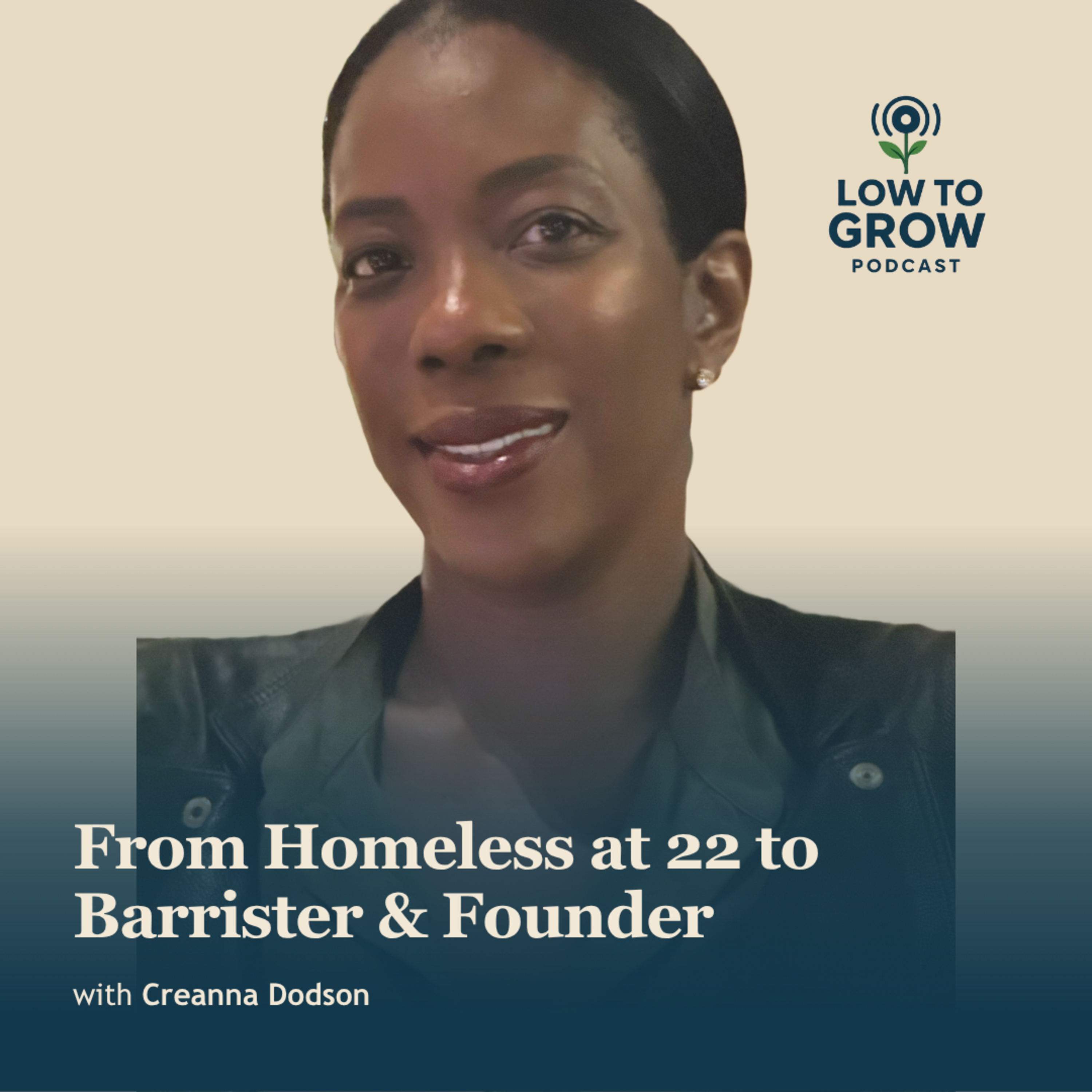
Creanna Dodson is a barrister at Church Court Chambers.
practicing in both criminal and family law.
Creanna Dodson (00:28)
I was really fortunate to be awarded a scholarship from the Inner Temple. That's my in. And that paid for Bar School. Again, that was an amazing in confidence people thought that I had what it took to succeed at the Bar.
now at the chambers where I completed my pupilage. I was taken on as a tenant.
Annie Wenmiao Yu (00:46)
This comes after a 20 year career probation
She's also the founder of Soaring Heights Care.
an organization that she has grown over the past 10 years to over 20 homes and supporting more than 20 children and young adults.
Creanna Dodson (01:01)
I was dealing with a lot of young people who were unaccompanied asylum seeking children.
if I could change anything it would be poverty. I think it would be one of the simplest things that we could do. I don't understand why we still have such disparity or such, a wide gap between those who are so well off and those who are barely surviving.
Annie Wenmiao Yu (01:24)
And on top of all that, is also a proud mother of four
has carved out her own route in life from humble beginnings.
Annie Wenmiao Yu (02:25)
Creanna I am so excited to be having you on the Low to Grow podcast. Let me start by asking you, who do you want to be listening to our conversation today?
Creanna Dodson (02:25)
⁓
I think I'd like younger people who are sort of navigating life and at the point where they may be making changes in respect of their career, where their life is headed, to really sort of take heed and understand from my perspective
It doesn't matter what happens, you know, in terms of the situations you're faced are different options. So yeah, younger people.
Annie Wenmiao Yu (02:59)
you've had a super interesting career trajectory. you say that your story started?
Creanna Dodson (03:00)
Can I honest you? do you say about George Wimbledon's
outfit? I think we have to go back to 2003 and it's really interesting because that's when I had my first daughter. She's now 22 years of age, and I think if we're really honest about it, I was only 22 at the time as well and really had very little direction in terms of
what the future held. And I found myself being pregnant, not really understanding where I was going to go and what I was going to do. And I was then faced with homelessness during that period and really had to navigate not only my life, but also the life of my newborn who ⁓ didn't ask to be here, but was here. And I just felt I had a duty to make things better for the both of us. But it really has been sort of trial and error.
in terms of the journey, but yeah, that's where it started. It started, you know, as back as 2003. then became a probation officer after having a very short period of maternity leave. In those days anyway, you know, it was a very, very short period and period, and decided that I needed to pursue my career because I knew that actually there was this young child or a young baby that was dependent on me to sort of show her the way.
And so I joined the London Probation Service as it was called then or London Probation Trust and I did my first degree which was a degree in criminal justice with probation studies. that was in 2004 became a probation officer, qualified and stayed with the probation service for two years after that. Around 2008, I started to get a little restless again.
and then decided actually I needed to do more because although I had a good solid career as it was in those days, I just wasn't able to make ends meet financially knew that it couldn't continue. And I was very fortunate at the time to have really good support systems in place and fantastic friends. To this day I have an amazing bunch of friends.
who were able to really look at me as a person, see my qualities and sort of signpost me to where they thought my skills would lend itself and then decided to go back to university. I did a masters 2010. By that time I'd had my second child. Every stage of my life where I've had children.
I've sort of progressed onto the next because I've just had to. to. And I think it always goes back to the first point in 2003 where, you know, you're faced in that situation where you don't know what to do, but there's others depending on you. you. And so I went and did a master's in social work, graduated from that, began my career in social work. And I was very fortunate to set up my company in 2013, a company that still exists to this day.
a company that employs over 20 people and supports or has supported countless young people, vulnerable young people in terms of supported accommodation and those leaving care. been a journey, but it's been a journey sort of the way. And at a later stage, 2019, I decided actually, I think I'm going to venture into law.
And so I've sort of combined managing the business that I still operate to this day with support. You know, I have a fantastic structure in place. have operations managers, residential managers as well, and countless other staff that support me. But that sort of assisted me with pursuing my legal career. And now I'm a practicing barrister. Interestingly, I practice within crime and family law.
I suppose I'm always asked this question, why that? But if we really reflect upon it, it was underpinned in everything that I'd done up until that point from probation services or whether it was social services in terms of social work. Law underpinned in terms of the decision making and now I'm here. So it's quite an interesting journey.
Annie Wenmiao Yu (07:10)
That's an amazing journey and it's so incredible to hear about you going back to university, doing master's degrees whilst raising your young children and then also making, in your career to new things that really challenged you and also excited you. you've grown Soaring Heights Care to now
Creanna Dodson (07:15)
Thank you. Yeah. Yeah.
Annie Wenmiao Yu (07:28)
I think around 10 homes and you are supporting about 20 children and also young adults. And it's pretty incredible how you are able to do that whilst looking after your children and also becoming a barrister. What did you learn about each of those stages of your life?
Creanna Dodson (07:34)
Yeah, that's correct.
I think one of the biggest lessons I've learned is my ability to be resilient, my determination, because it sounds fantastic to hear of all these accomplishments, but what I will say honestly to the audience that it doesn't come
without setbacks. So it hasn't just been this perfect sort of trajectory where I started off in 2003, 2004, and then everything's gone swimmingly well. No, have been setbacks. You know, I've been let down. I've had to sort of re-strategize. But I think at the core of that, having the determination and being resilient, you know, to when you receive those no's and you are going to receive those no's because that's part of life.
But as long as you know what you want to do and you've got that determination, you've got that grit, and you're really willing to put in the hard work because, you know, there's been countless sleepless nights, periods of stress, but I think sort of being grounded and understanding that actually I've got to put the work in to get there. And, you know, when I was growing up, my mum used to use this phrase.
Deferred gratification. As a young child, a teenager, that went right over my head. Like, what was this lady telling me? But it really makes sense. You have to lose, I believe, in order to gain. And so at every part of my journey, I've really sort of appreciated those setbacks because I've learned lessons during those periods. During those periods of rejection, I've been able to reflect, as I said, to re-strategize, to think, okay, what can I do next?
whether that be upskilling myself in terms of work experience I've done, or as you've just pointed out, in terms of going back to study. I've studied throughout, I now have four children and I've studied throughout every pregnancy and, early stages of having children and they've been a part of that journey with me. So it can be done. Yes, it's difficult, but it can be done.
Annie Wenmiao Yu (09:48)
And how are you teaching your children about delayed gratification?
Creanna Dodson (09:54)
I think they see in real life because they see me put in the work, they see the sacrifices. My children still have to deal with the fact that I'm not always available. For example, I've just finished quite a long trial where I've been away for the past seven days in Southampton. Southampton. There are periods of time where I'm not there. There are periods of time where I miss out on
quite crucial moments to them, but I think they understand the reason why and they see the sort of, the end results as to it. But they know they've got to work hard and it's really good to see because actually my eldest daughter, who's now 22, is a final year law student and I believe she'll be following she shared with us
just a couple of weeks ago that she's ready to go to bar school. So I believe actually without me even encouraging her to follow the same as me, just by her seeing me do the work and the other children seeing it, you know, be done essentially in real life, it gives them hope to think that actually I can do it as well because you know, mum's doing it.
Annie Wenmiao Yu (11:02)
Leading by example and also just children observing and learning and doing through osmosis. I feel like that's the strongest children to learn about anything that's super meaningful. I want up on something that you said earlier about having to lose in order to gain. For you, what would be one example of something that you had loved or that was denied to you?
Creanna Dodson (11:03)
Yes.
Yeah.
Okay.
⁓
Annie Wenmiao Yu (11:28)
that actually changed the trajectory of your life for the better?
Creanna Dodson (11:32)
Well, I think there's been so many periods of having those setbacks or having those instances where things have been denied. If I just look at work experience, you know, being missed out for promotions at work or
being told that you don't have the necessary skills at that point, or being asked to really reflect about whether or not the career path you're making is the right one for you. You know, I'm not very good at dealing with no's and I think that's just my fighting spirit. So whilst I'm not going to throw a tantrum, when you tell me it can't be done, I'm going to say, well, hold on a minute, let's find a way. So instead of again, looking at the rejection or taking those setbacks and just giving up, I don't.
because I think actually there is a way and I'm gonna uncover that. It may take more time, it may take more hard work, but I will find a way because I truly believe that the world is your oyster. And actually when we look at the name of the company, Soaring Heights Care, there's a slogan behind that and that's making the impossible possible. And I think that's one of the other things that I stand by. by. Life is not gonna be...
roses, or all flowers, it's not going to be perfect. There are going to be highs and there are going to be many lows, but it's what you do when you receive those lows or those no's, and how you sort of dig deep and really reflect. And I think actually, if I'm being really honest, at every setback that I've had, despite feeling the obvious feelings of hurt, rejection, failure, inadequacy,
it's allowed me to really have that silence and that space to think and make myself vulnerable and to think and reflect about what I want and how I'm going to get there and what obstacles are in the think I'm really good at being able to, when I receive a no and a setback, not just take it at face value, but peel those layers.
and see what I can do within myself to navigate around that.
Annie Wenmiao Yu (13:43)
Has there always been a quality that you had possessed or was it something that you had to develop as life went on?
Creanna Dodson (13:46)
Thank you.
I think there's truth to both senses of what you say. I think part of me is that I'm just that person. It's my character and my nature that again, I just don't take no for an answer. And I've always been the person that's just like, okay, let's go again. But also I just through experiencing life.
Annie Wenmiao Yu (13:54)
Mm-hmm.
Creanna Dodson (14:12)
and experiencing some of the many setbacks that I faced. When we started this conversation, I spoke about being a young 22 year old girl who found herself homeless, thinking that there was no way out at that time, living in temporary accommodation with a child that's looking up to me, a baby that's looking up to me. And that could have gone so many different ways,
but I still dreaming. I kept the dreams alive.
I was like, I've got to make it work. So I think it's part of who I've always been, but also circumstances that you face can sometimes change the way you react. And if you go through life, having had a number of setbacks, it can go either way or it can go in a different way potentially, or it can really spur you on as well. And you're essentially, you're wearing this invisible armor as you sort of navigate through life. You know, you're just learning more and equipping
yourself with more as well.
Annie Wenmiao Yu (15:09)
I think it's really beautiful. That's such a lovely analogy of how as you go through life, you're building on the armor that you wear and that's something that you can really put to be used for good. And it's a conscious decision of whether we choose to take setbacks or failures as tools to build our armor with or to give up. And as you were saying earlier, there are so many directions that your life could have taken when you were homeless when you were 22 all with your first child. you mind sharing a bit about what was going through your mind?
Creanna Dodson (15:11)
Thank you. Yeah. Yeah. Yes.
Bye.
⁓ gosh. Yeah. I was thinking about that recently actually. I think there was definitely
Annie Wenmiao Yu (15:38)
that period of time. And also, how did you find your resilience and your grit within you to put yourself and your child onto a good path?
Creanna Dodson (15:51)
an aspect of naivety on my part, I was still very young. On one hand, I was an adult, but I was still very young. And these were situations that I never encountered before. So a lot of it was thinking on my feet. But again, I've been so fortunate to have a wonderful support system in place. I have friends that can really see
and sort of value me as a person. They know my skills and my qualities and they've really wanted me to succeed. And I think when you've got people that are really batting for you and that really want to see you do well because they know that you can do it, has assisted greatly. But yeah, I think obviously it was very different then, knew that these children deserved more and I knew I had to be creative.
⁓ creative. I knew I had to be creative for myself, but for my family as well, to be able to provide them a standard of life that they deserved. And also myself. I'd always had these aspirations, but sometimes we down with life and life throws many curve balls at you. And, you know, they can initially stop you in your tracks. But again, I've had...
those people around me that just encourage me. And at every point that I've studied, whether it be the undergraduate degree, the master's degree, you know, doing a postgraduate degree, and then afterwards going to bar school, I've had people championing me. my husband's been a fantastic support as well. He sometimes sees my potential more than I can because I am human at the end of the day. And so I think in terms of doing the demanding roles now that I have.
Annie Wenmiao Yu (17:28)
you
Creanna Dodson (17:36)
having that support system that just believe in you and people that just say you can do this, you've got this, we know what you're capable of. You've got so much empathy, you're so caring, you're very thoughtful the way you engage with people, you you've got to steer into that direction. direction. They have been things that I think have just been invaluable, really.
Annie Wenmiao Yu (17:55)
I you referenced that your husband was able to see potential in you that you were not aware of. How did you pick such a husband?
Creanna Dodson (17:59)
Yeah. Yes.
How did I pick? Well, it's been a long journey. That's what I'll tell you. It's been a very long journey. We met each other when we were very young. And, you know, as you get older, you you change or you lose certain habits and then you habits and things as well. So I think we've gone on this journey together.
Annie Wenmiao Yu (18:06)
Yeah.
Creanna Dodson (18:22)
But one thing I will say is he's always seen my potential and he is by far one of the that I have. In fact, it was him that's encouraged me to come down the path of law. I never saw myself as a lawyer. It wasn't something that I remotely thought a viable option. But option. But I think just having people around you that can just see the skills and the qualities that you have.
and know that you can do it with the right signposting, know, with meeting the right people as well, and with doing the hard just been fantastic to have him by my side as we navigate together on this journey. And, you know, even with the company that we've built as well. So it's fantastic.
Annie Wenmiao Yu (19:04)
So tell me a bit more about how you decided to transition to become a barrister because you you have Soaring
Heights Care, it was a successful organization it's still running so why did you choose to take on something else into your life?
Creanna Dodson (19:17)
Why do you choose to take on something else in
life? I am known as somebody who can get quite itchy feet. So I never get too comfortable. I'm always like, what's next? And you know, my friends refer to me as being quite speedy. That's just the person that I am. I'm here, there and everywhere. Always trying to, you know, have or...
be involved in new experiences and just understand different things. So I think in terms of transitioning to law though, there was that sort of light bulb moment, aha, the law has been the center of everything I've done in terms of my work experience. And it was actually just sort of joining the dots together and thinking, actually, I do advocacy when I'm working with clients.
I've got all of those soft skills, I've got lot of transferable skills, I know the law. I can do this. And again, with the support and with the encouragement, it just felt like it was natural at that phase in my life. At that time within the company, I was dealing with a lot of young people who were unaccompanied asylum seeking children.
And so just by the virtue of that, I was working quite closely.
or signposting to solicitors. So I think there was one angle of me sort of becoming interested in law. there'd been experiences as well in terms of family who had required legal advice and somehow you just, become involved in those situations and you're signposted to amazing advocates. And then it just sort of happened naturally. When I say it happened naturally,
I did have to think about what I was doing. It wasn't I just sort of fell into. There There was definitely thought about that transition. But in terms of me transitioning to become a lawyer, I think it was relatively simple because of all of the past experiences and those transferable skills that I had. So I completed a graduate diploma in law.
And then I was really fortunate to be awarded a scholarship from the Inner Temple. That's my in. And that paid for Bar School. Again, that was an amazing boost in confidence that actually people thought that I had what it took to succeed at the Bar. And lo and behold, I completed Bar School. And then I was very fortunate enough to obtain pupilage in 2023.
I'm now at the chambers where I completed my pupilage. I was taken on as a tenant.
So again, it's just all sort of slotted in, in terms of moving into this new phase of my life, as I like to call it. Who knows what the future holds? That's what I say. Who knows where I'm going to go next? But I love it because it just feels as though everything that I've been working really hard for over the last 20 years has finally come together.
and I believe that I'm just doing the best job that I can do in terms of still being committed to working with the most vulnerable in society, ensuring their voices are heard and providing that support that I can do when I'm at court.
Who knows where I'm going to go next? But I love it because it just feels as though everything that I've been working really hard for over the last 20 years has finally come together.
and I believe that I'm just doing the best job that I can do in terms of still being committed to working with the most vulnerable in society, ensuring their voices are heard and providing that I can do when I'm at court.
Annie Wenmiao Yu (22:46)
it's so inspiring hearing you describe your journey and also how all the pieces of your life are fitting together now. And it's really, really nice to see you light up when you talk about it. to see you light up. Yes, yes. And also to hear you light up earlier when you were talking about that there is degrees that you did. I think that's so amazing. And it shows that you are someone who is on the path that you are meant to be and that you're excelling in. What would you say is one
Creanna Dodson (22:48)
Thank you.
Yeah. ⁓ thank you. I've heard that happens. ⁓
Yes. Yes.
Annie Wenmiao Yu (23:13)
unfair advantage that you have had, that people wouldn't necessarily think
about.
Creanna Dodson (23:19)
Unfair advantage, that's a good one. I think actually in this instance, it's been my age and my life experience. I think that has been invaluable in terms of transitioning into law in particular. Just because I have navigated through life to this age with a number of setbacks. It hasn't been a hindrance for me.
Yes, I've been annoyed. Yes, I've been disappointed. Yes, I felt like giving up, but I haven't. And I've just been able to sort of use all of those experiences. And it's essentially shaped who I am today. So I think my age has definitely allowed me to, know, as I've got older, actually, I've got a bit more chilled as well, I must say. I was anxious, I think, in my early
was a definite need to please and eagerness as well. And I think as I've become more older, I really value what's important to me. And then ultimately that's my family. That's the most important thing. So it doesn't matter how ambitious I am. I need to make sure that my family are okay. And so obviously I know sort of where to prioritize those goals, but I think my age and my life experiences have definitely shape.
where I am
Annie Wenmiao Yu (24:32)
What advice would you give to someone who's in their 20s who is trying to, out a career in corporate or in law themselves and if they also relate to being people pleasers?
Creanna Dodson (24:34)
Thank
community.
If they have a question, please leave a comment we
will be moved. Firstly, don't be so hung up. Don't be so anxious like I was. You need to work hard. I'm not going to sugarcoat it. You have to work hard and you have to be determined, but enjoy life. We don't know how long we're here for. Enjoy life, enjoy experiences.
have new experiences, meet new people and just understand and believe that actually where you're meant to be, you will end up. It's going to map itself out along the way. So you need to work hard. You need to be ambitious, but enjoy yourself. Take time for yourself. Look after your own emotional wellbeing, your mental health, have breaks. I see people work so hard now.
And whilst on one hand, you know, I commend that, I think that the flip side of that is actually we can work too hard and not really take stock of what's in front of us at that moment. So live in the present as well is something that's really, really important for me. And it's something that I think I do. I take regular breaks. I am known for taking breaks. I know my capacity bucket, my emotional capacity bucket.
Annie Wenmiao Yu (25:48)
Hmm.
Creanna Dodson (25:58)
I know when I'm a bit tense and I need to just that's a habit that I've picked up through the work experience that I've done. Essentially, you're dealing with very involuntary clients, clients that don't want to be around you, people that don't necessarily, want the intervention. And it can become very overwhelming. So what I've learned is that actually every couple of months have a week off. It's okay. Do something fun. Switch off. Put the laptop down.
it's still going to be there come back to it. So having that balance is definitely something that I think is important as young people try to careers and just sort of navigating life. I honestly believe that things are harder now. And it's something that we don't really talk about as much, but things are harder now. Although I'm sharing experiences of being homeless and feeling to some degree
helpless. Things are much harder now than they were 20 years ago. So I think it's really important to get that balance. Yes, you want to excel in your career, but you also need to have a life. That's important.
Annie Wenmiao Yu (27:03)
In what ways do you think that things are harder now compared to 20 years ago?
Creanna Dodson (27:07)
I think in terms of the available opportunities. So for example, I was homeless in 2003, early 2004. know, I come from sort of ⁓ a very modest ⁓ background, working class background. You're able to approach the local authority and get assistance. You can still get assistance, but it's very limited.
I was still able to be supported within my local connection. Now, for example, if somebody requires assistance in terms of housing, they may be accommodated hundreds of miles away. They don't have those options. So I think even in terms of job opportunities sometimes, it's rather limited. But that's just the way the world is essentially now. And we've got to learn and find new ways to adapt to that. So I think that's where I would say it's a bit challenging. It's a bit more challenging.
I also think, those days we were just more friendlier. We a bit more friendlier, there were more discussions, you you'd just sort of be out and around. We didn't have remote working. It was every day, nine to five in the office. Remote working is more of a newer concept, something that we're all still adjusting and adapting to. But it allowed us being in the offices and seeing people to interact. And that's where you started to pick up those soft skills. You know, you'd go out.
for after work drinks or just to socialise, whereas now it's just a bit harder and people are more alienated now. So I think there's just a number of challenges that younger people are faced with.
Annie Wenmiao Yu (28:31)
Understood. And thank you for sharing that. For you in your position as a successful barrister, how do you see AI tools coming into play in your industry?
Creanna Dodson (28:42)
Yes, well, I think in terms of the legal sector, it's something that we must be aware of, and we must adapt to and sort of incorporate into our work. But I don't see it as for now, being a major threat.
Annie Wenmiao Yu (28:59)
Mm-hmm.
Creanna Dodson (29:00)
law as a whole, but it's something that we need to understand . It's a growing area that is going to, it's here to stay, it's here to stay and that's the end of it. So we must adapt and we must understand and we must implement as well.
Annie Wenmiao Yu (29:14)
And what is one thing that you are doing yourself to adopt or to embrace AI in your day to day?
Creanna Dodson (29:15)
Okay.
I'm still at the end, at the end of the AI tail. My children are sometimes encouraging me to understand the functions of tools, ChatGPT, I'm still a bit behind, but I am sort of coming to grips with it and understanding it more. And again, you know, it's here to stay. It is going to change.
and shape the way that we work, the way that industries run. So I think it's just about recognising this is the way that the world is going to operate and incorporating it into what I do. my children are fantastic, I must say. They're saying, mum, you need to understand this, you need to do that. So yeah, I'm being assisted by the younger generation.
Annie Wenmiao Yu (30:05)
That's beautiful. And Creanna, if you had the power, what would be the one thing that you would change tomorrow?
Creanna Dodson (30:12)
⁓
gosh, well the one thing that I think there should be equality for all and I've always felt that and I've always tried to champion if I could change anything it would be poverty. I think it would be one of the simplest things that we could do. I don't understand why we still have such disparity or such, a wide gap between those who are so well off and those who are barely surviving.
I still can't comprehend it. That would be on my wishlist, 100%.
Annie Wenmiao Yu (30:45)
one thing that people could do from tomorrow to work towards that future.
Creanna Dodson (30:51)
In terms of individuals, that's rather challenging. I mean, we could all sort of assist more in terms of resources that are available, local food banks. But I think it comes from ⁓ a sort of a wider focus of government policy and it requires more from government essentially essentially. It's something that world leaders can come together on
and really pay more attention to,
Annie Wenmiao Yu (31:17)
Wonderful. Thank you for sharing your thoughts on that, Creanna. Let me end by asking you our podcast staple which is, what is one thing that you believe will allow more people to have better mental health?
Creanna Dodson (31:23)
⁓
Taking time out. I touched on this before. It's so important to understand and recognise when your capacity bucket is filling. It's about to tip over. You need to understand the limitations of what you can do and what you can't do and understand that you can't do it all. I've had to find that out the hard way.
I am not a superwoman, I am a human being. There's only so much I can do and that's why I rely heavily on those that I trust who are around me to support, to sign posts and for me to delegate as well. But looking after your mental health, looking after your emotional wellbeing is paramount. And definitely I think by taking some time out, having breaks, travelling, even just enjoying hobbies.
Having a pastime, rest and recharge are very important things in this very demanding world that we live in now. Thank Yes. you very much for having me on and for allowing me.
Annie Wenmiao Yu (32:27)
Creanna, it's been such a pleasure to talk to you and thank you for sharing so openly about your own experiences and also for painting such a vivid picture of what it means to be succeeding in today's world.
Creanna Dodson (32:44)
to share those experiences and hopefully give some pointers to people of things that they can sort of utilise and take on.