Eva Kerschbaumer (00:00)
I essentially stole that ring from my mother.
I'm not proud of that move actually. I was just very desperate.
Annie Wenmiao Yu (00:59)
In 1996.
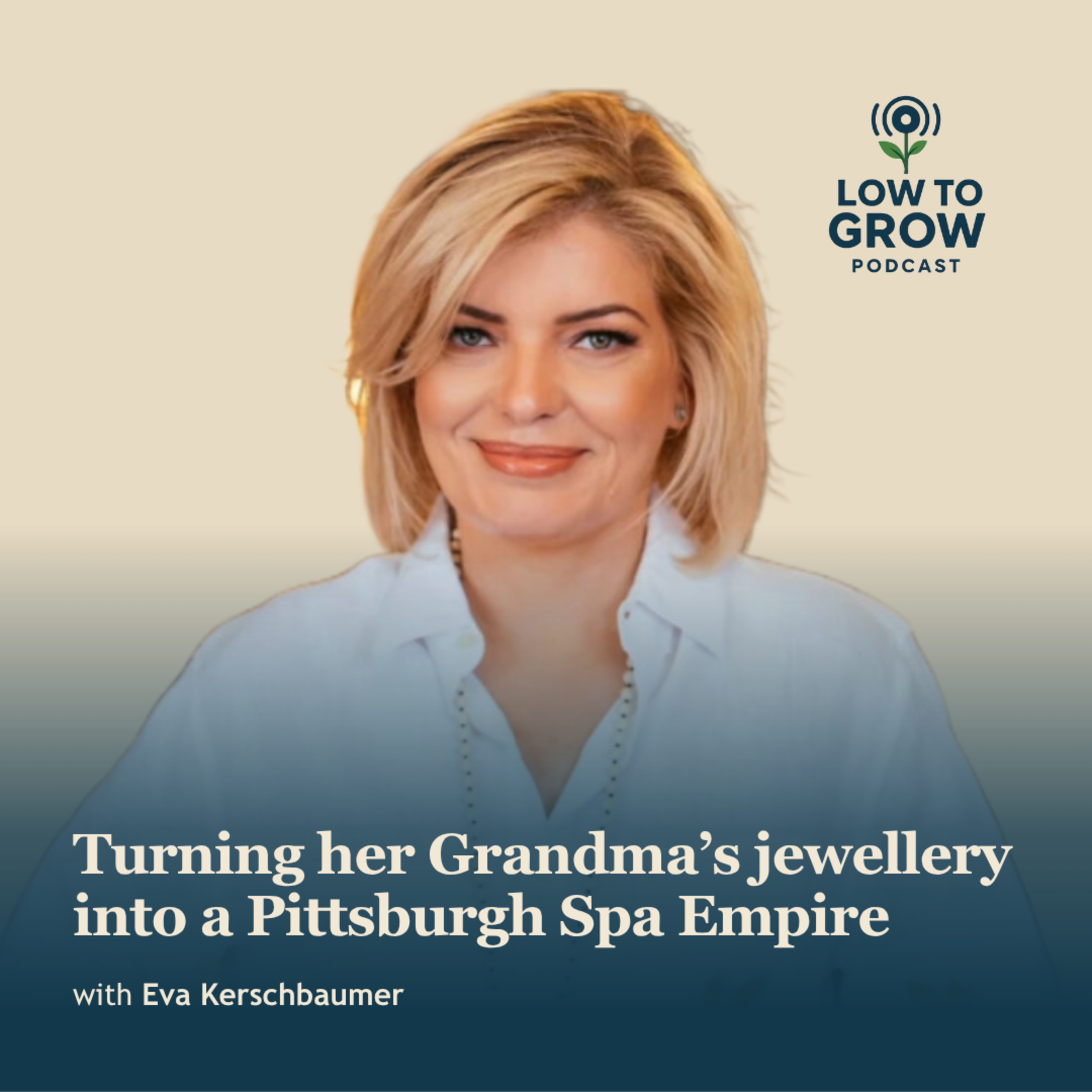
Eva Kerschbaumer sold her grandmother's jewelry and brought a one-way ticket from Hungary to New York City. She arrived at the airport with just $50, the clothes on her back, and no family at all in New York and speaking no English. After spending the money on a hamburger and a taxi ride to Penn Station, the $50 was gone. But thanks to the kindness of an Amtrak conductor, Eva was able to make her way to Pittsburgh, where she has been based since. There in 1996, Eva started
working in a local salon and learn English by watching reruns of Gilligan's Island. mere six years later, was able to open her first own day spa called ES Spa with just three employees and it was located in a renovated walk-in cooler at the local Yacht Club. For Eva, business grew rapidly so that by 2005, Eva was able to build her dream spa where it still stands today.
This is a 7,000 square foot, green certified spa sanctuary in Pittsburgh. And this is where you can find it to this very day. Fast forward 20 years, Eva's client list now includes A-list celebrities, professional athletes, and Fortune 500 executives. Her success comes down to one simple philosophy, which is that Eva always puts her clients needs first, and she works harder than anyone else in the room in order to deliver the most effective treatments with both heart.
and integrity. I am so humbled and honored to have Eva join me on the Low to Grow podcast to share her story and what she has learned as an immigrant from Europe in the US who has really made a name for herself. Eva, it's a pleasure to have you on the Low to Grow podcast.
who do you think will benefit the most from listening to our conversation today?
Eva Kerschbaumer (02:48)
You know, as you were just talking, I got super emotional about all this. You forget when you're going through all this. You you just remind me. The conductor, example, who's bless him, I hope he's just an amazing person. thought that was he helped me to be where I am because I don't know if I would have been able to get to Pittsburgh But I think people who...
have to for whatever reason go to maybe a different state, a different country, they are alone. But you are not alone. There is a reason you are there, and there's going to be people, or whatever that is, going to help you to achieve whatever is your dream. So you are never alone. So that's the person I want to reach to, that when you, whatever desperation or just challenge that you have to
even young people who just have to go study abroad and they feel like it's going to be challenging because they may be you know harder time to make friends and what's it going to be like to be studying in a different city so those are the people I think they would benefit.
Annie Wenmiao Yu (04:01)
I really love it Eva because I think your story it's really for someone who is out of their home country and they might be you know starting a new career or as you said going for university and they they're alone in that new city. Your story has so much learning and also power to give to them. So let's start at the very beginning then so Eva you sold your grandmother's jewelry in Hungary to come to New York with just $50. what prompted that move?
Eva Kerschbaumer (04:27)
I'm not proud of that move actually. I was just very desperate. My parents were really against for me to go. I just, you know, as much as you feel like you have money, but then you realize for the ticket and at the time you had to have this visa card to show to the US that you have some sort of money maybe. So that meant in a bank that you had to have like a minimum payment.
I essentially stole that ring from my mother.
And obviously later I brought her the nicest one that she could just amazing. But that one thing I'm not really proud of . Now she always said to me, it was meant to
happen. It was desperation. Somehow I thought that it is the right thing to do in a sense of maybe it's not the right word I'm using, but I will make it right. And I know these words are dramatic when you say stolen or something, because that was actually my grandmother's ring. And like I said, that is something that I battle with every day.
Annie Wenmiao Yu (05:18)
Mm.
Eva Kerschbaumer (05:30)
Like I said, I bought my mom a nicer and fancier or whatever you want to call it, but the sentiment is not that right. Or is that the sentiment? Because essentially I'm able to provide them a better life with how they live right now, because you know how I live now and I what I choose, then I could help them. But it's it's in you, you know, what you did and how you did it.
Annie Wenmiao Yu (05:58)
Thank you for being so honest and sharing that. I think it's quite a personal thing to share and I really appreciate you doing so. On that plane ride to New York City for the first time, what was going through your mind? Because you would be landing in a country in a place where you don't have any family or friends and also the language barrier existed.
Eva Kerschbaumer (06:01)
Of course, you know, yeah, yeah.
Yes.
I and so many people ask me that and I always think of I don't know I'm going to be again really raw about this. think I was just stupid, naive, ignorant, naivically dreaming everything is going to be okay. Obviously you have a natural nervousness but as I'm a parent now and I remember my son this past year wanted to go to Iceland for eight
days and he cruised around in a van and my heart you know was sinking every day and I followed the GPS and hit the phone you know the locator and I really remember thinking , my mom didn't have that chance you know
Yeah, I would call it stupidly naive. Like, everything is gonna be just fine. Somehow I am gonna manage to learn language really quickly and this country is gonna welcome me. Now, it was many years ago. Things are different now. This is so much harder for people like me to come over to a country in that situation. I like to think...
if it's called luck or serendipity or whatever you want to call it. But yeah, what I was feeling nervousness, but extreme hope for some.
MTV like world that at the time I loved, you know, that the sound of English I felt very cool and yeah,
Annie Wenmiao Yu (07:41)
I love how you're being so blunt and also very refreshingly honest about it because you could have so easily said and framed it in a much more positive way. But, you know, I think for, I guess, young people, whether back then or today, it's the same, right? you have a sense of refreshing optimism about the world and also this innate feeling that, you know, I can really do anything.
Eva Kerschbaumer (07:50)
No.
Annie Wenmiao Yu (08:04)
and to then give yourself the belief to travel across continents to try and a new life for yourself. And I also really liked what you said about learning English by watching reruns of Gilligan's Island because that's such a vivid image. And for me, my parents don't speak English as a mother tongue as well. And I think watching soap operas or TV shows and also listening to songs, like country songs specifically, because they're slower, it's an amazing way for them to have learned English as well. But I was quite curious.
Eva Kerschbaumer (08:08)
Yes. Yes. Yes.
yeah.
Yeah.
Annie Wenmiao Yu (08:34)
For you, learning English by, I guess, working and also watching Gilligan's Island, what did that experience teach you about finding your way in a completely new world than what you're used to?
Eva Kerschbaumer (08:45)
very visual, very visual to this day. And I think the way I express myself, sometimes with my face or my hands, gesture, or when I talk to, when I teach young estheticians about aesthetics, I'm always trying to give them a scenario, almost like a movie scenario to make them understand. And I just don't think I could quit that because this is how I learned things. And maybe I was always like that. I didn't know, but.
learning English through movies. I remember the first movie that I went to in a movie theater was called The Crow, you know, The Really Scary Bird, and it was a horror film. didn't know. And I, it was an afternoon matinee, and I just thought, I think this is a horror movie, and I'm kind of scared right now, but I just think I'm gonna sit here.
Annie Wenmiao Yu (09:24)
Mm-hmm.
Eva Kerschbaumer (09:37)
I knew then that that's a difficult movie to learn English from because it's more imaginative, it's superficial or whatever. But Three's company, Gilligan's Hire, the gesture of if you look at those actors, how they try not to tell you and overacting their little funniness, you could sort of guess what they were saying, right? So that made it easy and I realized, okay, I know. And like, I don't know.
Annie Wenmiao Yu (09:41)
Mm-hmm.
Mm.
Eva Kerschbaumer (10:07)
Gee Willikers was one of my favorite sophisticated words that I learned from that movie. And I used it all the time. And I thought, ah, I am so perfect English now, just because I could say Gee Willikers I sort of knew it's a positive, like something super, but I didn't exactly knew. So I used it a lot, later on a friend said, I think you might wanna.
Quit using that word. It's not always good for everything.
Annie Wenmiao Yu (10:37)
I love that. Could you share a bit more about those, you know, first few years in the US when you were working at the
Eva Kerschbaumer (10:42)
It was,
It was difficult. coming across new students, when I realized and I could place them in my position, because a lot of times I'm a people pleaser. So I would always say, yes, yes, I understand. I had no clue. I had no clue what they said to me. I had no clue what they wanted from me. And I had to sort of figure it out. And
Most of the time I did a pretty good job. I had times that I couldn't. I couldn't make a client understand that I wanted them to lay comfortable in a bed. I winged it a lot, like a lot.
And people pleasers probably will have a harder time to learn English. It's because you think you know, you want that person to think you understand things. And I think it took me back probably a year or two, because I thought, yeah, for sure I know. And I'm sure people will think like, I don't think she has any clue what I just said to her. But I would smile. So I was extremely pleasant always.
It puts me on ease when I go to Europe or travel to countries that may or may not speak English because I know what it's like. You just have to really make sure, you really truly understand what I'm saying? And I'm happy to work it out with you, not being short or I can't believe.
she just smiling and has no clue what she's saying because she wants to please me or I wanted to please my boss or the clients or the coworkers like yes I think I understand why you want me to use acetone to blush this floor not sure okay it's white there's a lot of wax on it hmm why acetone
Annie Wenmiao Yu (12:27)
Whilst you were speaking, was actually thinking, yes, having to learn a new language as an adult in a foreign country, I think that probably teaches a lot of tolerance and patience, which when of course, as you were saying, you are now able to exhibit when you go abroad and when you're interacting with other non-native English speakers as well.
Eva Kerschbaumer (12:37)
patients.
it's culturally
too, because don't forget, I come from a country, of socialist capitalist... it's just sort of changing into, right, in the 70s, 80s. So authority, for example, we've learned to absolutely no say no to it. Our parents no say no. So the patience, the people pleasing comes from that. It's that culture background.
Annie Wenmiao Yu (13:07)
Hmm.
Eva Kerschbaumer (13:08)
different countries, different backgrounds, different social levels might learn English a little bit different. an older adult obviously for our age the patience might be a little bit less, it probably would be a little bit less likely or it sets them back a little bit. And I also think at the time for me learning to think about a culture about
in the United States versus, you know, well, are they respectful for my culture? What I believe in, it really didn't matter to me because I was so young and so naive. And then I thought, their authority that this is my boss. This is a client who's going to pay for my services to wax her eyebrows or whatever. So I am doing whatever they want to do. There was no
challenging them. I think now and maybe for somebody older than me or like this age, I probably would have a harder time to learn, you know, because I think I would have a little bit of back experience that they would challenge me on that.
Annie Wenmiao Yu (14:16)
I think a lot of people who work in people facing roles, myself included, would normally relate with being innate people pleases. But then over time or over a career that has to change, so for example, in corporate, if you go into management positions, and for yourself, I guess, when you launched your company, how...
Did you feel that your innate trait of people pleasing has actually developed or changed over the course of your career?
Eva Kerschbaumer (14:42)
It's a very good question. And I'm struggling with that a lot because having, you know, at one point, 35 employees now I have 22. I still want them to be happy. But as I'm growing older, I went through from cleaning the floor with acetone to somebody and now supposed to be the leader of the place. And I'm still cleaning the floor, you know, because I want to be part of everything of the operation. So I understand it. So I'm spending time with
the people who are doing the laundry, the people at the front desk, because I want to make them make their challenges. it's still hard for me to delegate. And for have them learning, if me not delegating just doing it, that's good. I just learned micromanaging, right? And that's a difficult one.
Annie Wenmiao Yu (15:30)
Hmm.
Eva Kerschbaumer (15:34)
because you want them to learn through experiences from not doing it or having that conversation. But if I do it for them because it's quicker or I'm so experienced, they're not learning. but I want them to have a better work experience than I had. had. Is that a good thing? Is that a good thing to have
very nice boss versus a very fair, tough, not so always pleasing boss in a sense of
When they do something, for example, in my place right now, I'm always trying to put them in the position that I was 30 years ago. This is a different time right now, you oh, you have an upset stomach and you don't want to come in to work today. It's okay. I do your work for you. It can't, I can't grow to be a bigger company if I keep continually doing that. And I have a really hard time to say , "Well,
Annie Wenmiao Yu (16:17)
Hmm.
Eva Kerschbaumer (16:37)
take some Pepto-Bismol or whatever that is or some electrolytes and you're going to be just fine," because that's what I would have done. I wouldn't even ask my boss. Never, never, never, never. I would have suffered through. But is that good too? Do I need an employee feeling uncomfortable throughout the whole day? She's not feeling well. She can't perform. these are the challenges that I have and I don't want my past experience
Annie Wenmiao Yu (16:56)
Hmm.
Eva Kerschbaumer (17:04)
that on them because there was so many years ago different things I need to learn from them. I think I worked too hard instead of smart and young people now work so much smarter than I was at the time and I need to learn from that. And it's still a little bit of a challenge, you know, because you have this resentment a little bit like, I had to work so many hours to clean that floor, you know.
Like for example, we talk about people in the waxing industry to make sure there's not wax everywhere in the room so clients can see that. And if you clean your room, and now it would be put in my industry, employees would be like, well, can you just hire a cleaning lady? A small business today maybe cannot. So it's gonna have to be part of your job to clean up your area. But now, team members are challenging us well.
This is, this should be part of ES Spa to have a cleaning crew. You understand where I'm putting this in? And in the beginning of my existence, I could not do it. Now I can.
Annie Wenmiao Yu (18:09)
Hmm.
From 1996 to 2002, you were working at someone else's spa salon, and then you opened your first onsite premise in 2002. And then just within three years, so only three years later, you then opened this 7,000 square foot premise, which is where you guys are still based today. How did that happen?
Eva Kerschbaumer (18:31)
I want to tell you why
is that. I would love to have that little tiny small place looking back, but landlord circumstances and where it was located, it was just not feasible. You know, the ownership of that place was changing. So we're basically left out in my husband and I made the really again, I'm going to use the word stupid and I hate that, but if we were naive and handshake.
sort of trusting lease that basically the owners like well, you know Sorry, but we're selling this now. I mean moving on so we have to find ourselves to To move to a place and we were driving around and I remember just thinking , "where can we move that fast?" My business is getting successful I'm being demanded and I I'm liking that I'm
Annie Wenmiao Yu (19:06)
Yeah.
Eva Kerschbaumer (19:27)
being needed and wanted and clients reaching out and I need to find a place soon but how I'm going to pay for it? What's it going to be like? So he has this, my husband, this brilliant and also naive, very optimistic thing like we'll just find it. It's just, it's going to be here somewhere and we will drive around in the city.
Annie Wenmiao Yu (19:51)
Mmm.
Eva Kerschbaumer (19:52)
we find this sort of warehouse looking place and we're very handy in adapting so we thought okay well one scenario is we'll just sort of like ask them if we could operate in a corner and you're and then the rest and at night we could just paint and fix things and that's exactly what happened and kid you not, these really cool clients would just be sitting next to earch other.
with a curtain between then with in an office cubicle whereas downstairs, at night we would paint and my son in my backstrap and we would paint. I don't even know if we had a mask on it was just desperation. want to be quick and
We were excited. We were very excited because doing it your own, you have some sort of pride, you know, and the layout, it's in a beginning, it wasn't exactly smart, but we were just so genuinely psyched about doing it ourselves. And the more the progress went on, the more we thought, this is it, we could do this.
Annie Wenmiao Yu (20:54)
Mm.
Eva Kerschbaumer (21:12)
We had absolutely zero money. I mean, our car was possessed. I was getting quarters in the place here. The grocery store in this area called Giant Eagle and I would put it in this little machine. They would give you a ticket. Okay, you have $8.75 today to spend. And I find a way. This is what I had. But remember, I lived in Europe, so I was very familiar with shopping like that. And it helped me.
And later on, my mom came many years later to visit me and we took him to, you know, she wanted to go to DC and all these fancy places. And I said, what was your favorite part? And she said, watching you in a grocery store, not looking at prices and putting in your cart. The night. Yes. And I thought, I kind of forgot that I never used to buy $9 olive oil, you know.
Annie Wenmiao Yu (22:01)
wow. That's very meaningful. Yeah.
Eva Kerschbaumer (22:10)
Here I am, I'm able to do that. It puts it back to perspective and thankful and grateful for that. But that's how we did it. It was again, not because we wanted to move. It was truly circumstantial and we made it a place very pretty. But as we're going through the years, things are crumbling a little bit. We have to keep fixing it because we actually thought we're making it this long years.
We were just taking it, you know, when they say stay in a moment and stay in the next minute for that's how we were operating. It's going to be just fine. A year from now, something else is going to happen and good and we work hard and it's going to be better. We were not really planning it again. That's probably wasn't smart, but it's just come from I want to use the word again, naivety and,
Annie Wenmiao Yu (22:38)
Hmm.
Eva Kerschbaumer (23:05)
we were very happy in a sense of...
did something ourselves. is accomplishing clients love it. They were so proud of us. You guys painted these walls. There's murals everywhere. Like you did this. I'm so happy for you. I remember seeing a client said to me, why are you carrying all these big laundry bags? And I said, well, we don't have a laundry machine, but we will. We will soon. And she said, let me write the check. So you're just going to detect all my facials from this check.
And I better see a Laundry Machine the next week.
Annie Wenmiao Yu (23:39)
Talk about bringing people along your journey with you. It sounds like your clients.
Eva Kerschbaumer (23:43)
I know, right? She's still our client.
Yes, wonderful, wonderful people. And she's still my client. And I remind her every once in a while how that's why we have laundry machines, because of her. And people care about you and see you work hard. And this is what I love about this country is you have a chance. People you see working hard, they do give you a chance. greatly...
I that and I advocate for that. This is the place people want to come to because they see a chance. You know, they have something to give. If it's landscaping, if it's doing incredible folding laundry, if it's your best eyebrow shaping or the best makeup or incredible science to figure out how to create robots or cure a disease, this is the place to be to have a
chance. And study to be a better yourself because don't forget, I mean, we all have to be honest with this. You could only be better and educate yourself if you have the finances or grants or schools for you to to be a better doctor or a scientist or a better esthetician because you can. At the time for me, it was a challenging one and maybe in different countries.
Annie Wenmiao Yu (24:37)
you
Eva Kerschbaumer (25:03)
for immigrants like me, if you want to be a brain surgeon, and this might be not a country that could help you, and if you don't have the finances or the social level to do that, if you're really smart, they help you, and it's just so great, right?
Annie Wenmiao Yu (25:21)
That's really beautiful to hear. And I think it stands really true to the American dream. I think you're one very good example of making it happen. I was going to ask you because, you know, for you coming to the U S. at that age with the language barrier there.
Eva Kerschbaumer (25:26)
Yes, for sure.
Yeah.
Annie Wenmiao Yu (25:37)
to you now being like a master esthetician that both clients and travel to specifically to come to ES SPA to work and to train under you. How did you manage to build your name and also the general brand awareness of what you do from someone with $50 in her pocket who landed to then, know, 25 years later with this establishment under her name.
Eva Kerschbaumer (26:00)
I do have to think that I have to thank that to people around me. Like there was this word of mouth or like, okay, she was great. You gotta help this girl. She worked so hard. And my husband's family was great. His mom at the time worked in a clothing shop and she saw me try and she's like, okay, I'm gonna try and help you and I'm gonna send every lady to your way. My husband was like really this big marketer. I'm gonna try to promote anywhere we went.
Have you met my wife? She's the most amazing aesthetician ever. I wasn't. But the, if you want to call it luck, yeah, I, people become a cheerleader of mine. And that's drived me to be better because I had to make sure, however higher they talked about me, I thought, now I'm going to have to be even better just to make sure I.
match that what they say, you know? And that's how it happened. This Pittsburgh is a really cool town to be that way. They're supporter. It's a town when people want to help each other or friendly. I'm not sure how you would call it, but yeah, I highly recommend people to come here, by the way.
Annie Wenmiao Yu (27:16)
It sounds like a really supportive environment. I was just laughing because I think how I came to get to know you was an email from your husband saying, hey, have you heard of this master aesthetician, which I absolutely love? And then I realized that you and him worked together. And I was quite curious to understand what is it like working, I guess, in part with your husband?
Eva Kerschbaumer (27:18)
It is. It is.
I know, I know, I know, I I know.
it is
difficult. He's a numbers guy. He's a cheerleader. He's absolute promoter. I am more emotional. I more want the best. I want the best steam machine or the best laser. But it's not always that we can afford. So I think we balance it out. I am not
Annie Wenmiao Yu (27:57)
haha
Okay.
Eva Kerschbaumer (28:00)
I would have never reached out to you and say, I want to be on your podcast. So for promoting myself, I need him now. I would be perfectly comfortable just working in my event. He says, this is crazy. need to, you need to do this. You're so great. You have so many famous people who seek you out and why would you not? And I'm like, that's okay. We need their privacy and that's why they like me. I'm very discreet and this is not, maybe they were just.
locally here. I never operated in my life like there is... there's always... it's not a competition. You're just trying to do the good thing at that time and really, really trying to focus to...
Do the right thing, right? And if you always focus on that, you're going to be good. ⁓ If you're wasting your time to do selfies and make sure your hair is perfectly curled instead of worried about investing in you and be a better what you do that one single thing that you're good at, right? Like I'm really good at figuring out when I see your skin.
Annie Wenmiao Yu (28:48)
Hmm.
Hmm.
Eva Kerschbaumer (29:14)
because I suffered through with acne, horribly. So I know the pain what you were going through, looking at yourself in the mirror and thinking, I don't think I could go outside. There's a way, why is this happening? So I could place myself in there, I'm insightful, so I could figure out what can I do for you then, now? And that's what I'm good at. I'm not good at promoting myself.
Annie Wenmiao Yu (29:24)
Hmm.
Eva Kerschbaumer (29:41)
Typically, I would call myself a little bit introverted for this to be on here. I'm telling you, I can't tell you a man of I don't think I could do this. I don't think I could do this. I don't think I could do that. And he basically just shoving me in here. The reason why we are here. It's and I it's not like I'm 20 right now. I'm 51 years old, so it should be better. But I'm still.
Annie Wenmiao Yu (30:00)
I love that.
Eva Kerschbaumer (30:10)
sweating right here right now. You know, it's not that easy. He would be charming everybody and it comes easy for him. And every once in a while when we work with each other, I always think it would be probably better if he would be the aesthetician and I would be behind background and I would do all the assisting for him and he would just do all the promotion for himself because he's so good at it.
Annie Wenmiao Yu (30:38)
Well, you know, it definitely sounds like you both have a very complimentary relationship and complimentary roles, both in your personal and those your professional lives. What came out, which I found quite interesting is, and you know, this is just based on textbook stereotypes, your husband sounds like a very American guy, you know, because I feel like in America, it is normal and it is accepted to promote yourself and always just be quite comfortable with saying what you have achieved and not feeling any
Eva Kerschbaumer (30:57)
us.
Annie Wenmiao Yu (31:06)
almost like, not shame, but almost like embarrassment behind it. Whereas I guess in some other cultures, so for Chinese culture, for myself, and I guess for you from Hungary, maybe like Eastern Europe, we're not raised to be like that. And which is why even if, you know, yourself or myself, even if we are good at this one thing that we do.
Eva Kerschbaumer (31:18)
Yes.
Annie Wenmiao Yu (31:25)
it's just not that normal or natural to talk too much about it because I feel like, for example, if I talk about something that I achieved really well, there's always this like small thought at the back of my mind, which is, my parents, they hear it, would they tell me to stop talking about it? And it's just that kind of like cultural differences. But I'm quite curious because you have children who of course grew up mainly in the US. What parts of your culture have you really tried to actively share with them?
and what parts of, I guess, your new culture that's a hybrid of Hungarian and also American that you have see develop within yourself as well.
Eva Kerschbaumer (32:02)
When I moved here, I really wanted to blend in. I actually, again, some of the things that I'm not proud of, he does not really speak Hungarian well as he should be. Because I so wanted to be blending as smooth as I can and not being known that I'm different.
I really didn't like my accent. I always think of myself as a guest, as the kind of guest that you want to invite again, right? Not the destructive, not the one who's the loudest and just fit in. And my son Christian is a very, it's a sensibility of people. think he finds his place very sensitive.
Annie Wenmiao Yu (32:21)
Hmm.
Hmm.
Eva Kerschbaumer (32:46)
very creative, but he has my husband's also loudness, right? Like we went to Hungary in an airport and they both said to me,
"why are they so quiet? It's an airport." I'm like, they are respectful for each other. We don't have to be so loud like in America. Like, hi, how are you? And how is that, you know, they were fascinated by that. And it is that difference. But my son is extremely good at people reading, pleasing, almost to the fault like me, but also developed a really good of
Annie Wenmiao Yu (33:19)
Mm.
Eva Kerschbaumer (33:26)
that funny
Annie Wenmiao Yu (33:34)
Sounds like he took very good characteristic traits from both of you and he picked the very best ones from both and it's kind of all merged together. Eva, I was also quite curious to ask you even though you are very well established now, you still see between nine to 12 clients regularly a day during the week. What keeps you so inspired to remain
Eva Kerschbaumer (33:37)
Yeah
Yes, yes, yes, yes, for sure, for sure.
Annie Wenmiao Yu (33:56)
so hands-on when you actually have the resources and staff to be able to take more of a step back.
Eva Kerschbaumer (34:03)
it's also a super good question because I would love to travel more, a lot of creative things that could be doing. But I am so attached to and I want to see the clients health going there. And I just realized lately that I'm almost like a psychiatrist for them to, you know, be treating the overall because I
believe your skin is what you put in your mouth, you know, and the skin taking care of yourself. The first sign of people neglect is depression. You when they're not grooming themselves, it's typically something's going on, insecurity, whatever reason is. And I'm a cheerleader for them on that. And I try to find a way. What is the reason that we are unhappy with our skin? Or is it the dark circles, the
you're having a hard time to getting out of bed and washing your face. What is that reason? feel that need to help. I want you to feel good versus look good. I don't know if you understand the difference because when you feel good, I do believe that you, you
your posture is different, your eyes are brighter. The look good in this country particularly, it might be a little bit superficial. For me, it's about your skin is covering that super special body of yourself. It's that wrapping paper when we open up a package, the pretty wrapping paper, and I could help you wrap that.
amazing special body of yours with this really good skin. But I need you to help me to figure out what we could put inside. So I love helping, I love pleasing, and I love when clients say, I cannot believe how when you were talking to me about taking biotin for my hair, how much it's made a difference. I can't believe that you challenged me on that and I wasn't doing it and
being consistent or vitamin D or all the nutrition or taking probiotic for example or just simplify my skincare and being consistent how much it's changed or seek a dermatologist for a certain type of skin disease right and I feel so much better looking at myself in a mirror because it's not necessarily for a selfie picture but if you feel good about yourself you
You're more performing at your job. You're better at your relationships. You're taking care of your kids better, right? Because you have this self-security and just, if your eyes are brighter and you're smiling, I think around you, everybody, even cats or your dogs are smiling at you back, you know, because you are just alive.
like that. That's the only thing I know. Other than ⁓ I'm a really good decorator as well. Yes. Yes. Yes.
Annie Wenmiao Yu (37:02)
I know.
You can definitely paint murals.
Um,
you know, I really loved the imagery that you gave that and the difference that you were trying to bring up between how someone feels versus how they look. So it seems like what you do at ES SPA, it's about helping people to feel better about themselves innately. And this is like an intrinsic internal thing that comes from nutrition, sure. But I was in their mindset and it seems like even if they might come to ES SPA thinking, Oh, it's for something that's to do with my skin, so that's external. actually after leaving your spa.
Eva Kerschbaumer (37:17)
Yes.
Yes.
Annie Wenmiao Yu (37:38)
they would have had the chance to have conversations and to learn about nutrition and just a lot of other surrounding things that helped to make their skin really good. So I love that. as someone who is a female, an immigrant to the US and also a really successful entrepreneur, what were some of the main challenges that you had to overcome over the past 20 years?
Eva Kerschbaumer (38:01)
I think being a people for the judgment was one of the things that I remember going to a coffee shop and I would ask for a mocha. And if you don't speak Starbucks, sometimes they misunderstand you and you get the wrong one and in the beginning you just take it. And then you're like, excuse me, that's not what I...
I think that was hard for me. I just want people to understand me. want to...
to not to feel uncomfortable if the mistake is made by that. You know what I mean? The judgment of owning a spa, I got that many times that I am not looking like a spa owner would be, like the frozen face, the really thin, you know, and I remember thinking, well, but I'm healthy and I am, is that, or just this is what I am and I don't understand what does it have to be?
person looking like a spa owner, where does it say? Like I didn't know that description existed. And that was hard. and aging in a sense of people think, you know, a 51 year old spa owner should look like 30, you know, and I'm thinking, no, I'm okay. I'm okay with my whatever that is, is because this is this experience. This is what I am.
is part of my life that it is different about me and I kind of like this part right now. I have the wisdom. I have mental little bit different toughness, maybe a little bit more finances. You know, I'm not worried about things as much. You know, I don't spend as much time to make myself
perfect looking like when I was trying to do at 20 because really it's not that what matters. It's when you meet someone, it's the connection that what you have to say to each other, how you feel about each other, even as a friend, right? Or you're seeking relationships. When you were younger, I think it's different. As an immigrant in a beginning, I was really nervous about being judged that I was poor.
that I got here because I was maybe a mail order bride or came here for just money. I was judged by, like I said, the language barrier.
Those were the things that bothered me or I wasn't as smart. I didn't go to Ivy League colleges. That was hard for me to meet my husband's schoolmates who I couldn't relate to those things like homecoming. You don't have homecoming. So I realized I have to learn about homecomings and I'm going to be able to interject with the conversations. And now I'm okay with it completely. But in the beginning I felt...
Annie Wenmiao Yu (40:56)
Mm.
Eva Kerschbaumer (41:04)
I was less and I don't want to be less. I want to be just the same as everybody else. And that those were my challenges for sure.
Annie Wenmiao Yu (41:06)
Hmm.
What What advice would you give to some of the audience members and they might be in a similar position as you are right now. So, you know, they could have just graduated university and starting a new corporate job. Maybe they're the first person in their family to ever work in a corporate job. So in law or finance or maybe similar to yourself, they have just moved to a very different culture and they are finding it difficult to, share a common language because they don't have that shared lived experience. It's a group of people that they have
met
Eva Kerschbaumer (41:43)
Don't afraid just make make eye contact and say hello. I my son always say to me. you have that elevator Or customer service language and you're making friends with even an elevator, you know You just you just talk to everybody now obviously Because I can. In the beginning if you move here, just smile just don't afraid of people Sharing your story like hey, I am working for this company and
Annie Wenmiao Yu (41:57)
That's great.
Eva Kerschbaumer (42:09)
Surround yourself with people like-minded and it's okay. Somebody will know somebody who want to take your, if you're an artist or if you want to be a doctor, somebody will know somebody who puts you in that group. You have to come out of your comfort zone. For me, was socializing was, was difficult. I don't have a car, I didn't speak English, but glad that I was sort of forced to go to see clients every day. Right.
Otherwise, I don't know what I would have been. It was forced to me to be with people. So people will help you. You become who you surround yourself with. It's very, very important. If you are in my position now, what I realized is you can't do everything yourself. You're not a superwoman just because you're doing it. You have to surround yourself with
smart people, because you're to be smart by watching them learning from them, learning from an employee in a corporate job, or a team member, or a support member, it doesn't make you you are less of an executive, for example, maybe if you or you want to be an executive. It's just you being smart about it. And the people who uplift you
Annie Wenmiao Yu (43:22)
Mm.
Mm.
Eva Kerschbaumer (43:31)
Cut out the toxic people who bring you down that it's not serving you if you walk away from a conversation that it's not serving you, you know, I I like to be around people who are smiling uplifting and Just you feel good about the conversation, right? Even if you're not an airplane just whatever that is. It's just it's nice to be around people who are
Annie Wenmiao Yu (43:55)
Hmm.
Eva Kerschbaumer (43:58)
smiling and like-minded and positive. But there is good parts of the challenges. You learn through suffering. You have to boost things to gain things, right? So I always bring this scenario to my son particularly. Like I used to pick my nose when I was three years old and my mom made a hand a couple of times and I don't pick my nose. So you learn through.
Like I said, suffering or mistakes you will learn through. And I made plenty of those. those gaining information is going to be so much pressure for you. And please share that with others. And I think that's how you're going to be a mentor if you want to be one, right? Sharing. It doesn't have to be a competition. You're still going to be great. You're still going to get your accomplishments just because you are sharing, teaching somebody else.
Annie Wenmiao Yu (44:35)
Mm-hmm.
Mm hmm. I love that. And I really like what you said about how mistakes are good and they are what you learn from. And in a way, you know, you have to suffer, you have to be at low points in life in order to really then appreciate the times when things are actually going well. Because if you don't have that contrast, then your life will just be very monotone. And honestly, probably not that interesting. So yeah, thank you Thank you so much for sharing your own lived experiences, Eva.
Eva Kerschbaumer (44:58)
Yes.
Yes.
Yes.
Exactly.
Annie Wenmiao Yu (45:19)
when you look back at yourself as the young woman who was stepping off that plane from Hungary to New York for the first time, what would you tell her knowing everything that you do now and having lived all the rich life experiences that you have had?
Eva Kerschbaumer (45:34)
do it again all over. All the crying, all the things, don't be scared, do it again exactly all over. Even the little mistakes I made, it served me later. It really did serve me later. Just be brave.
Typically the gut feeling that comes sort of deep down, that first instinct is always right. And I remember people saying that to me. like, don't know what that means. I don't know. What is that gut feeling? It's that first thing. It's always right. It never failed me. And then many times you doubted yourself and then you let influence and...
I knew that's what I needed to be. I mean, just to be here in the United States is when I go travel back to Budapest and Hungary, it is a beautiful country. It's wonderful. I'm proud that I born there, but I would still want to live here. Just the friendships I made, my family, who's here now, the life I created for myself.
Annie Wenmiao Yu (46:31)
Hmm.
Eva Kerschbaumer (46:39)
and the people who supported me, who I am, it's obviously meant to be here. So if your challenges, if you are sent to a job for five years to be whatever that is, enjoy it, keep your eyes open, just keep going, and on that plane, don't be scared, it's gonna be okay.
Annie Wenmiao Yu (47:02)
Wow, that's a very strong message. And I love how optimistic and positive and I think what came across in our conversation today, Eva, is that you are very curious, open-minded and compassionate and also driven. And I think all of those qualities, you know, obviously had a huge part to play in the success that you have had. I'm actually feeling very sad that I have to draw this conversation to a close, but let me close by asking you our staple, which is
Eva Kerschbaumer (47:24)
Bye!
Annie Wenmiao Yu (47:29)
what in your opinion is one thing that can allow more people to have better mental health.
Eva Kerschbaumer (47:37)
I do think we need more screening. should be, psychology should be taught in school. think we don't do that. I remember learning in Hungary to have to sew a button, which is I love that I could sew. But I think psychology would be great. Understand our brain. That's a huge part of our body. We learn about everything. We go to the dentist every three months to clean our teeth, but we have this some sort of stigma.
to go to see a doctor or to talk about mental health or, and I would even challenge the word change it to something other than mental health. It's so dark. We need to come up with something better because have it screen. Have like a nutrition, have like a doctor who could just like, okay, let me get your blood worked on because I don't know if people know this, but simply vitamin D is responsible. Just that's one of them.
Annie Wenmiao Yu (48:12)
Mm.
Eva Kerschbaumer (48:29)
for building the nervous system. You're so low that everything is making you nervous and reactive. Vitamin D is also responsible to follow in tasks, get you out of bed. So by knowing these will help you. How is things affecting you previous life or what you eat or what you watch or
Annie Wenmiao Yu (48:43)
Hmm.
Eva Kerschbaumer (48:54)
sleeping pattern, we don't know these things. Now, I am curious and I want to do it, but not many people know it. Probiotic could help you. People don't even know about leaky gut. There's just so many things. How is affecting your brain? You know, if it's smoking, if it's drinking, if it's overeating, how is it affecting your behavior? What you're going to be throughout the day if you're making those choices.
I'm not judging and saying it those are bad choices, but how is it affecting you and if you know it I think it might help you to To reach what you want to do each and I think mental health it should be one of those things that we're going to get our you know gynecologist we're gonna go to To our whatever we want to call it now to doctor and it's okay. It's as part of it
Annie Wenmiao Yu (49:45)
agree with you. And I love that you brought up leaky gut. I think that's an area of research that's actually still quite new, but there's a lot of like startups and those so kind of diagnostic tools being developed. And it's looking at how your gut and your brain actually linked together. And as you said, you know, your skin that's affected by what we eat, but also your emotions, that's also very much affected by your digestion, etc. So yeah.
Eva Kerschbaumer (49:48)
Yes.
Yes. ⁓
For sure, for sure, for sure, for sure.
Annie Wenmiao Yu (50:09)
Eva, it's been such a pleasure to have you on the podcast. Thank you so much for your time.
Eva Kerschbaumer (50:13)
Thank you so much. I appreciate you. Thank you for letting me be here and thanks for Scott, right? For cheering me on.