Annie Wenmiao Yu (00:00)
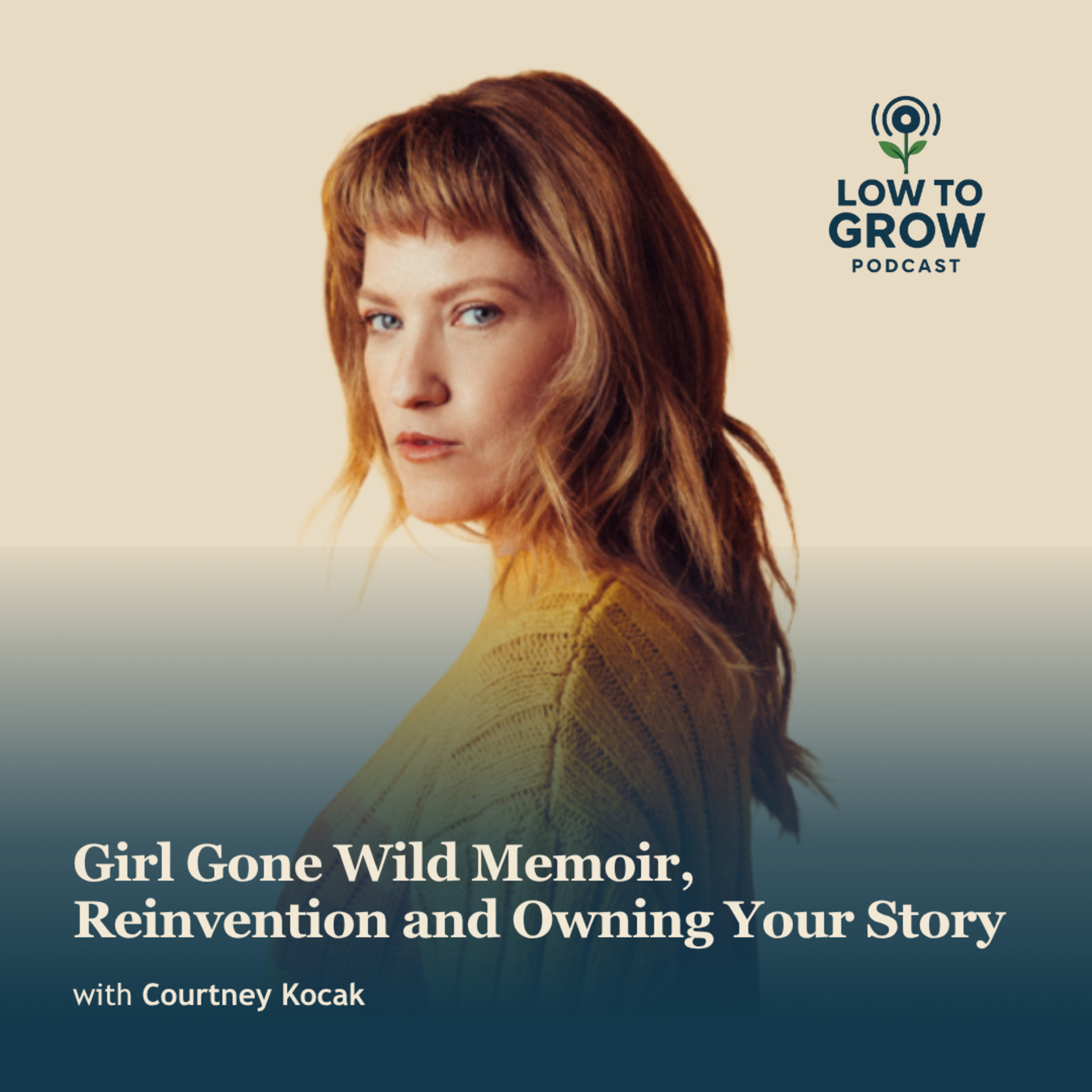
Courtney Kocak
is a writer, podcaster, and comedian who splits her time between Austin and Los Angeles.
She has written for shows for Amazon and Netflix.
and also has bylines in the New York Times and the Cosmopolitan.
Courtney is currently the host of three standup podcasts and earlier in April, 2026 launched her memoir called Girl Gone Wild.
Courtney Kocak (00:23)
sexual assault. I had an abortion when I was 23. I was really ashamed about the experience, I sold t-shirts on the Girls Gone Wild tour and I didn't realize that it was so coercive and of other women.
that younger self that I was trying to
like push away from, allowing her to come back into me. I feel like way more whole person than I did before. I feel like I've shed so much of that shame. And one of the beautiful things about it is
Annie Wenmiao Yu (01:46)
Courtney, it's such a pleasure to have you on the Low to Grow podcast. Before we start, who do you want to be listening to our conversation today?
Courtney Kocak (01:55)
I would say dreamers, especially small town dreamers who are unsure about how to get started with their creative ambitions and don't know a lot of artists who are doing it as part of their career. basically my younger self.
Annie Wenmiao Yu (02:14)
Oh, I love
that. And you know, we're recording this on the 2nd of April, 2026. And I know that yesterday you actually launched your first memoir on your book called Girl Gone Wild, kind of delves into those themes. how does it feel to be a published author?
Courtney Kocak (02:30)
It feels good. It's sort of anticlimactic, which is so funny. You work like 15 years towards this goal and then you're sort of like, ⁓ it's the same. I'm the same. incredible joy and inner transformation I got from book was really from the writing process. And so it's really exciting to share it with other people. But
you know, it's sort of cliche, but it just reminds me that really it's all about that initial work and like that's the Like the journey is the reward, not the outcome. And so I've just, reminding myself of that. And like, I'm excited to dive into my second book, but I'm also cherishing all of these. Like I get to have conversations with people like you. I I get to finally hear from readers. And so all of that is.
exciting and nerve-wracking and all the complicated feelings.
Annie Wenmiao Yu (03:26)
Definitely, what an exciting time for you. So Courtney, where would you say that your journey starts?
Courtney Kocak (03:29)
Yeah.
My journey starts in a small town, rural Minnesota. The town is called Jackson. And I was always yearning for big city life. I wanted to be an actress. And that was the big dream that I was chasing for my whole life up until I was 27. And so I did as
many school plays and community theater productions and any sort of acting opportunity I could get my hands on. Like when I got my driver's license, I started driving to other towns to do plays. And then I went to college to get my BFA in acting and graduated as fast as I could, but I did a ton of plays then. And then I did a couple independent films after I finished school. And then I...
Made some mistakes. I sold t-shirts on the Girls Gone Wild tour and I had some jobs that were just like not good and sort of tested my values. But then I went back to LA and really sort of understood how to get started the second, actually the third time around. you know, I could really pursue the acting thing and I got my SAG card. You know, I joined the union.
a lot of theater around town. I did some short films and other things like that, but I really grew frustrated with the experience of being an actor. I realized, I hate auditioning. I hate being the last person on a production. To a lay person, acting seems like the exciting part entertainment industry, but really in practice.
you aren't like the creative force behind the project. You really are like the last person being hired. And I didn't understand that when I was growing up and it really sort of hit me as I was struggling with acting. And I was like, I want more control over this. And this. And so I started writing at about 27 as a way to create opportunities for myself. And then I realized like,
this is the thing that I love. my God. And so I started screenwriting and I started writing essays and that was about 15 years ago. And then ever since then, I've been chasing this new dream to be a writer. I'm so happy I made the pivot. It's been amazing.
Annie Wenmiao Yu (05:57)
wow, that's beautiful. I love how you said that it was around 27 when you started writing and then really discovered that's what you want to do. What was that transition like going from being an actress to then actually being able to fund yourself as a writer full time?
Courtney Kocak (06:11)
Well, it was really hard to admit to myself that I wanted to make the pivot because my whole life had been about this dream. It seemed like I was giving up on myself, though internally, I knew I wanted to make the transition, but it was hard to admit to other people. was hard to admit to struggled with that for months before I could finally like,
say it out loud and start to reorient my life in service of this new goal. to anyone out there who is struggling with the pivot, like I totally Really just telling yourself old dream that you had is no longer, it's kind of dead. It's like a mourning process. had to allow myself to go through the stages of grief with that. And then
I was also like starting at stage one, even though I'd put in all these reps into being an actor and I, you know, I'd had some wins, you know, I'd starred in an independent film and I'd some amazing theater and, and then realizing like, ⁓ I have to start over and I have to be new at this thing was also hard.
I'm gonna have to go through all of that again. I'm gonna have to take classes and really that's to me turned out to be the joy of writing. I still take classes to this day because I love to learn new techniques and everything like that. But at the beginning it seemed like, my God, now I'm gonna climb a totally new mountain and I'm back down at the beginning and it seems overwhelming.
Annie Wenmiao Yu (07:46)
In that period when you were doing their transition, did you have any support from your friends and family?
Courtney Kocak (07:52)
I think my family, when I could finally admit to my family that I wanted to make the transition, I think that they were sort of relieved. It's not a much more secure career than acting, but a little bit, and you have more control, I would say. And so they, I think they were happy about that. And even though I'd,
Annie Wenmiao Yu (08:01)
Hmm.
Courtney Kocak (08:18)
didn't realize that I was going to be a writer until I was 27. I think I'd always been really good at writing in school and I'd always, shown aptitude in that area. And so I think they were like, she's going to be good at this. But my parents just in general are like their teachers, they're very salt of the earth kind of people. They're not artists. And so they weren't super helpful in terms of
supporting my artist life. That was very much a self-directed thing both for acting and for writing. But I did start to make friends in the writing space as I took more classes and as I met more writers, I sort of, a community around myself, which, now, like when I'm launching my book, I have an amazing community and that is such a game changer.
So I'm so grateful to all the friends that I have gained along the way.
Annie Wenmiao Yu (09:15)
That's so beautiful and as we were chatting before we started recording you as well doing podcasting, you were able to build that virtual community and get to know people. I'm also really intrigued because earlier you said that, growing up your parents were both teachers, you know, that's a really structured, really high value job. It's much needed in the community.
Courtney Kocak (09:28)
Mm-hmm.
Annie Wenmiao Yu (09:33)
a self-described creative and going down on the path of being a creative, it's much, much more unstable and less structured than being a teacher. What was it when you told your parents that you wanted to be an actress and did you ever feel that you had to fight your way to be who you are and to go after the career that you wanted?
Courtney Kocak (09:40)
Yeah.
Yeah, well, I very much had an instinct early on, which I think is correct, that I didn't want to go to college because I wanted to go straight to LA and start acting, which I think in some ways would have been a smarter thing to do because your first years when you can still play a teenager are such high value acting years to break in.
But my parents did not want that at all. They were like, you have to go to college. You must. And so we created some friction between us. And yeah, they definitely tried to talk me out of it probably a million times. I I write about it in the book, but my dad showed me this chart at one point. And it was like a thousand dots on this piece of paper. And there was one black dot.
And he was like, this is the odds. These are the odds that you will make it. Like there's one out of a thousand. And I was like, yeah, I'm gonna be that black dot. to them that was a frightening prospect to even try to chase that. But for me, I was confident.
Annie Wenmiao Yu (11:05)
the inner belief that you really need. actresses and also creatives need who they are and also I feel like that comes hand in hand with self-belief as well. ⁓ How do your parents feel about the launch of Girl Gone Wild?
Courtney Kocak (11:12)
Mm-hmm.
Yeah.
⁓ I think they probably have complicated feelings. We have a great relationship, but our relationship is not, my career is not the center of our relationship. relationship. The whole point of writing a memoir is to be devastatingly honest, right? And so I say a lot of things about what I've done and
I'm not ashamed of any of those things, but I think my parents are very private people. And so it's both. They're both proud of me and they're like, ⁓ God, she's really saying a lot here. my mom hasn't read the book yet. I offered her an opportunity to do, to read a draft a couple of years ago and I don't think she was ready to do that then. And then
A couple months ago, she wanted to read it and I was like, you know, I'm going to let you make that decision when the book is out, but I'm not going to send you an early copy. think she probably will get to it at some point. She's a huge reader. She reads every other book. But yeah, I think, you know, it's complicated.
Annie Wenmiao Yu (12:25)
what did you learn about yourself over the process of writing your book?
Courtney Kocak (12:29)
Everything? I think I had a lot of shame around certain things that I had been through, sexual assault. I had an abortion when I was 23. I was really ashamed about the experience, I sold t-shirts on the Girls Gone Wild tour and I didn't realize that it was so coercive and exploitive of other women.
And so I had been through these experiences, but then I'd sort of suppressed some of them, you know, and divorced myself from my younger self who had made those decisions. And I even remember being like I dated this comedian and writer when I was around the time I was making the transition to being a writer. And I remember being kind of jealous of him because I had this dream to write a memoir. And I thought,
I don't remember my life well enough. How am I gonna do that? Cause I don't remember my life. And I think the fact of the matter is I do remember, I remember everything. And the process for me was sitting down and like really allowing myself to access those memories that had a lot of shame around them and reintegrate that person that I was, that younger self that I was trying to
like push away from, allowing her to come back into me. I feel like a way more whole person than I did before. I feel like I've shed so much of that shame. And one of the beautiful things about it is
I realized some of that shame doesn't belong to me. know, some of those things weren't my fault or they weren't entirely my fault or, you know, the
burden came from other people's expectations or societal rules, you know, and once I could, you know, put everything in its proper place and realize how I really felt about that past experience without all those other voices in my head, I just felt free. I felt liberated. And so, like I said,
at the beginning, like the gift of writing a memoir is the process of writing it because I am the best version of myself today because I put in all those years of working on the book and really, allowed myself to get comfortable with who I used to be and like embrace her and love her again. And that has been just incredible.
Annie Wenmiao Yu (15:05)
Hmm wow was that a process that you did by yourself or were there people that you were able to lean to?
Courtney Kocak (15:15)
So in 2020, I took an incubator, like a year long incubator class because I was like, I'd been wanting to write this book for so many years and I'd written a lot of one off essays and gotten them published, but I didn't know how to like do a whole book whoa, what a challenge. And so in 2020, I took this year long incubator with Chloe Caldwell, who is a essayist and memoir writer that I really love.
and she guided our class of, I don't know, there was probably like eight people in the class. it was obviously during the pandemic, so it was a very weird time to get started, but it was great to have that outlet and it was great to have like a Sherpa to have like a guide who led us through the process. that was super helpful. I got a rough draft by the end of that year. Then I sort of put it,
in a drawer and was like, I don't know what to do with it now. And I knew I could feel that it wasn't quite done, but I didn't know how to fix it. And so in 2023, I actually went, I saw that she was doing another one and I went back and I did it again. And this time I'd been through it one time. So I was like, I'm gonna make the absolute most of this. I'm really gonna finish book
in the way that I want it to be. And so I really worked so hard that year. And by the end of 2023, I had a draft that is basically the bones of the book that exists today. I did a lot of rewriting after you know, the version that exists today is way better, but, you know, sort of the structure of the book still stands. so Chloe was invaluable in that process.
I really thrive on external deadlines. So I love to have someone tell me like, hey, your essay is due on Sunday or whatever. I found that really valuable. I wound with a small press I did get a couple rounds of edits from them, but they were very light. And I was surprised by how little external editing there was.
And so as far as like the final rounds of revision that happened in the last year, really had to lead the way on those. And that was also an amazing process and also just really gave me lot of confidence in my own writing. Like I can elevate it to the next level with all the things that I've learned before.
Annie Wenmiao Yu (17:44)
Hmm, what was the process of getting a book published like?
Courtney Kocak (17:49)
Yeah. thought, I first started, was like, this is going to be a big five book. I'm going to get a big publisher and it's going to be great. And then I got a fancy agent, like a New York agent. And. We actually went out with another project, a narrative nonfiction project, and it got close, but it didn't sell.
and we only went out for one round of submissions. And then it sort of died on submission is what they call it. this agent did not wanna take my memoir out because they sort of correctly feel the only memoirs that sell are written by celebrities, which is sort of sadly the trend in the industry these days. And so.
a lot of the most interesting memoir is being published by small presses. And so I had submitting to these contests that sometimes small presses run. One of them was Santa Fe writers project. I made the long list with kind of a rough draft for that. And then trio house press. I was a finalist. got a really nice rejection from
the publisher and she was like, I really connected with this. It's not quite ready and we don't have the editorial finish it. But like, I really loved this and blah, blah, blah. It was a really long, nice personal letter. And I was like, ah, cause I knew it had a little bit of work left to do. But also that publisher
you know, is based in my home state of Minnesota. And there was something that felt sort of fated about that. So I was really sad by that rejection. And then did a couple other contests like that and also got, you know, like close, but not quite. And so then I was really frustrated and I had made this long list of places I was going to submit and I was working on another revision
There was something in that period of time where I felt like almost scared to finish revision because I don't know, like I was waiting to get the publisher or I don't know. There was something psychological going on there, which I wish I would have just allowed myself to be like, just finish the revision and like, it'll all work out how it's supposed to work out. But I had some sort of block around that. So anyway.
There's this big writing conference called AWP that happens every year. And there was one in LA last year, around this time, I went and I was going through the booksellers and just taking pictures of places I thought might be a good fit for me. And I was like, I want to talk to the woman that sent me that rejection.
I want to just say hi and I couldn't say thank you at the time. I didn't respond because I couldn't graciously respond because I was so sad about it. But I was like, it's been enough time. I'm good. I just want to say thank you because that was actually really sweet that she did that. And so I said hi to her and she knew me right away. She was like, Courtney, my gosh. And we had a really nice conversation. We talked for like five or 10 minutes. She gave me a book.
and she told me they have a contest coming up. I said, I know, I'm working on a revision. I think I'm going to submit, And I got an email two weeks later and she was like, I can't stop thinking about your book and can I buy
Annie Wenmiao Yu (21:11)
Aww.
Courtney Kocak (21:13)
All that to say, sometimes a rejection can turn into a yes, you know, if you just put in a little more time and effort. And I had done another the meantime. And so the manuscript that I wound up sending was in way better shape than the version that she'd initially read. And so she really didn't have that much feedback, which is sort of ironic because...
It was rejected because it wasn't quite ready.
Annie Wenmiao Yu (21:40)
wow, I love when things come full circle like that. ⁓ I also really liked how you talked about the various rejections that you had to go through and the path that you took to then finally getting your book published. what went through your mind each time that you were rejected from something or you where you didn't win a competition that you wanted to?
Courtney Kocak (21:43)
Yeah.
Yeah. you know, I am sort of desensitized to it in a way because there's so much rejection with acting and with writing. And so I, I've learned not to take it personally. In fact, one year, I think it was 2018, I challenged myself to get rejected 200 times in the year. And I got some of my best bylines just by doing that challenge. So I know that sometimes it's a numbers game.
Annie Wenmiao Yu (22:21)
Nice.
Courtney Kocak (22:27)
And so I would kind of tell myself that. I also learned in the process, like sometimes rejection is protection, you know? I am really glad that I wound up doing this without an agent. And I'm really glad that I wound up, even though my dream was to go with a big five press, I got to go with a small press where I got to work really closely with the editorial team. I got to maintain my audio book rights.
because I'm a podcaster, I knew that I wanted to narrate and produce my own audio book. I got to maintain my film and TV rights because I'd already written a pilot related to the And so I don't think I would have been able to do all of that with a big five press. wound up being like the best thing for me, even though it wasn't the initial dream.
Annie Wenmiao Yu (23:19)
So what's next and also where you want to take Girl Gone Wild?
Courtney Kocak (23:25)
Yeah, so I hopefully will have the audio book out. I'm hoping by the end of the month, I have realized even though I worked so hard promoting the book up to book launch, I'm realizing like, I'm just getting started. Like I'm to be promoting this book for a year and a half or whatever. And then I do I have another second memoir that is in progress. It's about half done. it's working through some
themes about like, am I going to be a mother or not? And also eating disorder stuff. in the same way that I got so much personally out of writing the first book, I cannot wait to return to the page and work through all of those things on the second book. And so I'm planning to do that late summer, like fall. am going to be trying very hard to sell the
TV version of Girl Gone Wild. also do stand up comedy. I've had to kind of put it on the back burner with everything that I have going on with the book. And so I'm excited to try to put in a little bit more time on stage and really take that to the next level. just want to say for anyone listening.
Like sometimes we think that there's like an age limit on some of our dreams. And I have found that to be totally the opposite. Like I didn't start stand up until I was in my thirties and that's like considered pretty late, but you know, anything is possible. Leanne Morgan is an American standup
I think she just turned 60 and she is having a breakout year. She has a show based on her life. Like she's incredible and she also started late. And so just anything is possible. you can just do these things at any age. And so I don't like people holding themselves back based on such a silly thing.
Annie Wenmiao Yu (25:18)
Hmm, age is definitely just a number and it's really interesting because I guess in my world, which is tech entrepreneurship, some reason, my Instagram feed, I always see these posts and it's kind of like always saying the average age of the female entrepreneurs actually between 39 to 45. And I just found that super cool because it shows that, you know, for women, there are a lot of things that we need to do in our lives, like career, family, et cetera, et cetera. And there's no set, universal standard for
Courtney Kocak (25:21)
Yeah.
Yeah.
Yeah.
Annie Wenmiao Yu (25:46)
between what ages can you do that? So it's really nice to hear you mention that about the standup world as well and in comedy. Courtney, you do a lot. are a podcaster, you're a comedian, you're now a published author. How do you get creative? Like, do you have a flow that gets you into that creative state?
Courtney Kocak (25:48)
Totally.
Yeah, you know what I've learned as I have gone through the years of doing all of these things? I used to think, you know, the perfect day is when I do all of the things, right? I record a podcast interview, I edit something else, I spend a little bit of time working on an essay. I, you know, I try to jam it all into one day. And I used to feel so burnt out and also beat myself up for not having...
a perfect day most of the time. And then I realized, no, that's the opposite of what I need. What I need is to prioritize the most important things that are going on. also need to like batch. I get my best flow going when I am doing the same thing for a period of time. So I like when I'm recording interviews, I like to record, you know, for a week.
and I'll record as many podcast interviews as I can. And I sort of get into the flow of interviewing and I don't make tech mistakes because in the flow. And then I like to do the same thing with my book. Like if I'm working on a revision, I wanna block everything else off my calendar and like work on that for two weeks and sort of ignore everything else that's not essential. And it's not perfect. I still have other things. Like I teach writing and I teach podcasting. And so,
Sometimes I have to pop out to do that. But the more that I can try to just focus on one thing at a time, the deeper I can get into that work and the more productive I am. And so then it's totally fine if I don't touch that for even a month because I've put in the time that I need to get that work done
at the highest level I can. And so that has been a game changing realization for me is just realizing like, no, it's not about stacking each day and doing a little bit at a time. It's really about like expanding into the work and not forcing yourself to do it all at one time.
Annie Wenmiao Yu (28:04)
Hmm.
we were talking, I was thinking about, she's creating the conditions for her mind to go into a flow state. Because sometimes, especially for creative work, it takes a while to really get there. At least for me, I I'm most after one or two days of feeling really bored. And that's when I can actually kind of unlock that area of creativity. And then I can just stay there for a couple more days.
Courtney Kocak (28:10)
Yeah.
Yeah.
Annie Wenmiao Yu (28:28)
guess similarly to what you were describing, if I had to, you know, jump between tasks over one single day, then I get a lot of cognitive fatigue that will lead to burnout as well. Courtney, would love to ask this is for our younger listeners. does going wild mean to you now versus earlier in your life?
Courtney Kocak (28:48)
Yeah, that's such a good question. actually, I mean, that's one of the central questions of the book. So, you know, I realized on the Girls Gone Wild tour, like that's not really what going wild is. Like those girls were being manipulated and they were being coerced by a man running a company and people involved in that. And that is...
There's no freedom in that. And so I really realized being a girl gone wild is about having agency. It's taking control, writing your own rules for how you're going to live your life. And it's really like a feminist awakening, I think. you know, sometimes that is threatening to the patriarchy.
They hate it when we really find ourselves and are not willing to play by those patriarchal rules anymore. so, yeah, I think that's where the power lies. And I have definitely found that for myself. And that's what I hope readers get from reading the book.
Annie Wenmiao Yu (29:54)
That's a really beautiful note to keep in mind. Courtney, let me now ask you our podcast staple. What is one thing that you believe will allow more people to have better mental health?
Courtney Kocak (30:04)
So journaling was like the most incredible practice for me. I was going through these breakups in my late 20s and early 30s. I was making this career pivot. I was trying to figure out like what I really, really wanted in my life and how I wanted that to look and how I was going to get there. And so I just, and I thought, you know, I thought all great writers journal, like I should journal.
And so really I thought it was gonna help me write books and that is not what wound up happening. But what wound up happening is I was forced to really confront what I thought on the page and I hand wrote, I made a goal to hand write a whole journal. And so I did one and then I kept going. And so it really was a place for me to work through my own uncomfortable feelings and
realized when I was lying to myself and sort of reorient myself, according to my values and all of that was so important. I don't journal as much anymore just because I feel like I'm sort of realigned in a way. I do keep like a one line a day journal, but for that stage in my life, it was.
so important and I really don't think I would be the person that I am today without that journaling practice. So I think for anyone going through it or struggling with shame about their past or even if your issue is even better if it's in the present, that journaling practice can be so important.
Annie Wenmiao Yu (31:39)
It really is such a therapeutic process, isn't it? Writing things down because it gets things out of, for me, gets things out of my head. And when it's on the page, it's in black and white. So it's really clear and somehow that minimizes however big that could have felt in my mind. But thank you so much for sharing that Courtney. It's been a pleasure to have you on the Low to Grow podcast.
Courtney Kocak (31:42)
Yeah.
Thank you so much for having me. was such a pleasure to chat with you.