Eileen Wada Willett: From Cucumber Clothing to East Asian Girl Gang

EntrepreneurshipIdentityMental HealthCommunityResilienceSustainability
"Sometimes if a brick wall comes down, you can't punch your way through it. So you have to make peace with that wall and either find a route around it or take a different route."
Eileen Wada Willett Founder, East Asian Girl Gang & Co-founder, Cucumber Clothing
"I feel like I carry three kind of cultures within me. I feel quite at peace of having this, I don't even call it fractured, this kind of mosaic identity."
Eileen Wada Willett Founder, East Asian Girl Gang
"As you get older and older and older, it's so easy for your life to close in on itself, to be in this comfortable space where you're only seeing the few people that make you happy. You all agree about everything. Everything is fine. Don't do that."
Eileen Wada Willett Founder, East Asian Girl Gang
"Make sure you save some of your energy for your friends and family and for all those people you haven't met yet."
Eileen Wada Willett Founder, East Asian Girl Gang

Eileen Wada Willett, co-founder of award-winning sustainable label Cucumber Clothing and founder of the East Asian Girl Gang, joins Annie Wenmiao Yu to talk candidly about building, losing and rebuilding. She shares how Brexit, COVID and a collapsed retail deal forced her to close her business, what it taught her about working hard versus working smart, and how a 'mosaic' Japanese-Canadian-British identity shaped her life. The conversation explores diaspora identity, the invisibility of the East and Southeast Asian community in the UK, and why staying connected is the key to mental health.

What you'll learn

  • Sometimes hard work alone isn't enough — when you hit a brick wall, the smart move is to find a route around it rather than punch through.
  • As a founder, never take your eye off all the balls you're juggling for one big opportunity, because trust can be broken and small businesses get 'eaten up'.
  • External forces like Brexit and COVID can devastate a physical-product business through cross-border trade barriers and lost wholesale revenue.
  • The skills and experiences you build while creating something don't disappear when it ends — they carry forward into whatever you do next.
  • A multicultural or 'mosaic' identity is a gift that offers a richer perspective on how to approach life.
  • Mental health thrives on staying connected and curious — deliberately save energy to nurture relationships across all ages and viewpoints.

Key moments from the conversation

Hitting rock bottom as a founder

Eileen frames her story as a 'reverse arc', beginning at the lowest point — the collapse of Cucumber Clothing — and explaining how reaching the bottom meant there was only one way to go: up.

The deal that fell through

A major high street retailer offered a game-changing collaboration, so the team focused everything on it — only for the retailer to pull the contract the day it was due to be signed, while all the other 'balls' they'd stopped juggling dropped too.

The genesis of Cucumber Clothing

Eileen and her co-founder met at the school gate and bonded over exercise and living in workout kit, sparking the idea for soft, technical, sustainable everyday clothing for women, starting with sleepwear and built on a 'five mile radius' supply chain.

Founding the East Asian Girl Gang

Reconnecting with her heritage during the anti-Asian hate spike of COVID, Eileen called mentor Pinky Lilani with just a name and an idea — and within a day had two introductions and the beginnings of a thriving community.

A family's romantic, transnational story

Eileen shares how her Japanese father and second-generation Japanese-Canadian mother fell in love at a dance, and how their very different experiences of racism shaped how each handled adversity.

Frequently asked questions

Why did Cucumber Clothing close down?

A combination of external pressures and one broken deal. Brexit made cross-border trade and EU sales almost impossible, wiping out 20-30% of trade including wholesale; COVID hit the business hard; and a major high street retailer pulled out of a game-changing contract the day it was due to be signed, after the team had focused all their energy on it.

What is the East Asian Girl Gang?

It's a community resource for women of East Asian heritage, founded by Eileen Wada Willett during the COVID pandemic when anti-Asian hate crime spiked. It's not a registered charity but a place for friendship, connection and support, with members across tech, fashion, banking and more. Membership is £25 a year, waived for anyone who finds that difficult.

What does it mean to have a 'mosaic' or multicultural identity?

Eileen describes carrying three cultures within her — Japanese, Canadian and British. Rather than feeling fractured, she sees it as a gift that gives a different perspective on life and lets you draw the best lessons from each culture, like learning to be honest about feelings rather than internalising them.

Why is the East and Southeast Asian community often described as invisible in the UK?

Eileen explains the community is small — around a million people — and often fits the 'model minority' stereotype of being hardworking and not making trouble, so it isn't always recognised as an ethnic minority with its own specific challenges. Cultural norms can also make it harder to ask for help or speak out.

What is the best thing you can do for your mental health according to Eileen?

Stay connected and curious. Eileen advises deliberately saving energy to be social, reaching out to people older and younger than you and even those you disagree with, because humans are social creatures and maintaining those connections takes genuine practice and effort.

Who is Eileen?
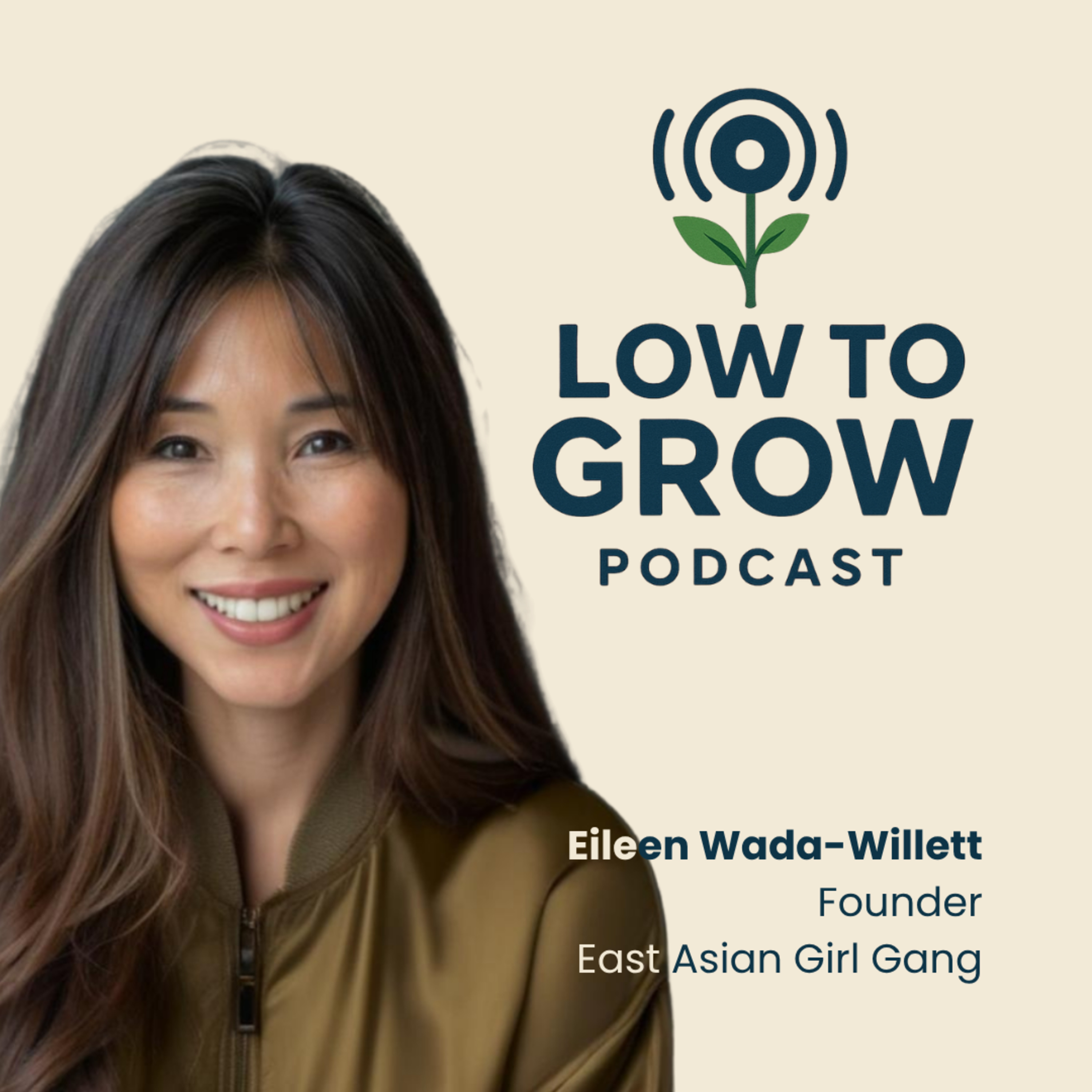
Eileen

Eileen

fdsd

fsdafs

Full transcript

Annie Wenmiao Yu (00:00) With me today is someone whose life raised like a beautiful global tapestry. Eileen was born in Vancouver to Japanese parents studying fashion in Paris in San and then moving to Tokyo to work for Billboard. came to London, working in the menswear collection for Nicole Farhi and actually co-founded the award-winning brand Cucumber Collective. creating luxurious pieces with ultra soft fabric techniques. Eileen Wada Willett (00:26) when you're a child, every single thing you do, every day brings something brand new to you. As you get older and older and older, it's so easy for your life to close in on itself, to be in this comfortable space where you're only seeing the few people that make you happy. You all agree about everything. Everything is fine. do that. Annie Wenmiao Yu (00:44) During the COVID pandemic, created the East Asian Girl Gang, which is also how we met. This is a powerful and nurturing community for women heritage. Eileen is a speaker, all-around champion for diverse entrepreneurs. Annie Wenmiao Yu (01:54) Eileen, it's such a pleasure to have you here today. first met through the East Asian Girl Gang and I'm really excited to be having you on the Low to Grow podcast. do you want to be listening to our conversation today? Eileen Wada Willett (02:07) Well, obviously as many people as possible, but more specifically, I would say. I think this is a podcast for anyone who has been walking around and carrying what they feel is a great idea on their shoulder. So it could be something that they woken up in the middle of the night and thought, just think that would be really great. Or I don't think anyone's really thought of that or be so cool. haven't actually done anything about it. They're just carrying it around. yeah, this is a podcast for the person, for the people out there who have a great idea, but they haven't actually actioned it yet. Annie Wenmiao Yu (02:39) Hmm, very excited to be delving into that with you Eileen. where would you say that your story started? Eileen Wada Willett (02:46) So as I think that this conversation is going to have a sort of arc, but maybe a reverse arc, so it's going to have a dip and then hopefully it's going to come back up at the end, I might start on the way down to that in 2017, my co-founder and I launched a company called Cucumber Clothing It was incredibly exciting as it is, as you all know, as a founder yourself, to kind of give birth to something that feels really exciting and important to you, that you've thought about a lot, that you've done a ton of research on, that you think there's a gap there that we're going to fill and it's going to be amazing. And it really was, it really was absolutely amazing. We created something that won a lot of awards, that got a lot of attention, had all this strong growth. But after about three or four years, for all sorts of reasons, which we may or may not go into a bit later, it just became really, really, difficult. at a certain point we hit rock bottom. But I'm pleased to say that hitting rock bottom, there is a bottom. And from the bottom, there's only one way, generally, and that's up. if that's going to be my reverse arc, that's where I would start in this story. Annie Wenmiao Yu (03:49) I'm going to take it slightly before that story then and ask about how you came to become the co-founder of Cucumber Clothing. Eileen Wada Willett (03:57) Okay, well, let me ⁓ dig into the past. very long time ago, I did a bachelor of fine arts. I was always really interested in fashion. I worked as a fashion illustrator. I lived in lots of different places. I'm from Canada. I grew up in Vancouver. I went to school in Canada, in France. I finished my degree in the States, I took my Bachelor of Fine Arts there. I lived in Japan for a while. then I moved to the UK and I ended up working in fashion here. And then I started my own accessory company, which was great for about 10 years. And then we had this idea. My co-founder and I had this idea, which we carried around on our shoulder and in our bags for a long time. And we finally thought, let's just do it, let's just try. And then it kind of exploded from the beginning. But that was the backstory, which is that I've always been in the creative industries. and cucumber was kind of coalesced all sorts of things that I was interested in, in terms of fashion design, technology, sustainability was a huge thing as well. Annie Wenmiao Yu (04:59) I remember from when I spoke with you about how the timing just really aligned when you were launching Cucumber Clothing, there sustainability angle and also the more popular cultural awareness of sustainability as well. cucumber clothing was featured in a lot of very well known magazines. What did that feel like for you in the first couple of years of creating cucumber clothing when it was growing so quickly? Eileen Wada Willett (05:22) Honestly, it was great. It's such a high. And I think anyone who has started anything, however big or small, will recognise that feeling. It's a feeling of pride that you've created something that other people they also think is great and they're willing to put their money where their mouth is. It's also a feeling of pride around creating something that you actually feel proud of. So. sustainability was a really important part of our story. We had something called the five mile radius, which meant that we lived our factory, our sample maker, our graders. Everything was within a five mile radius. And it just meant that we bought everything within the UK, most likely England, all our trim, everything our fabrics were incredibly long lasting. We thought really hard about. What does it mean to be sustainable? And how can we action that in a meaningful way? Because if you try and tick every single box, you're definitely going to lose, like you're not going to make it work. So we just decided to double down on the areas that we could make work and the bits that we didn't feel were that sustainable. We would just say, look, we're looking at it. We're going to try really hard to improve in that area. And so as you said, the stars seemed to align sustainability was a really big story. We were two female founders in midlife. We were doing clothing. We were doing something new with fabric technology. it was great. It was great. It was great until it wasn't. Annie Wenmiao Yu (06:45) And what happened to Cucumber Clothing? Eileen Wada Willett (06:48) I think all sorts of things. I mean, how long is a piece of string? I don't want to keep you here for 16 hours, Annie. But I'd say the main things had some external forces, which were very difficult. selling a physical product. means cross border trade. shipped worldwide. Once Brexit happened, that was very complicated, as it was for almost every single company in the UK. And particularly for small companies who couldn't afford to warehouse in Europe, it became almost impossible to sell to What would be about 20 or 30 % of our trade just dropped off completely, including wholesale, bricks and mortar. And then the second thing that happened was COVID. obviously that was very challenging for everybody in many, many ways. And as a business, it wasn't personal in the sense that we didn't have people who were. that we loved who weren't well. Nevertheless, our business really, really suffered because COVID was really tough. So I think the impact of those two quite large external forces put a huge amount of pressure on us in terms of making sure we had cash flow, in terms of making sure we had new collections coming out, because with fashions, there always has to be something new, which is quite frankly unsustainable, but that, you know, you can't square a circle. circle. And then I would say the final the final difficult thing, which again was a salutary lesson for us, is that when you're, as you know, Annie, when you're a founder, you are juggling lots of bowls, especially at the beginning, you're wearing like 16 different hats, know, marketing, fulfillment, design, all of this. And as you grow, you can share those hats out. But with COVID, we shrunk down our team as much as possible. And just at that time, we were approached by a not to be named high street massive retailer us a game changing idea in terms of doing a massive new collection for them with them with new fabrics and everything. So we took our eye off. Annie Wenmiao Yu (08:39) Hmm. Eileen Wada Willett (08:49) all those other balls that we were juggling and we concentrated on this one big ball over here thinking this is a game changer, this is going to be amazing. And literally the day that we were meant to go in and sign the contract, they pulled it. Annie Wenmiao Yu (09:02) okay, I didn't know about this. Okay. Eileen Wada Willett (09:05) Yeah, not only did that big bowl drop, all the other bowls that we hadn't been looking at were dropping. And so that probably was our lowest point. And it was when we really had to reassess and think, can we make this work? Because now we're in a really position. Maybe the lesson from that is however exciting something seems, don't take your eye off everything else because no one knows what's going to happen. And there's a lot of trust involved. and if that trust is broken there's nothing as the small fish with the big fish you know you can get eaten up and we did definitely we were digested thoroughly. Annie Wenmiao Yu (09:41) What did you learn about yourself over that process, Eileen? Eileen Wada Willett (09:46) That's a really good question. I think that when you spend a really long time, years, kind of giving birth to an idea, actually making it happen, feeding it, watering it, watching it grow, with all the high points but also the low points on that journey to growth, when it suddenly falls off a cliff, it's very disturbing. then for a lot of have a kind of founder mentality, they tend to be people who believe in hard work. So you're not going to found a company if you, if you can't work hard. the downside of that sometimes is that people who have learned in their lifetime that if they work really hard, not just really hard, super hard or like harder than anyone else and more like the most, then usually they can overcome challenges. Usually they get over that hump, they see the other side and they're like, okay, onto the next thing. And one thing that it did teach me was sometimes that doesn't work. Like sometimes you can work as hard as you possibly can, seven days a week, take no holidays and do more, do like the most that anyone can do. And it still doesn't work. And that actually was really difficult to understand at that time. Annie Wenmiao Yu (10:55) Mm. Eileen Wada Willett (10:56) But retrospectively, it was quite a good lesson to learn that sometimes if a brick wall comes down, you can't punch your way through it. So you have to make peace with that wall and either find a route around it or take a different route. you know, obviously friends, family, you get a lot of support. My co-founder and I, we were very lucky to be co-founders. We're still really good friends. because having somebody who understands exactly the journey that you're on is super helpful as well. You don't need to explain anything. But yeah, I think then it's just learning that actually there are different paths and all the experiences that you've gained from creating this thing. You know, we did a million different things. I learned how to create a website. I learned how to organize a shoot. I learned hair and makeup. I learned... how to do podcasting, how to do vlogging, know, just I can't even, it's a list of a thousand things that I had an experience of all of that stays with me. It doesn't just disappear with what's gone before. So I think it is slightly cliched, but to try and take the positive out of what's happened. And to keep that close, you you've had this amazing experience. You've met amazing people. You we were on television, we were on radio, we were in magazines, we were in shoots, we organized shoots, we won awards. It was it was great. And that can't be taken away from us. Those experiences still live with me informed what I've done next in my life, which has been great. But yes, at the time when you're in the middle of it, it's not it's not amazing. Annie Wenmiao Yu (12:24) I see. How did you meet your co-founder for Cucumber Clothing? Eileen Wada Willett (12:29) met a very long time ago because her eldest son and my middle son became friendly at school. So we met at the school gate used to have a dog walk every week , we both worked out a lot. We both love exercise, all sorts of different kinds, netball, basketball, wild swimming, hot yoga, list goes on. And on. And we found that a lot of the time we're just wearing our... workout kit all day if we didn't have to go to a meeting or something. We were like, why don't people make clothes for women that are like technical clothes? Like even if you get hot, you don't show any sweat. They move with you. They don't constrict you, but they look great. They feel super soft. And that was the genesis of the idea trying to bring that comfort, practicality. and positivity and helpfulness of like sports kit, but into everyday comfortable wear. We started off with sleepwear to be honest with you. Annie Wenmiao Yu (13:25) That's really beautiful. And it's really nice to hear you talk about how sometimes no matter how hard you work in business, things are just out of your control. And it's something that I guess you as an entrepreneur would have to make peace with. with. How did you then move on from the closure of cucumber? as you were describing before, creating a business is like creating a a labor of love, hopes, expectations. Eileen Wada Willett (13:34) and Annie Wenmiao Yu (13:49) when that shuts on itself, it can be quite a drastic change in terms of self identity for the founder as well. Eileen Wada Willett (13:59) That's absolutely right. You've hit the nail on the head because so much of you is tied up of yourself and is tied up in what you've created. So when that closes down, you feel like a part of you is gone. And also it takes up so much of your time. We really were working seven days a week and then suddenly you're not doing that. But there was a bit of overlap for me. So two things. One is, as I said, I've always worked in the creative industries and I have this kind of compulsion to make things. not doing it for work, I like designing. I like making things, whether it's clothing or or sweaters or whatever it might be and designing them. The design aspect of it is the most interesting to me.. me. at the same time, this was during COVID, I became quite interested in my ethnic and cultural background. So as I said, I grew up in Vancouver. is very different from the UK, Canada is different from the UK, but the demographic makeup is very different. where I grew up, in the town that I grew up in now, though it's changed over the years, it's over 60 % I'm Japanese Canadian, but it's mainly Chinese origin. Korean, there are a lot of Persian people, there's a large Persian population, there's a very large Sikh population. It's got a very different feel to it, especially now. And my two best friends are of Hong Kong Chinese origin. And during COVID, when there was a spike in anti-Asian hate crime, and it was all about the China virus, cetera, anyone who looked East Asian was fair game. fair game. It just made me realise that even though I'd lived in the UK for really long time, like for decades, I didn't have any friends who were from the East Asian diaspora. I just thought, well, that's really weird because in Vancouver, half my friends are East Asian background. And it also made me realize that there are some things that culturally you recognize within each other. know, for me, it's like when I grew up, we had rice with every meal. So we'd have rice with fish and we'd have rice with spaghetti bolognese and we'd have rice with steak. we'd have, you know, it didn't matter what else was on the table. There was always rice. And that's something I laugh about with my other friends who share my heritage. ⁓ or at Christmas we'd have this amazing turkey, but it would have Japanese rice stuffing. are some things that are easier to share with people who recognize that cultural background. And I suddenly missed it. I suddenly thought, this is strange and I'd like to remedy that. something had been carrying this thought around with me for quite some time. And before we closed Cucumber Clothing, I got in contact with an amazing woman called Pinky Lilani. I was shortlisted for an award called the Asian Women of Achievement Award. through Pinky, who runs it, who runs a series of amazing awards in this global networking group of amazing women. So I was pulled into that network, which was great. And I just thought... I might just give her a call and see what she thinks of my idea. I had a name, I was thinking like East Asian, East Asian, East Asian Girl Gang. I kind of like it. So I rang her and she being an incredible enthusiast and so positive just said, I think it's a brilliant idea. know two women who would love to join. I'll introduce you to them today. So I had a name and I had two women I'd never met and suddenly I had a group. And so as Cucumber Clothing, we were going through the dismantlement of our company. This tiny little thing East Asian Girl Gang was growing. And that was, you know, beacon of positivity for me because it was in a completely different sphere. it was not a business at all. It's not actually registered as a charity. is, I would say very much just a community. a community resource for women of East Asian heritage. And it's grown a lot over the last couple of years and it's become a place of, I think, a great place of friendship and connection and support. And all the things that I mentioned, well, maybe not the photo shoots, but learning how to run a website, doing all the back end of that, the photography, learning how to manipulate photographs, doing blogs like writing a newsletter. all of that, all that experience I put to use creating East Asian Girl Gang. some of the positivity from that really intense period in my life has carried over into this new bit, which is calmer. And a nice thing. Annie Wenmiao Yu (18:17) I think it's really beautiful and it's really nice that you were able to channel your energy into that as well. I've been part of the East Asian Girl Gang group for I think just over a year now and it's incredible to meet people who are either Chinese or American Chinese and to be able to relate to them in a way that I don't think I would be able to do so so naturally from your experience of running that group, what are some of the themes that you have seen come up that group? Eileen Wada Willett (18:47) I love that question because it's something that does come up a lot two things come up a lot. One is this idea of being, ⁓ as one of the members put it, double diasporic, or triple diasporic - quite frankly, bicultural. might grow up in a family that say my father was Japanese from Japan. My mother was second generation Japanese Canadian. And so even though I grew up in a Western, very much Western society, my dad was a Prof at the university, the neighborhood I grew up in was very white Canadian. I still had a Japanese upbringing to some extent because my parents were Japanese. brought up in Western society. I traveled around quite a bit and then I ended up in British society. So I do feel like I carry three, three kind of cultures within me. Reflected a lot through a lot of the the British born Chinese people who brought up in a Chinese household, maybe in Chinese, who they really can recognize things in each other. But grew up obviously in a white British society. Also Americans, a lot of Americans, not so many Canadians, maybe I'm the only Canadian. But also immigration patterns are so different. Why did the Chinese people in my group move to the UK? Why did those people move to America? So they're part of very different migration stories and the results of whole different worldwide seismic. bumps and lumps through history. But nevertheless, this idea that you share different cultures within yourself is really powerful. And it's something that we really recognize in each other. It's like, oh, yeah, no, I feel that way too. Or that's what I would have said that I couldn't say it because my Asian side held me back. And then I think the other interesting thing is definitely this split between our members who are North American East Asian and British-East Asian and whether that's because of the country, the culture that they're brought up in. But I feel that there is definitely a difference. But the nice thing is there are so many commonalities that it's produced this very lively, energizing group of people who seem to always be traveling. I was speaking to a member yesterday who's living in New York, but she's moving just having that experience. of being there and here. She was saying the experience of being East Asian in New York is so different than being East in the UK. I think probably this idea of having more than more than one diaspora inside you is quite powerful. Annie Wenmiao Yu (21:10) What are the differences that you are talking about, for example, between someone who's British in London versus someone who is and living in New York? Eileen Wada Willett (21:20) So I think one of the biggest differences is, and this is what I've been told by my friends ⁓ who are British born Chinese. lot of them call themselves, not all of them obviously, but there's a substantial number of theirs. I think even a group called... Takeaway Kids. And so their families ran restaurants. And when their families moved here, they looked on a map and they looked at all the different towns of where they could live. And they looked for towns where there was no other Chinese restaurant, because why go where there's competition? And so a lot of these kids grew up being the only Chinese person not just in their neighborhood, but like in the whole village or in the whole town. So they had experience where they felt quite isolated and they different from everyone else. And there was nobody who really understood their background or literally where they came from Whereas a lot of the women who Asian North American and similarly to me is even though I said I grew up in a very white neighborhood when I was a child, over the years it's changed. And when my parents first bought their house, house, my dad was a young professor, His colleague said, oh, where? It's here. And he said, his colleague said, his colleague who also was not white said, you can't buy house there. And my dad said, but why? And he said, well, because you're not white. And my dad said, but I just thought it. But interestingly, the person who sold it to him was Jewish. So this is a long time ago. But now on our street, it's 60, I'd say 60 to 70 % non-white. So the demographic has just changed so, so much. I see that younger women, probably in their 20s and 30s, who are in the group. Annie Wenmiao Yu (22:45) Okay. Mm. Eileen Wada Willett (23:00) as they were growing up, they did have a community. They weren't isolated in the same way that their British sisters were. A lot of people, especially if they grew up somewhere like LA or New York, there's a large Asian population. so kind of the culture that you grow up in is very different. And I think it reflects in how you feel about yourself as an individual, how you feel that you fit in. So yeah, I'd say that's quite a big difference. Annie Wenmiao Yu (23:24) I think that's so interesting because I remembered interviewing Daisy who wrote a book about Conversations on Being British Chinese and she is someone who I think grew up in California and worked there before moving to Oxford in the UK and she said she just had major culture shock as an American Asian living in California to moving to Oxford in the UK. I think Oxford is still relatively diverse but I guess compared to London not so definitely not compared to California. So it was really interesting for me to speak to her about her experiences there. you grew up in Canada, you've worked in Japan, and now you live in the UK. How would you describe your sense of identity? Eileen Wada Willett (24:04) that's such a great question because it literally wasn't something I ever thought about until very recently I do feel quite at peace with my identity. So I definitely would say that I'm I would happily say I'm British. I've been British Annie Wenmiao Yu (24:19) Mm-hmm. Eileen Wada Willett (24:20) longer. I have a dual citizenship, but I happily would say I'm Japanese Canadian. I I would never call myself Japanese because even though I've lived in Japan, I lived in Japan for a year and I visited a lot. I'm really, really not Japanese. The fact that I laugh like this showing on my teeth is a big giveaway. But I relate to that side of me because my father was Japanese and my mother is brought up in a very Japanese way. So there are certain things that when I go to Japan, I really recognize and I appreciate and I honor. But I feel quite at peace of having this, I don't even call it fractured, this kind of mosaic identity. And I feel maybe I'm old enough now to really appreciate what it gives to me this kind of different perspective on how to approach life. you learn so many things through life. I definitely, without realizing it, did internalize this idea. I think it is probably quite Asian of never complain, you know, just, just, just, especially if you're a female. And so probably my tendency in life for a long time was if something bothered me, I just wouldn't say anything. I would just internalize it because that was the better thing to do. But actually one great thing about being married to my husband, who is white British, is through him actually, I really learned that often it's so much better to be honest about how you feel about something, especially if you feel quite strongly, not to just internalize it, but to be able to talk about it in a very factual way and just say, ⁓ this actually made me feel uncomfortable or made me feel upset. And so that's just an example of being able to take things from different cultures. think you don't always need to challenge people. something bothers you, you don't always need to say, look, that really bugs me. You can just say, it just really doesn't matter. They're having a bad day. But if it's something important to you, it's probably better to... uncover it and deal with it and then you can smooth it over and then it's forgotten rather than letting it sort of sit there and fester and turn into a boil that may erupt at some on. I think it's quite nice to have this mosaic. I think ⁓ it's a gift really. Annie Wenmiao Yu (26:28) Mm. I think so too. So I think similar to you, I've lived in a few countries when I was growing up and I grew up in the UK in a town that was very monocultural in my school, I didn't really see colour until I went to university and started interacting with other British Chinese people that opened a couple years of exploration. And interestingly to what you were saying earlier about the takeaway kids in the UK, I managed to get some travel funding to go to a Netherlands to do a piece looking at the collective identity of second generation Chinese immigrants in the Netherlands. And I was able to speak to some whose parents ran Chinese takeaways in the Netherlands . One was adopted. their birth parents, but they grew up in a very small Dutch village with Dutch parents. And that was super interesting. I found it really easy to relate to them. And I guess that was kind of what then prepared me for when I joined the East Asian Girl Gang because I felt that whenever I met members who were from the US, we really got along. And I found that food was such a common language between all sorts of people with Asian diaspora. And then I think how you phrased it earlier about the mosaic of your different parts of your identity. I love that. I think for me, I managed to term it as a hybrid sense of identity. So having different parts of myself and really over the years growing to appreciate that as well. But I do find that my experience is different to what my parents have experienced. I'm curious if you have ever discussed, this sense of identity with your parents who were Japanese and in somewhere like Canada. Eileen Wada Willett (28:12) I find actually the older I get, the more fascinating I find my family history. I think it's a very classic thing. But my parents, what I love about them is they had a kind of fairy tale romance. They really should never have met. mother was the child of economic migrants. So they came from a fishing village on the Indian Sea in Japan. And my grandfather moved to Canada to work in a in a mill very far off the coast. I went to visit. It's still so isolated. It's beautiful, but it's so isolated. And then my grandmother came. They had two Asian. My uncle became first graduating class of Japanese Canadians because there are a lot of restrictive anti-Asian laws at the time. And then my mother became a a result, and luckily they moved to Montreal, so they weren't interned because they had been living on the coast. the war. And then my dad had a very different upbringing. So he was Japanese in Japan. And so my mother experienced a lot of racism, like just everyday racism. Her dad was paid half the wage or something of other white workers. You know, they lived in a separate area of town. So Even though she was naturally a very, very, very happy person, she did experience everyday racism every single day when she was growing up, whereas my dad grew up in Japan. So he was Japanese. He did not experience racism. He also came from a very different background. He came from what was said in his obituary from a elite pre-war family. He was a... assistant professor of neurology, went to North America to do further study, was meant to go back after four years, but he met my mother at a dance and fell in love with her and they were married six months later. So, yeah, it's a really romantic story and they would never have met if they had both been living in Japan because they would just never have met, literally never have met. But so their experience of living in Canada is very different. My mother carried Annie Wenmiao Yu (29:49) ⁓ wow, that's beautiful. Eileen Wada Willett (30:04) I realize that now the shadow of the past with her. So living in our neighborhood, which as I said when I was growing up was very white, there were people who definitely were cold to her because she was Japanese and not white. And she really felt that. Whereas my dad, because he didn't, he had that very self-confident sense of self that you get really from, in this country, it be from public school boys who have a very strong sense that they are people who are worthwhile. And my dad had a really strong sense of that. And even if somebody was racist towards him, it just fell off him like water off a duck's back. It didn't bother him in the least because he felt he knew his own worth. So I think that's actually quite interesting that those formative experiences as when you're growing really mold how you feel as an adult in terms of how you reacted when people try and do unkind acts, not even whether it's racism or just an unkind act. Some people take it to heart immediately and it can crush them and other people will just sell through it and they'll be like, that's your problem, not mine. I think actually there is a lesson, not that I'm saying that my mother did, my mother was a very, very strong person, but I could see that she was much more aware of even just kind of undercurrents of racism. my father just didn't care. Annie Wenmiao Yu (31:22) Interesting. And I guess you raised your children in the UK. How did you talk to them about race and also the heritage that they come from? Eileen Wada Willett (31:33) That is also a really interesting question. I should probably really ask them they're they're fully grown up the school they went to was not very diverse at all. And I would probably say, and you probably would have an opinion on this as well, that certainly growing up in on the west coast of Canada, kind of race relations, language that's used, ⁓ acceptable banter, it was always five or 10 years behind in this country than it was in North America. That might just be to do with the demographic makeup or whatever, I don't know. And so I would say they definitely probably endured some banter when they were kids. Do they identify in any way as Japanese? They know that they are half Japanese and they're really proud of it. And they went to Japan for the first time last year and they absolutely loved it, and also they spent a lot of time with their grandparents in Canada. So I feel that there is this kind of core inside them that knows that they're Japanese, But I would say if you met them, they definitely present as very much British, British first. But they're mosaic for sure. Annie Wenmiao Yu (32:39) Understood, And Eileen, I know that you're now also one of the trustees for the Sesame Organization, which I think started also during COVID, first End Violence and Racism Against Asian Hate Why did you choose to become a trustee of that particular organization? Eileen Wada Willett (32:57) earlier we spoke about the fact that maybe for some Asian people, speaking out, asking for help, challenging, are not really acceptable. They can be actually in some ways going down. So if you're the boss, you can tell off somebody below you. If you're the teacher, you can tick off the student. If you're the father or the mother, you can tick off your children. But there isn't generally this acceptability of a two way street. You can't have like an open, challenging sort of Socratic conversation where you're both, you know, you're questioning, you're questioning something really strongly. And so as a result, I feel that if you are Annie Wenmiao Yu (33:29) Mm. Eileen Wada Willett (33:39) from an Asian background, it's harder for you to find help. A, ask for support, B, even find any kind of support around things that are troubling you. It's just not part of the culture. It's not part of this idea, ask for some mental health, help. It is not something you're really gonna hear, particularly for older generations. And Sesame Organization specializes in providing that kind of. specialized, what they call cultural competent mental health support for. British East and South East Asian people, I should be more specific. They have a befriending programme, which is amazing, which is for foreign students who come here and might feel very isolated because of language barriers, because they're in a new city, because they don't know anybody. And they also deliver cultural competency courses for groups like the police force. just because, and I know this having done just a few small talks myself, because the East Asian and East and Southeast Asian community population in this country is really small. It is just small. It's maybe just around a million. of we don't really count because no one really thinks about us. And also, and this is just my personal opinion, I do often feel because we fit into that modern minority category of being invisible, we're not generally troublemakers. We try and work hard. We're clean. clean. We often are not recognized as people of color. I've been in rooms where people like, and you know, Annie Wenmiao Yu (34:49) Mm. Eileen Wada Willett (35:02) you know, everyone here is like something like basically assuming everyone in the room is white. And because I sound like if you close your eyes, English is my first language. Sometimes people just forget, which is fine. But I think that does happen more often than not, that that the East and Southeast Asian community is not recognized as being an ethnic minority and that we have our own specific challenges. so, yes, that's an organization I feel really services that and they have an extraordinarily Annie Wenmiao Yu (35:14) Hmm. Eileen Wada Willett (35:30) like a hardworking, energetic, energized team. So yeah, I'm very happy to be supporting them. Annie Wenmiao Yu (35:37) That's really beautiful. I've come across them before and they do amazing work. Going back to the point that you mentioned earlier about how sometimes in some rooms because you sound English, right? English is your first language. People can forget that you're ethnically not English. How do you feel when people make that misconception? Eileen Wada Willett (35:54) You know, I'm a mosaic, so part of me is Canadian. And it's fine. just have to laugh about it. if I'm on the phone with somebody I don't know and they know my name is Eileen, I speak English as my first language. If I show up in person, honestly, they're expecting a small Irish woman. Where's Eileen? But that's OK. It's not. I also think that Annie Wenmiao Yu (35:58) Mm-hmm. Eileen Wada Willett (36:21) when like I'm not looking to be insulted. It's like all they're saying is we feel so comfortable with you. We actually aren't seeing your color. And that's very different from saying we're ignoring you. You we're ignoring who you really are. They aren't. They're they're not doing that. and they'll always feel so embarrassed afterwards. But not meant to be a provocative, it's not meant to be insulting. insulting. They've forgotten and maybe there's something beautiful in that too. I don't know. Annie Wenmiao Yu (36:49) Definitely context dependent. what are you hoping to achieve with the East Asian Girl Gang in the next year? Eileen Wada Willett (36:55) Well, I love that question because we're doing a little regrouping and a reshaping because as I said, it started in the kind of depths of Cucumber going down and COVID. So was all a bit of a complicated time. Also at the time my father wasn't very well so I was spending a lot of time in Canada. So it's only in the last year, year and a half it's really grown. But it's kind of grown into this unwieldy shape. And so at the moment a couple of members and I... we call it Auntie Council, are pruning and trimming into kind of like a lovely bonsai shape and just kind of making sure all the branches are straight so that we room for growth. And I have to say like every member who's in it, I just think they're all such amazing women doing really cool things. I love the fact that they're doing stuff in all different sectors like tech. They're in... fashion, they're in photography, they're in banking, they're in like just everything, they're founders, and they're all ages which I also love. So there's this kind of lovely connectivity between all these groups. going forward this year there'll be way more events. There'll be very member forward events. We're starting like global hubs. It sounds really huge. It really isn't, but it's just in my mind. It's like, it's growing. It's growing a lot. And it just feels very much sturdier than it has. It's been feeling a bit unwieldy, but now it's feeling really good. Annie Wenmiao Yu (38:20) That's a beautiful vision. And how could anyone who is listening help you towards that? Eileen Wada Willett (38:25) well, please visit the website and you can follow us on LinkedIn or on Instagram. I'm not so great on Instagram, but LinkedIn. And then if you're at all interested in joining, there's just a join now button, fill in a form and we'll get It's £25 a year, but we've always said for anyone for whom that is difficult, just message. It's really not a problem. It's more just to cover basic costs and so that we can have a couple of nice events year. Anything leftover goes to charity, probably Sesame. And yeah, just give us a visit and message. Annie Wenmiao Yu (38:57) That's beautiful. Eileen, let me ask you our podcast staple. What is one thing that you believe will allow more people to have better mental health? Eileen Wada Willett (39:05) So there are so many different things you could do, but I'm going to double down on the one that I've kind of seen in my life, which is to ensure that you stay connected with people. So it sounds incredibly simple. Well, of course, you've got maybe your mom, your dad, you've got brothers or sisters, or you've got school friends. But actually, all those relationships take energy. Proper relationships take energy. We need to remember to conserve some of our energy literally to be social. It sounds frivolous. It really isn't. And it's not just to stay social with the people that we know who are already in our lives. It's to keep reaching out and staying curious about other people because... When you're young, when you're a baby, when you're a child, every single thing you do, every day brings something brand new to you. You've never seen a Robin, you've never seen a train, you've never seen somebody with blonde, long hair. Every day brings new stimuli to your life. As you get older, you get less and less new stimuli, unless you're looking for positive stimulation, by the way, unless you're looking for it. As you get older and older and older, and I really have seen this, it's so easy for your life to close in on itself, to be in this comfortable space where you're only seeing the few people that make you happy. You all agree about everything. Everything is fine. Don't do that. Stay connected to people who are older than you and stay connected to people who are younger than you and stay connected to people whom you might not always agree with, but you can still share experiences with them because that's what keeps us going. And be curious, ask questions. The worst thing in the world is, oh yeah, I should really visit uncle so and so, but all he talks about is his knee and his back and how it used to be when he, you know, we don't want to be that person. And The best thing for our mental health, are humans are social creatures and we need to be social. But to be good at anything as we know, you need to put practice and energy into it. And even keeping those connections requires practice and energy. So make sure you save some of your energy for your friends and family and for all those people you haven't met yet. Annie Wenmiao Yu (41:19) beautiful. It's the concept of open mindedness and also curiosity. thinking of a sunflower with the petals like really reaching out towards the sun to really soak up everything that's in the world around us. And as you were saying about having that positive stimulation to help us grow in ourselves and be happy. Eileen, it's been such a pleasure to have you on my Lodacor podcast. Thank you for coming. Eileen Wada Willett (41:40) Annie, thank you. It's been an absolute pleasure.